Industrial Automobile Guide: Technology, Manufacturing, Components, and Future Trends
The industrial automobile sector plays an important role in modern transportation, manufacturing, engineering, and economic development. It covers the industrial processes, machinery, components, production systems, and technologies used to design, manufacture, assemble, test, and maintain automobiles. Passenger cars, commercial vehicles, buses, and specialized industrial vehicles all depend on a complex network of manufacturers, suppliers, engineers, and logistics providers.
Industrial automobile manufacturing has evolved significantly through the introduction of robotics, computer-aided design, automated assembly lines, advanced materials, and digital monitoring systems. These technologies help manufacturers improve production consistency, monitor equipment performance, and maintain vehicle safety standards. Understanding the industrial automobile sector provides useful insight into how vehicles are developed and how modern factories respond to changing transportation needs.
What Is Industrial Automobile Manufacturing?
Industrial automobile manufacturing refers to the organized production of vehicles and automotive components using specialized equipment, engineering processes, trained personnel, and quality management systems. It involves converting raw materials and individual components into finished vehicles that meet established performance, safety, durability, and environmental requirements.
The manufacturing process includes metal forming, casting, machining, welding, painting, engine or electric powertrain assembly, electronics integration, and final vehicle testing. Depending on the vehicle design, production facility, and manufacturing strategy, these activities may be performed through manual operations, automated equipment, or a combination of both.
Main Objectives of Automotive Manufacturing
One of the primary objectives of automotive manufacturing is to produce reliable vehicles while maintaining consistent quality across large production volumes. Manufacturers must coordinate material supply, equipment availability, workforce training, production scheduling, and quality inspection to achieve this objective.
Another important goal is operational efficiency. Industrial automation, preventive maintenance, energy management, and production planning can help reduce avoidable downtime and material waste. Manufacturers also focus on worker safety, regulatory compliance, and the responsible use of resources throughout the production process.
Major Components Used in the Industrial Automobile Sector
Automobiles consist of interconnected mechanical, electrical, electronic, and structural components. Each component must meet specific engineering requirements to ensure vehicle performance, passenger safety, and long-term reliability. Automotive component manufacturing uses processes such as precision machining, metal stamping, casting, forging, molding, and automated assembly.
Engine and Powertrain Components
Traditional automobiles use internal combustion engines, transmissions, fuel systems, cooling systems, and exhaust components. These systems work together to generate and transmit power to the wheels. Industrial manufacturers use precision machining, heat treatment, dimensional inspection, and specialized assembly equipment to produce components that can withstand mechanical loads and operating temperatures.
Electric vehicles use a different powertrain configuration that includes electric motors, inverters, battery packs, power electronics, and thermal management systems. As vehicle technology evolves, manufacturers increasingly need expertise in both conventional automotive engineering and electric vehicle manufacturing.
Chassis, Suspension, and Braking Systems
The chassis provides the structural foundation of a vehicle, while suspension systems support vehicle stability and handling. Braking systems help control speed and bring the vehicle to a safe stop. These components require accurate manufacturing, material testing, and strict quality inspection because their performance directly affects vehicle safety.
Industrial production facilities manufacture chassis components through stamping, forging, welding, casting, and CNC machining. Automated inspection equipment can help detect dimensional variations and production defects before components move to the next manufacturing stage.
Automotive Electronics and Electrical Systems
Modern automobiles depend on electronic control units, sensors, wiring harnesses, lighting systems, displays, and communication networks. These components support engine management, driver assistance, battery monitoring, vehicle diagnostics, and infotainment functions.
Automotive electronics manufacturing requires careful component handling, electrical testing, software validation, and traceability. The increasing use of electronic systems has also made semiconductor availability and electronic supply chain management important considerations for automobile manufacturers.
Industrial Machinery Used in Automotive Manufacturing
Industrial machinery is essential for producing automotive components accurately and repeatedly. Different machines perform specialized operations throughout the manufacturing process, from shaping raw materials to assembling finished vehicle systems.
CNC Machines and Precision Engineering
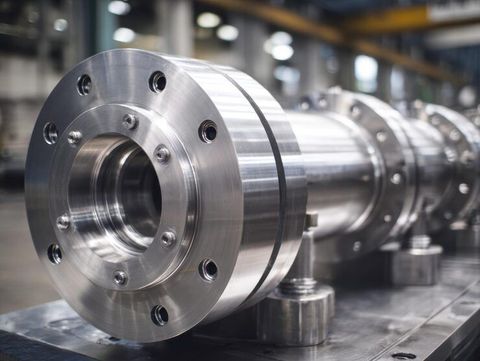
Computer numerical control (CNC) machines manufacture metal components according to programmed machining instructions. CNC milling, turning, drilling, and grinding are commonly used to produce precision parts such as shafts, housings, brackets, and selected powertrain components.
Precision engineering helps maintain dimensional accuracy and consistency across production batches. Manufacturers can combine CNC equipment with automated loading systems and measurement instruments to monitor production quality and reduce manual handling.
Industrial Robots and Automated Assembly Lines
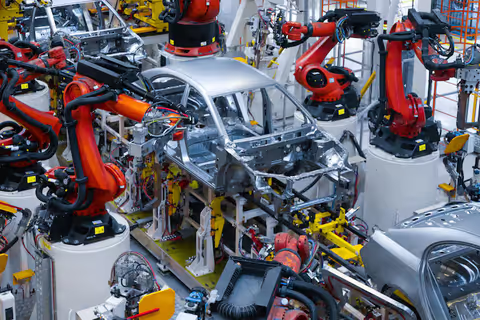
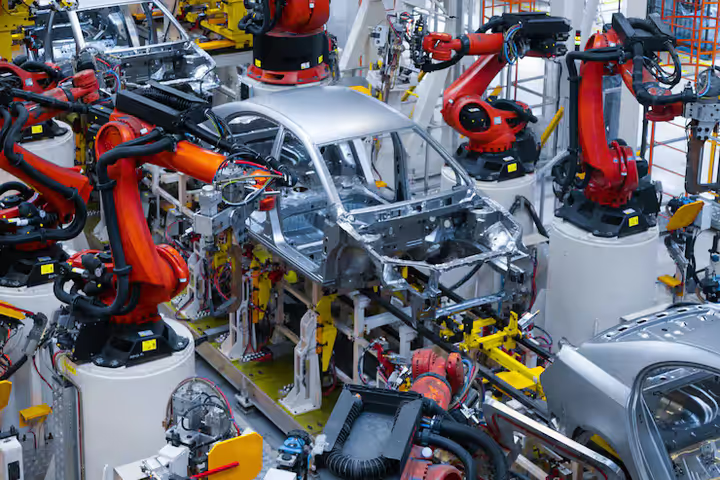
Industrial robots are widely used for welding, painting, material handling, adhesive application, and repetitive assembly tasks. Programmable control systems coordinate these machines with conveyors, sensors, safety equipment, and inspection stations.
Automated assembly lines allow manufacturers to organize production into connected stages. However, automation requirements vary according to factory size, production volume, product complexity, and available technical expertise. Human operators and technicians continue to play important roles in equipment supervision, maintenance, troubleshooting, and quality management.
Industrial Paint Systems and Surface Treatment
Automotive paint systems protect vehicle bodies against corrosion while providing the required surface finish. The process can include surface cleaning, pretreatment, protective coatings, primer application, painting, and controlled curing.
Industrial coating systems require careful control of temperature, humidity, airflow, material application, and environmental emissions. Consistent process monitoring helps manufacturers achieve uniform finishes and reduce coating defects.
The Automotive Manufacturing Process
Automobile production involves several connected stages. Each stage depends on accurate planning, suitable machinery, qualified personnel, and reliable materials.
Vehicle Design and Engineering
The process begins with vehicle design and engineering. Engineers use computer-aided design (CAD), simulation tools, and digital prototypes to evaluate vehicle structures, component fit, aerodynamics, and performance. Design validation helps identify potential issues before physical production begins.
Manufacturers also consider material selection, assembly requirements, serviceability, and applicable safety standards. These decisions influence the production equipment, factory layout, and inspection methods needed later.
Component Fabrication and Body Assembly
Raw materials are transformed into automotive parts through casting, forging, stamping, molding, machining, and other manufacturing methods. The parts are then inspected and delivered to assembly stations.
In the body shop, metal panels are positioned and joined to create the vehicle structure. Robotic welding, precision fixtures, and measurement systems help maintain structural consistency. The assembled body then moves through surface treatment and painting before final assembly.
Final Assembly and Vehicle Testing
Final assembly brings together the body, powertrain or electric drive system, suspension, wheels, seats, dashboard, electrical wiring, and other components. Production teams follow defined assembly instructions to ensure each component is installed correctly.
The completed vehicle undergoes inspection and testing. Depending on the model and applicable requirements, checks may cover braking performance, lighting, electrical functions, steering, fluid leakage, diagnostic systems, and other safety-related characteristics. Testing helps identify defects before the vehicle is released from the manufacturing facility.
Industry 4.0 and Smart Automotive Manufacturing
Industry 4.0 refers to the integration of digital technologies, connected machinery, automation, and data analysis into industrial operations. In automotive manufacturing, these technologies help factories monitor production activities, identify process variations, and coordinate equipment more effectively.
Industrial Internet of Things and Predictive Maintenance
Industrial Internet of Things (IIoT) systems use connected sensors and equipment data to monitor operating conditions. Sensors can measure vibration, temperature, pressure, energy consumption, and other indicators of machine performance.
Predictive maintenance uses this information to identify signs of potential equipment problems. Instead of relying exclusively on fixed maintenance intervals, technicians can use operating data to prioritize inspections and plan maintenance activities. The effectiveness of this approach depends on sensor quality, reliable data, and suitable analytical methods.
Artificial Intelligence and Quality Control
Artificial intelligence can support automotive production by analyzing images, detecting manufacturing defects, forecasting equipment problems, and identifying unusual production patterns. Machine vision systems can inspect surfaces, verify component placement, and measure selected product characteristics.
These systems do not eliminate the need for engineering judgment. Manufacturers must validate inspection models, manage incorrect classifications, protect production data, and maintain suitable human oversight.
Digital Twins and Factory Data Systems
A digital twin is a digital representation of a physical product, machine, or production process. Automotive engineers can use digital twins to simulate production layouts, evaluate process changes, and study equipment performance.
When integrated with manufacturing execution systems and production monitoring tools, digital models can support production planning and operational analysis. Their usefulness depends on how accurately the digital representation reflects actual factory conditions.
Electric Vehicles and Sustainable Automobile Manufacturing
Electric vehicles are changing automotive production by increasing the importance of battery technology, electric motors, power electronics, and high-voltage systems. Manufacturers must adapt factory equipment, worker training, inspection procedures, and safety practices to accommodate these technologies.
Electric Vehicle Battery Manufacturing
Battery production involves processes such as electrode preparation, coating, drying, cell assembly, electrolyte filling, formation, and testing. Battery packs then require additional assembly, electrical connections, thermal management, protective enclosures, and battery management systems.
Manufacturing quality is particularly important because battery performance depends on material consistency, process control, and electrical and thermal safety. Specialized facilities may also require carefully controlled humidity and environmental conditions.
Energy Efficiency and Environmental Management
Automotive factories consume energy for machinery, heating, ventilation, compressed air, painting, lighting, and material handling. Energy management systems help manufacturers measure consumption and identify areas for improvement.
Strategies such as efficient motors, optimized compressed-air systems, equipment maintenance, heat recovery, and renewable electricity can contribute to lower operational emissions. Manufacturers also evaluate material waste, water use, recycling, and the environmental impact of vehicle components throughout their life cycle.
Challenges in the Industrial Automobile Industry
Despite advances in production technology, the automotive sector faces several operational challenges. Manufacturers must manage changing customer requirements, complex supplier networks, component shortages, production interruptions, and increasing technical complexity.
Supply Chain and Raw Material Management
Automobile production depends on reliable supplies of steel, aluminum, rubber, plastics, electronic components, and specialized materials. Disruptions in one part of the supply chain can affect vehicle assembly schedules and production output.
Manufacturers address these risks through supplier diversification, inventory planning, demand forecasting, component traceability, and improved communication with suppliers. Semiconductor supply is especially important because modern vehicles depend on electronic control systems and digital functions.
Quality Standards and Regulatory Compliance
Automotive manufacturers must meet relevant safety, environmental, and product requirements in the markets where their vehicles are sold. Quality management systems help establish consistent procedures for design validation, production inspection, defect reporting, and corrective action.
Organizations may use automotive quality frameworks such as IATF 16949 where applicable to their operations and customer requirements. Compliance also depends on the relevant vehicle regulations, environmental rules, and technical standards.
Skilled Workforce and Equipment Maintenance
Modern automobile factories require professionals with knowledge of mechanical engineering, electrical systems, industrial robotics, software, quality assurance, and production management. As factories become more connected, workers also need skills in data interpretation, automation troubleshooting, and industrial cybersecurity.
Continuous training helps employees adapt to new production systems. Preventive maintenance, documented procedures, and appropriate safety controls are equally important for keeping machinery reliable and protecting workers.
Future Trends in Industrial Automobile Manufacturing
The future of industrial automobile manufacturing will be shaped by automation, electrification, connected production systems, and environmental considerations. Manufacturers are exploring flexible assembly lines that can accommodate multiple vehicle models while maintaining consistent production quality.
Artificial intelligence and advanced inspection systems are expected to play a growing role in identifying process variations and supporting production decisions. Digital engineering tools can also help teams evaluate designs and manufacturing layouts before implementing physical changes.
Another important trend is the development of circular manufacturing practices. Reusing materials, improving component recyclability, and designing products for easier disassembly can help reduce resource consumption. As electric vehicles become more prominent, battery lifecycle management and material recovery will remain important areas of industrial development.
The pace of change will differ across manufacturers and regions. Investment capacity, workforce skills, infrastructure, regulatory requirements, and access to technology will influence how quickly individual factories adopt these approaches.
Frequently Asked Questions
What is industrial automobile manufacturing?
Industrial automobile manufacturing is the process of designing, fabricating, assembling, and testing vehicles and automotive components using industrial machinery, engineering methods, production systems, and quality controls.
What machines are used in the automobile industry?
Common equipment includes CNC machining centers, hydraulic presses, casting machines, industrial robots, welding systems, paint booths, conveyors, automated inspection equipment, and vehicle testing systems.
How does automation improve automotive manufacturing?
Automation can improve production consistency, support repetitive precision tasks, increase throughput, and help monitor quality. Its results depend on equipment selection, process design, maintenance, and effective integration with factory operations.
What is the role of AI in automobile manufacturing?
AI can support visual inspection, predictive maintenance, production planning, and analysis of manufacturing data. Human supervision and validation remain important for safety-critical and quality-sensitive decisions.
How are electric vehicles changing industrial automobile production?
Electric vehicles require additional manufacturing capabilities for battery cells and packs, electric motors, inverters, high-voltage wiring, and thermal management systems. These requirements influence factory layouts, equipment selection, and employee training.
Conclusion
The industrial automobile sector combines mechanical engineering, precision manufacturing, automation, electronics, and digital technologies to produce modern vehicles. From component fabrication and robotic assembly to quality inspection and electric vehicle battery production, each stage contributes to vehicle performance, reliability, and safety.
As manufacturing systems continue to evolve, industrial automation, predictive maintenance, smart factory technologies, and sustainable production methods will remain important areas of development. Understanding these processes provides a foundation for exploring automotive engineering, industrial machinery, vehicle production, and the wider manufacturing industry.

You May Also Like