Conveyor System Manufacturers: A Guide to Industrial Conveyor Solutions
Conveyor systems are an important part of modern material handling operations. They are used to move products, components, packages, raw materials, and other items efficiently between different points within a facility. Conveyor equipment can be found in manufacturing plants, warehouses, distribution centers, food processing facilities, airports, mining operations, and logistics environments.
Conveyor system manufacturers design and produce equipment that can improve material flow, reduce repetitive manual handling, and support more organized industrial operations. Depending on the application, a conveyor system may range from a simple belt conveyor to a highly automated material handling solution integrated with sensors, controls, robotics, and warehouse management software.
This article explains how conveyor systems work, the major types available, factors businesses should consider when selecting equipment, and how conveyor manufacturers support industrial automation and material handling.
What Is a Conveyor System?
A conveyor system is mechanical equipment designed to transport materials or products from one location to another. The system generally consists of a conveying surface or mechanism, a drive system, supporting structures, controls, and safety components.
Conveyor systems can operate continuously or intermittently depending on production requirements. They can also be configured for horizontal, inclined, declined, curved, or multi-level transportation.
How Conveyor Systems Work
The operating principle depends on the conveyor type. A belt conveyor, for example, uses a motor-driven pulley to move a continuous belt. Products placed on the belt travel from the loading point to the discharge point.
More advanced systems may use rollers, chains, slats, magnetic forces, pneumatic systems, or automated vehicles to move materials.
Industrial conveyor systems can also include sensors and programmable controls that coordinate movement and help operators monitor material flow.
Why Conveyor Systems Are Important in Industry
Efficient material movement is essential for manufacturing and logistics operations. When materials must be transported manually over long distances or between multiple production stages, businesses may experience unnecessary handling, delays, and increased labor requirements.
A properly designed conveyor system can help organize the movement of materials and improve workflow.
Material Handling Efficiency
Conveyors can provide a consistent method of transporting materials within a facility. This can be particularly useful where products need to move repeatedly between production lines, storage areas, inspection stations, packaging equipment, and shipping departments.
Support for Industrial Automation
Conveyor systems are frequently integrated with industrial automation technologies. Sensors, programmable logic controllers, barcode scanners, machine vision systems, and robotic equipment can work together to automate material movement and sorting processes.
This makes conveyors an important component of automated manufacturing and warehouse automation projects.
Improved Workplace Organization
A well-planned conveyor layout can establish defined material flow paths. This can reduce unnecessary movement around production areas and help facilities organize workstations, storage zones, and shipping areas more effectively.
Major Types of Conveyor Systems
Conveyor system manufacturers produce many different configurations because material handling requirements vary considerably between industries.
Belt Conveyors
Belt conveyors are among the most widely used conveyor systems. They consist of a continuous belt supported by rollers or a flat surface.
They can be used to transport cartons, packages, components, bulk materials, and many other products.
Belt conveyors are available in different widths, lengths, belt materials, speeds, and configurations.
Roller Conveyors
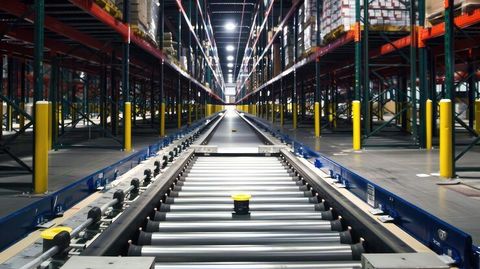
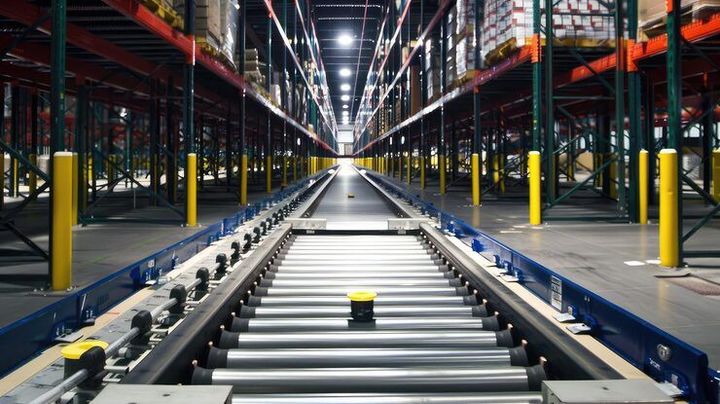
Roller conveyors use a series of rollers to transport products. They are commonly used for boxes, pallets, containers, and other products with relatively flat surfaces.
Roller conveyors may be powered or gravity-operated.
Chain Conveyors
Chain conveyors use chains to move products along a defined path. They are often selected for applications involving heavy loads or products that require strong support.
Industries handling pallets, automotive components, and heavy industrial products may use chain-based conveying systems.
Slat Conveyors
Slat conveyors use interconnected slats mounted on a continuous chain mechanism. They can be useful for products that require a stable conveying surface.
Slat conveyors are frequently used in manufacturing and packaging environments.
Screw Conveyors
Screw conveyors use a rotating helical screw to move bulk materials through a trough or enclosed housing.
They are commonly associated with applications involving powders, grains, granules, and other bulk materials.
Overhead Conveyors
Overhead conveyor systems transport materials above the working area. This configuration can help make use of vertical space while keeping floor-level areas available for other operations.
They can be found in manufacturing, automotive, garment, and material handling applications.
Flexible and Modular Conveyors
Flexible conveyors can be adjusted or repositioned to suit changing operational requirements. Modular conveyor designs can also make it easier to modify or expand a material handling system as facility requirements change.
Industries That Use Conveyor Systems
Conveyor equipment is used across a broad range of industrial and commercial applications.
Manufacturing
Manufacturing facilities may use conveyors to transfer components between production stations, assembly lines, inspection areas, and packaging equipment.
Warehousing and Distribution
Warehouse automation is an important application for conveyor technology. Distribution centers can use conveyors to move cartons and packages between receiving, storage, picking, sorting, packing, and shipping areas.
Food and Beverage Processing
Food processing applications often require conveyors designed around hygiene, cleanability, corrosion resistance, and applicable industry requirements.
The appropriate conveyor materials and design depend on the product and operating environment.
Automotive Industry
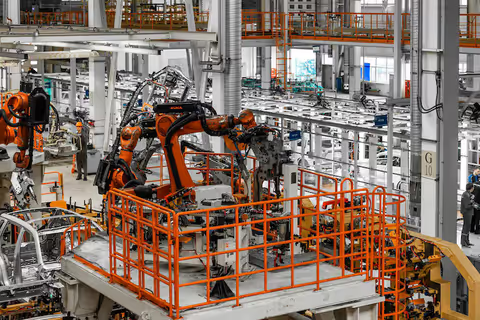
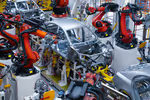
Automotive manufacturing facilities use conveyors to transport components, assemblies, and vehicles through different production stages.
Heavy-duty conveyor designs may be required for certain automotive applications.
Mining and Bulk Material Handling
Mining and bulk material handling operations can use large conveyor systems to transport materials over significant distances.
These applications often require specialized engineering because of high loads, abrasive materials, environmental exposure, and continuous operation.
E-Commerce and Logistics
The growth of online commerce has increased demand for automated material handling systems. Conveyors can support package sorting, order fulfillment, distribution, and shipping operations.
How to Choose a Conveyor System Manufacturer
Selecting a conveyor manufacturer requires more than comparing equipment prices. The manufacturer should understand the application's material characteristics, throughput requirements, facility layout, safety considerations, and future expansion plans.
Evaluate Engineering Expertise
A capable conveyor manufacturer should be able to understand the complete material handling requirement rather than simply supplying individual equipment.
Engineering capabilities may include conveyor design, layout development, system integration, controls, installation support, and commissioning.
Consider Customization Options
Different facilities have different space constraints and operational requirements. Manufacturers may offer customized conveyor lengths, widths, elevations, speeds, belt materials, frames, drives, and control systems.
Review Equipment Quality
Businesses should evaluate the materials, components, motors, bearings, belts, controls, and other parts used in conveyor equipment.
Equipment selection should be based on the expected operating environment and required duty cycle.
Examine Maintenance Requirements
Maintenance is an important part of the total cost of ownership of industrial equipment.
Businesses should consider access to replacement parts, preventive maintenance requirements, service support, component availability, and documentation before selecting a conveyor system.
Assess Safety Features
Conveyor equipment should incorporate appropriate machine safety measures. Depending on the design, these may include emergency-stop systems, guarding, warning devices, safety switches, and appropriate access controls.
Safety requirements vary according to the equipment and jurisdiction, so businesses should evaluate applicable standards and regulations.
Conveyor Systems and Warehouse Automation
Warehouse automation increasingly combines conveyor systems with digital technologies.
Automated Sorting
Automated sorting systems can use scanners, sensors, software, and mechanical equipment to direct packages or products toward specific destinations.
Conveyors provide the physical transportation component of these systems.
Barcode and RFID Integration
Barcode scanners and RFID technologies can help identify products as they move through a material handling system.
This information can be used by warehouse or enterprise software to support inventory tracking and order processing.
Robotics Integration
Robotic systems can work alongside conveyors for applications such as picking, palletizing, depalletizing, inspection, and packaging.
The conveyor provides a predictable movement path while robotic equipment performs specific automated tasks.
Conveyor System Costs
The cost of a conveyor system varies significantly depending on the application and system configuration.
Factors that can influence total project cost include:
- Conveyor type
- Conveyor length and width
- Required capacity
- Motor and drive specifications
- Construction materials
- Controls and automation
- Sensors and scanners
- Installation requirements
- Facility modifications
- Safety equipment
- Maintenance requirements
- Integration with existing equipment
Initial Cost vs. Total Cost of Ownership
A lower initial equipment price does not necessarily represent the lowest long-term cost.
Businesses should consider energy consumption, maintenance, replacement components, downtime risks, expected service life, and future expansion when evaluating industrial material handling investments.
Energy Efficiency in Conveyor Systems
Energy efficiency is becoming increasingly relevant for industrial facilities seeking to control operating costs.
Efficient motors, properly sized drives, variable-frequency drives, optimized conveyor speeds, and intelligent control strategies can help reduce unnecessary energy consumption in appropriate applications.
However, the best solution depends on load characteristics, operating schedules, conveyor design, and facility requirements.
Maintenance of Conveyor Equipment
Regular maintenance can help identify mechanical problems before they develop into more serious equipment failures.
Preventive Maintenance
Preventive maintenance programs may include inspection and servicing of:
- Conveyor belts
- Rollers
- Bearings
- Motors
- Gearboxes
- Chains
- Sprockets
- Drive components
- Sensors
- Safety switches
- Electrical connections
Maintenance schedules should be based on manufacturer recommendations, operating conditions, equipment design, and actual usage.
Predictive Maintenance
Modern industrial facilities may also use condition-monitoring technologies to identify potential equipment problems.
Sensors can monitor parameters such as temperature, vibration, motor condition, or other operating characteristics. Data analysis can then help maintenance teams determine when inspection or service may be appropriate.
The Role of Industrial IoT in Conveyor Systems
Industrial Internet of Things technology is changing how businesses monitor material handling equipment.
Connected conveyor systems can potentially provide information about equipment operation, production flow, motor conditions, faults, and maintenance requirements.
Real-Time Monitoring
Industrial monitoring platforms can collect operating information from sensors and controllers. Operators may use dashboards to identify abnormal conditions and monitor system performance.
Data-Driven Maintenance
Historical equipment data can help maintenance teams identify recurring problems and understand equipment behavior.
This approach can complement traditional preventive maintenance programs rather than completely replacing physical inspection.
Questions to Ask Conveyor System Manufacturers
Before purchasing or specifying a conveyor system, businesses can ask manufacturers several important questions:
What Materials Can the System Handle?
The manufacturer should understand product dimensions, weight, shape, surface characteristics, temperature, moisture, and other relevant material properties.
What Throughput Can It Support?
Throughput requirements should be clearly defined. Depending on the application, this could involve units per hour, pallets per hour, kilograms per hour, or another suitable measurement.
Can the System Be Expanded?
Businesses should consider whether future production growth may require additional conveyor sections, sorting equipment, storage connections, or automation.
What Maintenance Support Is Available?
Ask about spare parts, service personnel, maintenance documentation, warranty terms, training, and technical support.
How Will the Conveyor Integrate With Existing Equipment?
A new conveyor system may need to communicate with packaging machines, warehouse management systems, enterprise software, robotics, scanners, or other industrial equipment.
Integration should therefore be considered during the design stage.
Trends in Conveyor System Technology
Conveyor technology continues to develop alongside broader changes in manufacturing and logistics.
Smart Material Handling
Connected sensors and industrial software are making it possible to collect more operational data from conveyor equipment.
Flexible Automation
Manufacturers are developing systems that can be reconfigured as production requirements change. Modular equipment can be useful for facilities that expect future layout or capacity changes.
Robotics and Automated Warehousing
The combination of conveyors, robots, automated storage systems, and warehouse software is becoming increasingly important in modern distribution operations.
Focus on Operational Efficiency
Businesses are paying greater attention to throughput, energy use, maintenance, labor utilization, safety, and total cost of ownership when evaluating material handling equipment.
Conclusion
Conveyor system manufacturers play an important role in modern material handling, manufacturing automation, warehousing, and logistics. From basic belt conveyors to sophisticated automated sorting systems, conveyor technology can be configured for a wide variety of industrial applications.
When selecting a conveyor solution, businesses should look beyond the initial purchase price. System capacity, product characteristics, facility layout, automation requirements, safety, maintenance, energy consumption, integration capabilities, and future expansion should all be considered.
A well-engineered conveyor system can become an important part of an efficient material handling strategy. Working with an experienced manufacturer or system integrator can help businesses select equipment that is appropriate for their specific operational requirements.
Frequently Asked Questions
What does a conveyor system manufacturer do?
A conveyor system manufacturer designs, engineers, produces, and sometimes installs conveyor equipment used for transporting materials and products. Some manufacturers also provide automation, controls, integration, commissioning, and maintenance support.
What is the most common type of conveyor?
Belt conveyors are among the most commonly used conveyor systems because they can transport many types of products and can be configured for different layouts and operating conditions.
How much does an industrial conveyor system cost?
There is no single standard price. Cost depends on conveyor type, dimensions, capacity, materials, motors, controls, automation, installation, and other project requirements.
Are conveyor systems suitable for warehouse automation?
Yes. Conveyors are widely used as part of warehouse automation systems, particularly for transporting cartons, packages, totes, and pallets between receiving, storage, picking, sorting, packing, and shipping areas.
How can conveyor equipment improve material handling?
Conveyors can create consistent transportation routes, reduce repetitive manual movement, support higher-volume operations, and integrate with automated equipment.
What should businesses consider before buying a conveyor system?
Important considerations include product characteristics, required throughput, available space, conveyor type, operating environment, safety requirements, automation needs, maintenance, energy consumption, integration, and future expansion.
Can conveyor systems be customized?
Many industrial conveyor systems can be customized according to product dimensions, load requirements, facility layout, speed, elevation, materials, controls, and automation requirements.
Why is conveyor maintenance important?
Regular maintenance helps identify wear, alignment problems, damaged components, and other issues that could affect system performance. A planned maintenance program can also help businesses manage equipment reliability and operating costs.