Industrial Textiles: Materials, Manufacturing Processes, Applications, and Future Trends , Facts
Industrial textiles are specialized textile materials developed to perform specific functions in manufacturing, engineering, construction, transportation, and other industrial environments. Unlike conventional fabrics, which are often selected for appearance, comfort, or fashion, industrial textiles are primarily designed around properties such as strength, durability, filtration efficiency, heat resistance, flexibility, and chemical resistance.
These materials are important in modern production systems because many industrial operations require fabrics that can withstand demanding working conditions. Industrial textiles are used in conveyor belts, filtration systems, insulation products, protective equipment, composite materials, and machinery components. Their performance depends on the fibers used, fabric construction, manufacturing methods, and finishing treatments.
Technical textiles is a closely related term that covers a broad range of functional textile products, including industrial textiles. Their applications extend beyond factories into healthcare, agriculture, infrastructure, automotive engineering, and environmental protection.
What Are the Main Types of Industrial Textiles?
Industrial textiles can be classified according to their material composition, manufacturing technique, and intended application. Each category provides different characteristics that influence how a fabric performs in a particular environment.
Woven Industrial Fabrics
Woven industrial fabrics are produced by interlacing two sets of yarns, commonly known as warp and weft. This construction creates a stable structure that can provide good dimensional stability, tensile strength, and resistance to mechanical stress. Depending on the weave and fiber selection, these fabrics can be designed for conveyor belts, filtration equipment, reinforcement materials, and industrial covers.
Nonwoven Industrial Fabrics
Nonwoven fabrics are manufactured by bonding or entangling fibers without using the conventional weaving or knitting process. Common production methods include mechanical entanglement, thermal bonding, and chemical bonding. Nonwoven materials are widely used in air filtration, liquid filtration, insulation, automotive interiors, and protective applications because their structure can be tailored to specific requirements.
Knitted Industrial Fabrics
Knitted fabrics are formed by interlooping yarns. Their construction generally provides greater flexibility and stretch than many woven fabrics. Industrial applications include flexible sleeves, reinforcement structures, protective components, and specialized materials that must adapt to curved surfaces or repeated movement.
Coated and Laminated Textiles
Coated textiles contain a layer of polymer or another functional substance applied to a fabric surface. Laminated textiles combine two or more layers to produce a material with selected properties. Depending on the design, these materials can provide water resistance, chemical protection, abrasion resistance, or barrier performance for industrial equipment and specialized enclosures.
Materials Used in Industrial Textile Manufacturing
The choice of fiber has a major influence on the strength, temperature tolerance, durability, and chemical compatibility of an industrial textile. Manufacturers evaluate operating conditions before selecting a suitable material.
Natural Fibers
Cotton, jute, and other natural fibers are used in selected industrial applications. Cotton can provide absorbency and flexibility, while jute is used in certain packaging and agricultural products. Natural fibers may be appropriate where their mechanical properties and environmental characteristics meet the intended requirements.
However, moisture absorption, biological degradation, and temperature limitations can restrict their use in demanding environments.
Synthetic Fibers
Polyester, nylon, polypropylene, and aramid fibers are widely used in technical textile applications. Polyester provides useful dimensional stability and resistance to many environmental conditions. Nylon is valued for abrasion resistance and mechanical strength, while polypropylene is used in several nonwoven and filtration products.
Aramid fibers are known for their high strength-to-weight ratio and heat-resistant characteristics. Their performance makes them relevant to specialized protective equipment and industrial reinforcement.
Glass and Carbon Fibers
Glass fibers are used in insulation, filtration, and composite reinforcement. Carbon fibers offer high stiffness and strength relative to their weight, making them useful in advanced composite structures used in aerospace, automotive engineering, and other demanding applications.
The correct selection depends on the required mechanical performance, operating temperature, chemical exposure, service life, and applicable safety standards.
Industrial Textile Manufacturing Processes
Industrial textile manufacturing involves multiple stages, beginning with raw material preparation and continuing through fabric formation, finishing, testing, and quality control.
Fiber Preparation and Yarn Production
The first stage involves preparing fibers for further processing. Depending on the material, this can include cleaning, blending, carding, drawing, and spinning. These operations help produce yarns with the consistency and strength needed for the intended application.
Some industrial textile products use continuous filaments or directly processed fibers rather than conventional spun yarns.
Weaving, Knitting, and Nonwoven Production
The next stage converts fibers or yarns into a textile structure. Weaving machines interlace yarns, knitting machines form interconnected loops, and nonwoven production systems bond or entangle fibers. The manufacturing method determines important properties such as porosity, flexibility, thickness, and dimensional stability.
Textile Finishing and Coating
Finishing treatments modify the surface or functional properties of a fabric. Processes may include heat setting, surface coating, lamination, water-repellent treatment, or specialized chemical finishing. The selected treatment depends on the textile's intended use and the performance requirements of the final product.
Quality Testing and Inspection
Industrial textile testing helps determine whether a product meets its technical specifications. Common assessments include tensile strength, tear resistance, abrasion resistance, air permeability, liquid permeability, dimensional stability, and temperature performance.
Additional tests may be necessary for flame resistance, chemical exposure, filtration efficiency, or electrical properties. The appropriate test method depends on the product category and relevant industry standards.
Major Applications of Industrial Textiles
Industrial textiles support a wide range of manufacturing and engineering activities. Their functional properties allow them to operate as independent products or as components within larger systems.
Filtration and Environmental Engineering
Industrial filter fabrics are used to separate particles from air, liquids, and process streams. Applications include dust collection, wastewater treatment, chemical processing, and filtration in manufacturing facilities. The fabric must have suitable permeability, particle-retention characteristics, mechanical strength, and chemical compatibility.
Filtration performance depends on more than fiber type. Pore structure, fabric thickness, operating pressure, temperature, and maintenance conditions also affect performance.
Automotive and Transportation
Automotive textiles are used in seat belts, airbags, interior components, tire reinforcement, insulation, and composite structures. These materials must satisfy application-specific requirements for strength, durability, dimensional stability, and performance under environmental stress.
Electric vehicles also use specialized textile components in selected insulation, acoustic management, filtration, and reinforcement applications. Material requirements vary according to the vehicle design and operating conditions.
Construction and Civil Engineering
Geotextiles are functional fabrics used in civil engineering projects. They can support soil separation, filtration, drainage, erosion control, and reinforcement. Their applications include roads, embankments, retaining structures, and drainage systems.
Construction textiles may also include architectural membranes, reinforcement fabrics, and materials used in insulation systems. Engineers select these products according to soil conditions, loading requirements, exposure, and project specifications.
Industrial Safety and Protective Equipment
Protective textiles are used in selected types of workwear, gloves, heat-resistant clothing, and other personal protective equipment. Depending on the material and design, they may help reduce exposure to heat, abrasion, cuts, or certain chemical hazards.
Protective performance must be established through suitable testing and compliance with relevant standards. A fabric should not be assumed to protect against every hazard simply because it is described as industrial-grade or high-performance.
Packaging and Material Handling
Textile-based packaging products include woven sacks, flexible bulk containers, lifting slings, and reinforcement materials. These products can support the handling and transportation of industrial materials.
Their design requirements may include load capacity, seam strength, abrasion resistance, dimensional stability, and resistance to environmental exposure. Proper inspection and use are essential when textile products are involved in lifting or load-bearing operations.
Benefits and Limitations of Industrial Textiles
Industrial textiles can offer several functional advantages. High-strength fibers and engineered fabric structures can support demanding applications while maintaining relatively low material weight. Specialized textile designs can also provide flexibility, filtration, insulation, and reinforcement in ways that may be difficult to achieve with rigid materials alone.
Another advantage is adaptability. Manufacturers can select fiber blends, fabric structures, coatings, and finishing processes to meet different technical requirements. This flexibility makes industrial textiles relevant to sectors ranging from heavy manufacturing to advanced engineering.
Nevertheless, these materials have limitations. Some synthetic fibers degrade under ultraviolet exposure or high temperatures, while particular coatings can deteriorate after repeated chemical contact. Certain fabrics also require specialized cleaning, inspection, or replacement procedures.
The service life of an industrial textile depends on its design, installation, operating environment, and maintenance. Selecting a material solely on the basis of initial strength or appearance may result in unsuitable performance.
Industrial Textile Technology and Future Trends
The industrial textile sector continues to evolve through advances in materials science, manufacturing automation, digital monitoring, and sustainability practices.
Smart Textiles and Embedded Sensors
Smart textiles incorporate sensors, conductive fibers, or other functional elements that allow a textile system to detect or respond to changes in its environment. Potential applications include monitoring temperature, strain, pressure, and structural conditions.
These systems may support predictive maintenance and condition monitoring in selected industrial environments. However, their practical performance depends on sensor reliability, data interpretation, durability, and integration with existing equipment.
Automation and Digital Manufacturing
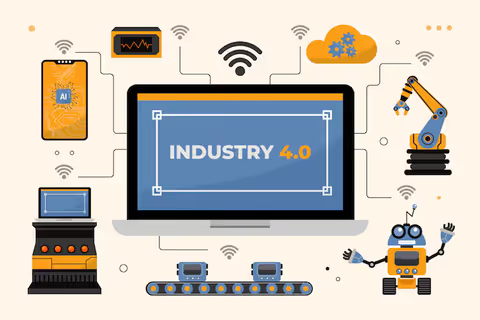
Automated textile machinery can improve process consistency, production monitoring, and quality control. Digital systems can help manufacturers identify process variations, track production parameters, and reduce material waste.
Computer-based inspection can also assist in identifying defects in fabrics and finished products. The benefits depend on equipment configuration, operator training, data quality, and the complexity of the manufacturing process.
Sustainable Industrial Textiles
Sustainability has become an important consideration in textile manufacturing. Relevant approaches include recycled fibers, more efficient production processes, reduced material waste, and improved management of water and chemicals.
Manufacturers also evaluate the durability and end-of-life treatment of industrial fabrics. Recyclability depends on fiber composition, coatings, laminates, and contamination. A textile made partly from recycled material is not automatically environmentally preferable in every application; its full life cycle and intended service must also be considered.
How to Select Industrial Textiles for a Specific Application
Selecting an appropriate industrial textile requires a clear understanding of the conditions under which the material will operate. Engineers and procurement teams generally assess the following factors.
First, the required mechanical properties must be established. Tensile strength, tear resistance, flexibility, abrasion resistance, and dimensional stability may all be important depending on the application.
Second, the operating environment must be considered. Temperature, humidity, ultraviolet exposure, chemicals, pressure, and repeated mechanical movement can affect textile performance.
Third, the material must meet relevant technical specifications and safety requirements. Documentation, laboratory testing, traceability, and applicable industry standards can help establish suitability.
Finally, maintenance and expected service life should be evaluated. A textile that performs well initially may not remain suitable if it is exposed to conditions beyond its design limits. Regular inspection and appropriate replacement procedures can help maintain reliable operation.
Frequently Asked Questions About Industrial Textiles
What is the difference between industrial textiles and conventional fabrics?
Conventional fabrics are often designed for clothing, comfort, or decoration. Industrial textiles are primarily developed for functional requirements such as filtration, reinforcement, insulation, mechanical strength, or protection.
Which fibers are commonly used in industrial textiles?
Common materials include polyester, nylon, polypropylene, cotton, aramid, glass fiber, and carbon fiber. The choice depends on the intended application and required technical properties.
What are technical textiles used for?
Technical textiles are used in manufacturing, construction, agriculture, healthcare, transportation, packaging, filtration, and protective equipment. Industrial textiles form an important part of this wider category.
Why is textile testing important?
Testing helps verify properties such as tensile strength, permeability, abrasion resistance, temperature performance, and chemical compatibility. It supports product quality and helps determine whether a textile meets the requirements of its intended application.
How is sustainability improving in industrial textile manufacturing?
Potential improvements include using recycled materials, optimizing energy and water consumption, reducing production waste, and designing products for longer service life. The effectiveness of each approach depends on the materials and manufacturing process involved.
Conclusion
Industrial textiles are an important part of modern manufacturing and engineering because they combine the flexibility of textile structures with specialized functional properties. Their applications range from industrial filtration and material handling to automotive components, construction, insulation, and protective equipment.
Understanding textile types, fiber properties, manufacturing processes, and quality testing helps explain why different materials are selected for different industrial environments. As automation, advanced fibers, smart textile systems, and sustainability practices develop, industrial textiles are likely to remain an important area of materials engineering and manufacturing innovation.