Industrial Machinery Explained: Types, Applications, and the Future of Modern Manufacturing
Industrial machinery plays an important role in modern manufacturing, construction, material processing, and infrastructure development. From small precision tools to large production systems, industrial machines help transform raw materials into finished products through mechanical operations, controlled processes, and automated activities. These machines are used in factories, workshops, processing plants, warehouses, and construction sites where accuracy, consistency, and operational reliability are essential.
As manufacturing processes become more advanced, industrial equipment increasingly combines mechanical engineering with electronics, software, sensors, and automation technologies. Understanding the different types of industrial machinery helps students, engineers, production professionals, and general readers learn how industrial operations function and how equipment contributes to product quality, workplace safety, and production efficiency.
What Is Industrial Machinery?
Industrial machinery refers to machines, mechanical systems, and associated equipment designed to perform specific industrial tasks. These tasks may include cutting, shaping, mixing, lifting, transporting, heating, cooling, assembling, or packaging materials. The design of each machine depends on its intended application, operating environment, production requirements, and technical specifications.
Industrial machinery can operate manually, mechanically, hydraulically, pneumatically, electrically, or through computer-controlled systems. Some machines perform a single operation, while others form part of an integrated production line. For example, a CNC machine can manufacture precision components, while a conveyor system transports materials between different stages of production.
Major Types of Industrial Machinery
Manufacturing and Production Machinery
Manufacturing machinery is used to convert raw materials or partially finished components into products with defined shapes, dimensions, and characteristics. Common examples include cutting machines, drilling machines, milling machines, grinding equipment, presses, and automated assembly systems. These machines are found in industries such as automotive manufacturing, electronics, metal fabrication, and general engineering.
The selection of manufacturing equipment depends on material properties, production volume, dimensional accuracy, and the complexity of the required operation. Machines designed for precision manufacturing often incorporate measurement systems and computer controls to maintain consistent output.
CNC Machines and Machine Tools
Computer Numerical Control (CNC) machines use programmed instructions to control machining operations such as turning, milling, drilling, and cutting. They are widely used to manufacture components that require repeatable dimensions and controlled tolerances. CNC technology is particularly relevant to aerospace components, automotive parts, medical devices, and industrial machinery components.
Machine tools also include conventional lathes, milling machines, grinders, and drilling equipment. The choice between conventional and CNC machinery depends on factors such as part complexity, production quantities, operator skills, and the required level of precision.
Hydraulic and Pneumatic Machinery
Hydraulic machinery uses pressurized fluid to transmit power and generate movement or force. Hydraulic presses, lifting systems, industrial cylinders, and heavy construction equipment are common examples. These systems are suitable for applications that require substantial force in a controlled manner.
Pneumatic machinery uses compressed air to operate cylinders, valves, actuators, and other mechanical components. It is commonly used in packaging systems, assembly lines, material handling equipment, and automated production processes. Both hydraulic and pneumatic systems require appropriate pressure controls, suitable components, and regular inspection to maintain safe operation.
Material Handling Equipment
Material handling machinery supports the movement, positioning, storage, and transportation of materials within industrial facilities. Examples include conveyor belts, forklifts, overhead cranes, hoists, pallet handling systems, and automated guided vehicles.
These systems help organize the flow of raw materials, work-in-progress components, and finished goods. Their configuration depends on the weight and dimensions of the materials, the available workspace, the required movement distance, and workplace safety requirements.
Industrial Processing Machinery
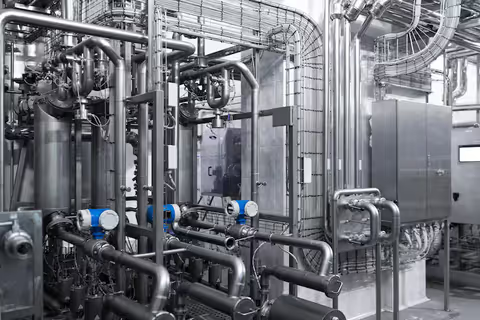
Processing machinery changes the physical or chemical characteristics of materials during production. Industrial mixers, blenders, crushers, grinders, dryers, reactors, filtration systems, and industrial pumps are examples of equipment used for different processing tasks.
The food processing, pharmaceutical, chemical, plastics, and water treatment industries depend on specialized processing machinery. Equipment design must account for factors such as temperature, pressure, material compatibility, contamination control, and the characteristics of the substances being processed.
Packaging and Filling Machinery
Packaging machinery prepares products for storage, transportation, and distribution. Common equipment includes filling machines, sealing machines, labeling systems, wrapping machines, carton formers, and automated palletizing systems.
In manufacturing environments, packaging equipment may be connected directly to processing and inspection systems. This integration helps maintain product flow and supports consistent packaging operations. The required machinery varies according to the product's physical form, packaging material, hygiene requirements, and production speed.
Applications of Industrial Machinery Across Different Industries
Automotive and Engineering Manufacturing
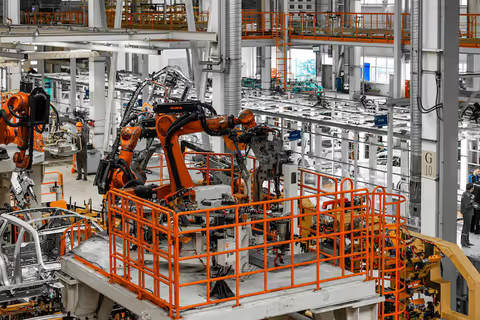
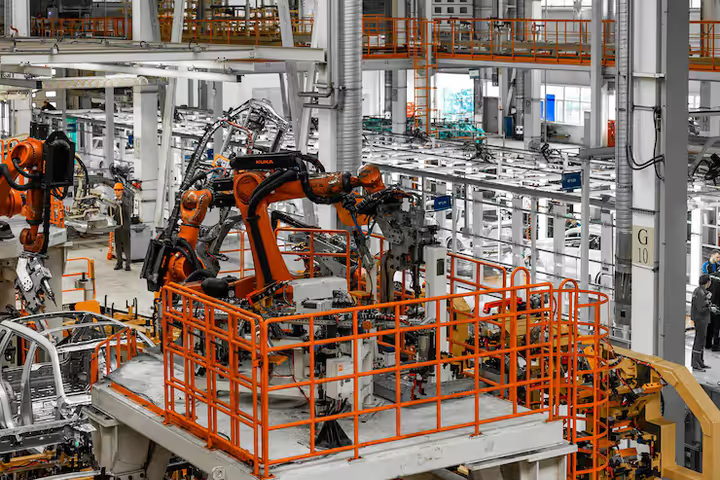
Automotive manufacturing uses industrial machinery for metal stamping, welding, machining, painting, assembly, and quality inspection. Robotic arms and automated production lines can perform repetitive operations with controlled movement and timing. Precision machine tools are also used to manufacture engine components, transmission parts, and structural elements.
General engineering facilities use similar equipment to produce shafts, gears, housings, fasteners, and other mechanical components. Product specifications and inspection procedures determine the machinery and measurement systems required for each operation.
Construction and Mining
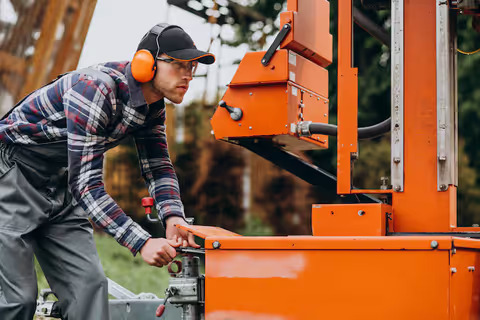
Construction and mining operations rely on heavy machinery such as excavators, bulldozers, loaders, cranes, drilling equipment, and crushing systems. These machines support earthmoving, material extraction, site preparation, lifting, and transportation activities.
Operating conditions in these sectors can involve dust, vibration, uneven terrain, heavy loads, and changing weather. Equipment suitability therefore depends on working conditions, load capacity, operator training, and scheduled maintenance.
Food and Pharmaceutical Processing
Food manufacturing uses mixers, grinders, industrial ovens, filling systems, refrigeration equipment, and packaging machinery. Equipment that comes into contact with food must be suitable for the product and the required cleaning procedures.
Pharmaceutical manufacturing uses specialized machinery for blending, granulation, tablet compression, coating, filling, and packaging. Production processes may require controlled environmental conditions, validated procedures, traceability, and strict quality checks.
Energy, Chemical Processing, and Water Treatment
Energy and process industries use pumps, compressors, heat exchangers, turbines, filtration equipment, and other specialized machinery. These systems support the movement of fluids, energy conversion, temperature control, and treatment operations.
Water treatment facilities use pumps, filtration systems, dosing equipment, and sludge-handling machinery to support different treatment stages. The required configuration depends on water quality, treatment objectives, plant capacity, and applicable environmental requirements.
How Industrial Automation Is Changing Machinery
Automated Manufacturing Systems
Industrial automation combines machinery with sensors, controllers, software, and communication systems to perform operations with reduced manual intervention. Programmable Logic Controllers (PLCs), robotic systems, machine vision, and automated inspection equipment are commonly used in modern production facilities.
Automation can help maintain repeatable processes and improve production monitoring. However, its effectiveness depends on proper system integration, equipment compatibility, operator training, and the ability to manage faults safely.
Industrial Internet of Things and Smart Machinery
The Industrial Internet of Things (IIoT) connects industrial equipment to monitoring and data systems. Sensors can measure variables such as temperature, vibration, pressure, energy consumption, and operating speed. These measurements help maintenance and production teams understand equipment performance.
Smart machinery can also provide information about operating conditions and recurring faults. When data is collected and interpreted correctly, it can support decisions about production scheduling, maintenance priorities, and equipment reliability.
Artificial Intelligence in Manufacturing
Artificial intelligence is increasingly used in manufacturing for tasks such as visual quality inspection, production planning, anomaly detection, and equipment condition analysis. Machine learning systems can examine historical and real-time data to identify patterns that may be difficult to detect through manual observation alone.
AI-based systems still require reliable data, appropriate testing, and human oversight. Their predictions should be evaluated against actual operating conditions before they are used to influence important maintenance or production decisions.
Industrial Machinery Maintenance and Safety
Preventive Maintenance
Preventive maintenance involves planned inspections and servicing intended to keep machinery operating within its specified conditions. Typical activities include lubrication, cleaning, alignment checks, calibration, filter replacement, and inspection of electrical or mechanical components.
Maintenance intervals should follow equipment documentation, operating conditions, and relevant safety requirements. Consistent records can help identify recurring faults and support decisions about component replacement or equipment refurbishment.
Predictive Maintenance
Predictive maintenance uses equipment condition data to estimate when a component may require attention. Vibration analysis, temperature monitoring, oil analysis, and electrical measurements can help detect developing problems in certain types of machinery.
This approach differs from preventive maintenance because decisions can be based on observed equipment conditions rather than only fixed schedules. Its usefulness depends on sensor quality, appropriate interpretation, and the availability of personnel who can respond to identified problems.
Industrial Safety Practices
Industrial machinery can present risks associated with moving parts, electrical systems, stored pressure, heat, noise, and unexpected machine startup. Safety procedures should address these hazards before equipment is operated, cleaned, adjusted, or repaired.
Appropriate guarding, operator training, personal protective equipment, and emergency procedures are important parts of industrial safety. Hazardous energy should be isolated using applicable lockout/tagout or equivalent procedures before servicing, according to the equipment and relevant local regulations. Safety devices should never be bypassed to maintain production.
Factors to Consider When Selecting Industrial Machinery
Production Requirements and Technical Specifications
Machinery selection begins with a clear understanding of the intended operation. Important considerations include production capacity, material type, dimensional tolerances, operating speed, duty cycle, and environmental conditions. Equipment specifications should match the actual process rather than relying on general performance claims.
Compatibility with existing production systems is also important. Electrical supply, floor space, ventilation, control interfaces, utilities, and material flow can affect whether a machine fits the intended facility.
Energy Efficiency and Reliability
Energy consumption is an important consideration for equipment that operates for long periods. Motor efficiency, compressed-air demand, hydraulic losses, idle operation, and process design can all influence overall energy use.
Reliability also depends on component quality, maintenance access, spare-parts availability, operator training, and the suitability of the machinery for its operating environment. Evaluating these factors together provides a more complete picture of equipment performance than examining output capacity alone.
Equipment Lifecycle and Documentation
Industrial machinery should be evaluated across its expected operating life. Installation requirements, maintenance schedules, operator training, software updates, calibration, and eventual component replacement all influence long-term equipment management.
Technical documentation, including operating manuals, electrical diagrams, maintenance instructions, and safety information, supports proper use throughout the equipment lifecycle. Keeping these records accessible also helps maintenance teams investigate faults and maintain consistent procedures.
Future Trends in Industrial Machinery
Digital Twins and Equipment Monitoring
A digital twin is a digital representation of a physical asset or process that can be updated using engineering information and operational data. In manufacturing, digital twins may help engineers examine machine behavior, test process changes, and understand performance under different operating conditions.
Their usefulness depends on the accuracy of the underlying models and data. They complement physical inspection and engineering judgment rather than automatically replacing them.
Robotics and Flexible Production
Industrial robots are used for welding, material handling, assembly, inspection, and other repetitive or precision-oriented tasks. Advances in sensing and control technology are helping manufacturers adapt automated systems to a wider range of production requirements.
Flexible manufacturing systems can support product variation by combining programmable machinery, automation, and coordinated production planning. Successful implementation requires appropriate safety measures, technical support, and a realistic assessment of production needs.
Sustainable and Energy-Conscious Manufacturing
Manufacturers are increasingly examining energy consumption, material waste, equipment lifespan, and resource efficiency. Modern control systems can help identify unnecessary idle operation, while condition monitoring can support timely maintenance and reduce avoidable equipment failures.
Sustainable machinery management also involves responsible material use, appropriate disposal of industrial fluids and components, and consideration of equipment refurbishment where technically suitable.
Frequently Asked Questions About Industrial Machinery
What are the main types of industrial machinery?
The main categories include manufacturing machinery, CNC machine tools, hydraulic and pneumatic equipment, material handling systems, processing machinery, packaging machinery, and heavy construction equipment. Each category performs specific tasks based on the requirements of an industrial process.
What is the difference between industrial machinery and industrial equipment?
Industrial machinery generally refers to machines that perform mechanical or production operations. Industrial equipment is a broader term that can also include supporting systems, measuring instruments, safety devices, utilities, and other tools used in industrial facilities. The terms may overlap depending on the context.
Why is industrial machinery maintenance important?
Maintenance helps preserve equipment performance, identify developing faults, and support safe operation. Planned inspections and appropriate servicing can also reduce unexpected downtime and help organizations manage equipment throughout its operating life.
How does industrial automation improve manufacturing?
Industrial automation can control repetitive tasks, support consistent production processes, and provide real-time information about equipment conditions. Its results depend on system design, process suitability, employee training, and effective maintenance.
What is predictive maintenance in industrial machinery?
Predictive maintenance uses condition measurements and equipment data to identify potential faults before they cause significant disruption. Common techniques include vibration analysis, thermal monitoring, and oil analysis. Not every machine requires the same monitoring approach.
Which industries use industrial machinery?
Industrial machinery is used in automotive manufacturing, aerospace, construction, mining, food processing, pharmaceuticals, textiles, electronics, energy production, chemical processing, and water treatment. The equipment varies according to the materials, processes, and safety requirements of each sector.
Conclusion
Industrial machinery is a fundamental part of modern production, infrastructure, and material processing. Its many forms range from conventional machine tools and hydraulic systems to automated production lines and sensor-enabled equipment. Understanding how these machines work helps explain their contribution to manufacturing quality, operational efficiency, and workplace safety.
As industrial technology develops, automation, predictive maintenance, robotics, and digital monitoring are creating new ways to manage equipment and production processes. A sound understanding of machinery types, technical specifications, maintenance practices, and safety requirements remains essential for using industrial technology responsibly and effectively.