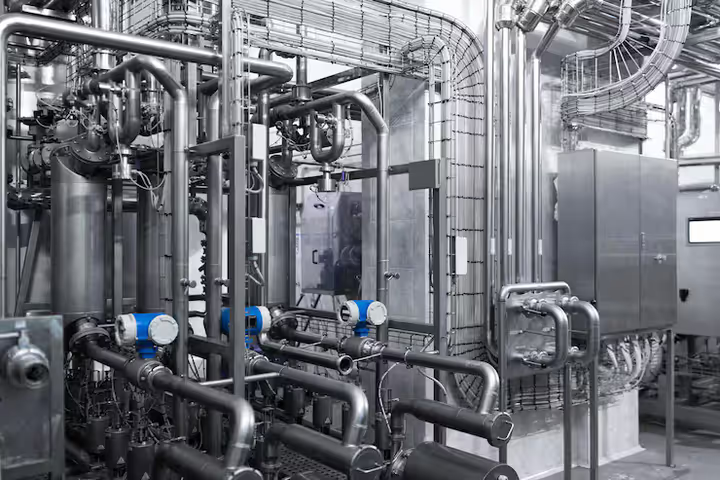
Industrial Compressors: Types, Applications, Benefits, Costs and Selection Guide
Industrial compressors are essential machines used to increase the pressure of gases, most commonly air, for manufacturing, processing, construction, energy, and other industrial operations. They convert mechanical energy into pressurized air or gas that can be stored, transported, or used to operate equipment.
Businesses evaluating an industrial compressor typically consider factors such as compressor efficiency, operating costs, energy consumption, maintenance requirements, air quality, pressure capacity, and equipment lifespan.
This guide explains how industrial compressors work, the major types available, their applications, operating costs, and the factors businesses should consider before selecting a system.
What Is an Industrial Compressor?
An industrial compressor is a mechanical device designed to compress air or another gas into a smaller volume, increasing its pressure. The compressed gas can then be delivered through piping to machinery, tools, production equipment, and process systems.
Industrial compressors are generally designed for continuous or demanding operating environments. Compared with small portable compressors, industrial systems can provide higher air volume, pressure capacity, and operating reliability.
Compressed-air systems are commonly found in factories, workshops, processing facilities, automotive plants, chemical facilities, food-processing operations, and construction sites.
How Do Industrial Compressors Work?
The basic operating principle is relatively simple.
First, the compressor draws air or gas into the compression chamber. The machine then reduces the available volume of the gas, which increases its pressure. The compressed gas is subsequently discharged into a receiver tank or directly into the distribution system.
Different compressor technologies accomplish this process in different ways.
Positive Displacement Compressors
Positive displacement compressors capture a specific volume of air or gas and mechanically reduce its volume.
Common examples include:
- Reciprocating compressors
- Rotary screw compressors
- Rotary vane compressors
- Scroll compressors
These machines are widely used where a controlled supply of compressed air or gas is required.
Dynamic Compressors
Dynamic compressors increase gas pressure by continuously accelerating the gas and converting velocity into pressure.
Centrifugal compressors are the most common example. They are particularly suitable for applications requiring large volumes of compressed air or gas.
Major Types of Industrial Compressors
Choosing the right compressor depends on the required pressure, flow rate, operating schedule, gas type, environmental conditions, and total cost of ownership.
1. Rotary Screw Compressors
Rotary screw compressors use two rotating screw elements to compress air continuously.
They are popular in manufacturing environments because they can provide a steady supply of compressed air and are suitable for extended operating periods.
Typical applications include:
- Manufacturing machinery
- Automotive production
- Packaging equipment
- Pneumatic tools
- General factory air
- Industrial automation
Oil-injected and oil-free screw compressors are available for different application requirements.
2. Reciprocating Compressors
Reciprocating compressors use pistons moving inside cylinders to compress air or gas.
They can produce relatively high pressures and are commonly used for applications requiring intermittent operation or higher pressure levels.
Typical applications include:
- Workshops
- Industrial maintenance
- Gas compression
- Small production facilities
- High-pressure applications
3. Centrifugal Compressors
Centrifugal compressors use rotating impellers to accelerate gas and convert kinetic energy into pressure.
They are generally designed for high-flow applications and are often used in large industrial facilities.
Potential applications include:
- Large manufacturing plants
- Chemical processing
- Petroleum and gas operations
- Power generation
- Large-scale process industries
4. Oil-Free Compressors
Oil-free compressors are designed to prevent lubricating oil from entering the compressed-air stream.
They can be important in industries where compressed-air purity is a critical requirement.
Applications may include:
- Pharmaceutical manufacturing
- Food and beverage production
- Electronics manufacturing
- Medical applications
- Certain chemical processes
The appropriate air-quality classification should always be evaluated according to the requirements of the specific process.
5. Rotary Vane Compressors
Rotary vane compressors use a rotating rotor containing sliding vanes. As the rotor turns, the vanes create chambers that progressively compress the air.
They can be used for industrial automation, vacuum systems, pneumatic equipment, and other specialized applications.
Industrial Compressor Applications
Compressed air is sometimes described as a utility because it can support many different production processes.
Manufacturing
Factories use compressed air for pneumatic tools, automation systems, material handling equipment, cleaning processes, and production machinery.
Automotive Industry
Automotive manufacturing uses compressed air in assembly tools, painting systems, automation, tire equipment, and various production processes.
Food and Beverage Processing
Compressed air may be used for packaging, instrumentation, automation, and process equipment. Where air comes into contact with products or packaging, appropriate air-quality requirements are especially important.
Pharmaceutical Manufacturing
Pharmaceutical production can require carefully controlled compressed-air systems for manufacturing, packaging, instrumentation, and other processes.
Construction
Portable and stationary compressors can supply compressed air for pneumatic drills, breakers, nailers, sandblasting equipment, and other construction tools.
Energy and Utilities
Large compressor systems can be used in power generation, gas processing, instrumentation, and other utility applications.
Benefits of Industrial Compressors
A properly designed compressed-air system can provide several operational benefits.
Supports Automation
Pneumatic actuators and control systems can use compressed air to operate production equipment.
Flexible Power Source
Compressed air can be distributed through piping across a facility, allowing multiple machines to use the same central system.
Reliable Industrial Operation
Industrial compressor systems can be designed for demanding operating schedules when properly sized, installed, and maintained.
Supports Multiple Applications
A single compressed-air system can potentially supply different tools and processes throughout a facility.
Industrial Compressor Energy Efficiency
Energy consumption is one of the most important considerations when evaluating an industrial compressor.
Compressed-air systems can consume substantial electricity, particularly when operating continuously. Small improvements in system efficiency can therefore have an important effect on operating expenses.
Factors That Affect Energy Consumption
Important factors include:
- Compressor size
- Operating pressure
- Air demand
- Duty cycle
- Compressor technology
- Air leaks
- Inlet conditions
- Pressure losses
- Maintenance condition
- Control strategy
Variable-Speed Drive Compressors
Variable-speed drive compressors can adjust motor speed according to changes in compressed-air demand.
They may be useful in facilities where air demand varies significantly during production.
However, variable-speed technology is not automatically the best choice for every facility. A proper load profile and engineering assessment should be used before selecting equipment.
Industrial Compressor Operating Costs
The purchase price is only one part of the overall cost of owning an industrial compressor.
A more useful approach is to evaluate the total cost of ownership.
Initial Equipment Cost
The initial investment can include the compressor, motor, controller, receiver tank, dryer, filters, piping, installation, and other supporting equipment.
Electricity Costs
Electricity can represent a significant portion of the lifetime operating cost of a compressor.
Actual energy costs depend on the compressor's power consumption, operating hours, electricity rate, and production requirements.
Maintenance Costs
Regular maintenance may include:
- Filter replacement
- Lubricant replacement
- Separator replacement
- Inspection
- Cooling-system maintenance
- Drain maintenance
- Component servicing
Following the manufacturer's maintenance schedule can help maintain system performance.
Downtime Costs
Unexpected compressor failure can interrupt production. For facilities where compressed air is critical, reliability and maintenance planning should therefore be included in equipment-selection decisions.
How to Choose an Industrial Compressor
Selecting a compressor based only on horsepower or purchase price can result in an inefficient system.
Several technical factors should be evaluated.
Determine Required Air Flow
Air demand is commonly expressed as CFM or another volumetric flow measurement.
The compressor should be capable of supplying the required flow under actual operating conditions.
Determine Required Pressure
Pressure requirements are commonly expressed in PSI or bar.
The required pressure should be based on the equipment with the highest practical operating requirement while accounting for system pressure losses.
Evaluate Air Quality
Determine whether the application requires:
- General-purpose compressed air
- Clean compressed air
- Oil-free compressed air
- Dry compressed air
- Specialized gas quality
Air-treatment equipment such as dryers and filters may be necessary depending on the application.
Consider Operating Hours
A compressor operating a few hours per day has different economic requirements from a system operating continuously.
For high-duty-cycle applications, energy efficiency and lifecycle cost can become more important than the initial purchase price.
Analyze Future Demand
Industrial facilities should consider potential production expansion when sizing a compressed-air system.
However, significantly oversizing a compressor can also increase energy costs and reduce efficiency during periods of low demand.
Compressor Maintenance Best Practices
Routine maintenance can help reduce unexpected failures and maintain operating efficiency.
Check for Air Leaks
Compressed-air leaks can waste energy and force compressors to operate longer than necessary.
Regular leak detection programs can help identify damaged hoses, fittings, valves, and pipe connections.
Maintain Filters
Blocked or dirty filters can increase pressure losses and reduce system performance.
Filters should be inspected and serviced according to the manufacturer's recommendations.
Monitor Operating Conditions
Important parameters can include:
- Discharge pressure
- Temperature
- Running hours
- Energy consumption
- Oil condition where applicable
- Pressure differential
- Compressor loading
Monitoring these values can help identify changes in operating performance.
Follow Manufacturer Guidelines
Maintenance intervals vary between compressor technologies and models. The manufacturer's documentation should be the primary reference for servicing requirements.
Common Industrial Compressor Problems
Even well-maintained systems can experience operational problems.
Excessive Noise
Noise can result from mechanical wear, vibration, poor installation, or operating conditions.
High Operating Temperature
Insufficient ventilation, dirty coolers, high ambient temperatures, or maintenance issues can contribute to excessive temperature.
Low Air Pressure
Low pressure may be caused by:
- Air leaks
- Undersized piping
- Blocked filters
- Incorrect pressure settings
- Insufficient compressor capacity
- Excessive demand
High Energy Consumption
Unexpected increases in electricity consumption may indicate leaks, inappropriate pressure settings, poor maintenance, inefficient controls, or changing production requirements.
Industrial Compressor Safety Considerations
Compressed air contains stored energy and can create serious hazards when equipment is improperly operated.
Facilities should use appropriate safety procedures for pressure vessels, piping, electrical systems, rotating machinery, and maintenance activities.
Operators should follow applicable workplace regulations and manufacturer instructions.
Compressed air should never be intentionally directed toward a person's body because it can cause serious injury.
Compressed Air System Components
An industrial compressor is only one part of a complete compressed-air system.
Air Receiver Tank
A receiver provides temporary storage of compressed air and can help stabilize system pressure.
Air Dryer
Dryers remove moisture from compressed air when required by the application.
Common technologies include:
- Refrigerated dryers
- Desiccant dryers
- Membrane dryers
Air Filters
Filters can remove particles, oil aerosols, and other contaminants depending on the filter design.
Piping Network
The distribution system transports compressed air from the compressor room to points of use.
Poorly designed piping can increase pressure losses and operating costs.
Industrial Compressor vs. Standard Air Compressor
The primary difference is generally the intended operating environment and duty requirements.
Industrial compressors are designed for applications that may require higher capacity, longer operating periods, specialized controls, and more comprehensive air treatment.
Smaller compressors may be sufficient for occasional workshop tasks or low-demand applications.
The correct choice depends on actual air demand rather than simply selecting the largest available machine.
Future Trends in Industrial Compressor Technology
The industrial compressor sector continues to evolve as manufacturers and facilities focus on energy efficiency, monitoring, automation, and lifecycle cost reduction.
Smart Compressor Monitoring
Connected monitoring systems can collect operating data such as pressure, temperature, runtime, and maintenance indicators.
This information can support preventive maintenance and system optimization.
Energy-Efficient Systems
Modern compressor designs increasingly focus on reducing unnecessary energy consumption through improved motors, controls, variable-speed operation, and system optimization.
Heat Recovery
Compressors generate heat during operation. In suitable facilities, some of this heat can potentially be recovered for water heating or other processes.
The economic value of heat recovery depends on the facility's operating conditions and available heat demand.
Frequently Asked Questions
What is an industrial compressor used for?
Industrial compressors supply pressurized air or gas for manufacturing equipment, pneumatic tools, automation systems, processing operations, construction equipment, and other industrial applications.
Which compressor is best for industrial use?
There is no single compressor that is best for every application. Rotary screw compressors are widely used for continuous factory air, while reciprocating and centrifugal compressors can be appropriate for different pressure and flow requirements.
Are industrial compressors expensive to operate?
Operating costs depend heavily on electricity consumption, operating hours, air demand, maintenance, and system efficiency. Electricity can represent a substantial part of the compressor's lifetime cost.
How can compressor energy costs be reduced?
Facilities can investigate air leaks, optimize pressure settings, maintain filters and cooling systems, reduce unnecessary demand, improve controls, and select efficient compressor technology based on actual demand.
How long does an industrial compressor last?
Service life varies significantly according to compressor type, operating conditions, maintenance quality, workload, and manufacturer design. Regular maintenance and appropriate operating conditions can support longer equipment life.
What is the difference between oil-free and oil-injected compressors?
Oil-injected compressors use oil for lubrication and other functions within the compression system. Oil-free compressors are designed to prevent oil from entering the compression chamber or compressed-air stream, depending on the technology and classification.
Conclusion
Industrial compressors are important components of modern manufacturing and processing systems. The right compressor can provide the required pressure and airflow while supporting reliable production and efficient operation.
Before investing in equipment, businesses should evaluate air demand, pressure requirements, energy consumption, air quality, maintenance costs, installation requirements, operating hours, and total cost of ownership.
Rather than choosing equipment solely according to purchase price or motor horsepower, a complete compressed-air assessment can help identify the technology and system configuration that best fits the facility's actual requirements.
Industrial compressor technology continues to develop through improvements in energy efficiency, digital monitoring, automation, and system optimization. Understanding these factors can help businesses make more informed equipment and maintenance decisions.

You May Also Like