Industrial Automation: A Complete Guide to Smart Manufacturing, Control Systems, and Industry 4.0
Industrial automation refers to the use of control systems, machinery, software, sensors, and robotics to perform industrial operations with reduced direct human involvement. It helps manufacturing facilities monitor equipment, control production processes, and maintain consistent operating conditions. Industrial automation is used across several sectors, including automotive manufacturing, pharmaceuticals, food processing, chemicals, electronics, energy production, and water treatment.
Traditional manufacturing often depends on manual operations and mechanical controls. Modern industrial automation combines programmable controllers, digital monitoring systems, industrial networks, and data analysis to coordinate different stages of production. These technologies allow operators to observe machine performance, identify process variations, and make informed operational decisions. The level of automation can range from a single machine with an automated control panel to an interconnected production facility.
How Does Industrial Automation Work?
Sensors and Data Collection
Sensors are essential components of industrial automation because they collect information about physical conditions. Depending on the application, sensors can measure temperature, pressure, humidity, liquid levels, vibration, speed, and the position of moving objects. The collected information helps control systems determine whether a process is operating within its specified limits.
For example, a temperature sensor in a chemical processing facility can continuously measure the temperature of a vessel. When the measured value differs from the required operating range, the control system can activate a cooling mechanism or alert an operator. Accurate measurement supports process consistency, equipment monitoring, and operational safety.
Controllers and Automated Decisions
Industrial controllers process information received from sensors and execute programmed instructions. A programmable logic controller, commonly known as a PLC, is widely used to coordinate industrial machinery and production sequences. Controllers can switch motors on or off, regulate conveyor movement, manage valves, and coordinate equipment according to predefined conditions.
More advanced control arrangements can manage several interconnected processes simultaneously. The appropriate configuration depends on production requirements, process complexity, equipment compatibility, and the level of supervision required. Human operators remain important for handling unexpected conditions, reviewing system performance, and making decisions that require experience or specialized knowledge.
Actuators and Machine Operations
Actuators convert control signals into physical movement or other actions. Examples include electric motors, pneumatic cylinders, hydraulic actuators, and motorized valves. These components carry out instructions generated by the control system.
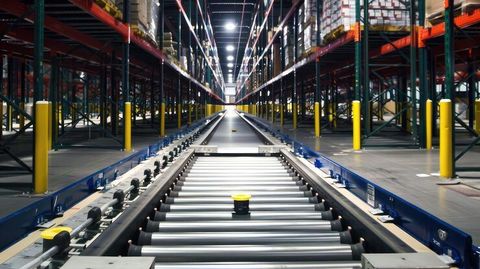
In an automated packaging line, for example, sensors detect the position of a container while a controller coordinates filling, sealing, labeling, and conveyor movement. Actuators perform the necessary mechanical operations. When the components are correctly integrated, the production line can follow a repeatable sequence while operators supervise its overall performance.
Types of Industrial Automation Systems
Fixed Automation
Fixed automation is designed for repetitive operations that follow a consistent production sequence. It is commonly associated with high-volume manufacturing, where equipment performs the same or similar tasks over extended periods. Examples include dedicated assembly lines, automated bottling systems, and specialized material-handling equipment.
The main advantage of fixed automation is its ability to perform repeated tasks with consistent timing. However, changing the production process can require substantial modifications to equipment or control logic. This makes the approach more suitable for stable production requirements than for operations that frequently change product designs.
Programmable Automation
Programmable automation allows equipment to perform different operations by changing programs, instructions, or machine settings. It is useful when a facility manufactures multiple product types in batches. CNC machining systems and programmable industrial controllers are common examples.
Manufacturers can modify production sequences to accommodate different components or processing requirements. Although reprogramming provides flexibility, changing between production batches may require setup time, testing, and adjustments. Effective planning helps reduce interruptions and maintain product quality.
Flexible Automation
Flexible automation is designed to accommodate product changes with limited manual intervention. It may combine programmable machinery, robotic equipment, automatic tool changes, and coordinated material-handling systems. This arrangement is useful when manufacturers need to produce several product variations within the same facility.
For example, an automotive components manufacturer may use programmable robots and CNC machines to handle different component designs. Flexible automation can support changing production requirements, although its effectiveness depends on system integration, process planning, and the complexity of the products being manufactured.
Integrated Automation
Integrated automation connects multiple machines, control systems, production databases, and monitoring applications into a coordinated operating environment. Instead of managing each machine separately, manufacturers can exchange production information across different stages of a process.
Integrated systems may connect machine controllers with manufacturing execution systems and enterprise resource planning software. This enables organizations to compare production schedules with actual output, monitor equipment conditions, and improve coordination between manufacturing and business operations.
Key Components of Industrial Automation
Programmable Logic Controllers (PLCs)
A programmable logic controller is an industrial computer designed to monitor inputs, execute programmed logic, and control outputs. PLCs are frequently used in conveyor systems, packaging equipment, assembly operations, and machine control applications.
Industrial PLC systems are designed for reliable operation in demanding environments. Their programming capabilities allow engineers to define operating sequences, respond to sensor signals, and implement process interlocks. The specific controller selected depends on the number of inputs and outputs, communication requirements, operating conditions, and system complexity.
Supervisory Control and Data Acquisition (SCADA)
SCADA systems allow operators to supervise industrial processes through graphical interfaces and collected operating data. They can display measurements, equipment status, alarms, and historical trends from multiple machines or geographically distributed facilities.
SCADA technology is used in electricity distribution, water treatment, pipeline monitoring, and manufacturing operations. Operators can use the information to identify unusual readings and understand how a process changes over time. Proper access controls, system maintenance, and secure network architecture are important because SCADA systems can influence physical industrial operations.
Distributed Control Systems (DCS)
A distributed control system manages complex processes through multiple interconnected controllers. DCS technology is commonly used in continuous-process industries, including chemical manufacturing, oil and gas processing, power generation, and large industrial plants.
A DCS coordinates process variables such as temperature, pressure, flow, and liquid level across different parts of a facility. Distributed control can support process stability and centralized supervision while allowing control functions to operate across several units. System design must account for reliability, process safety, and operational requirements.
Industrial Robotics
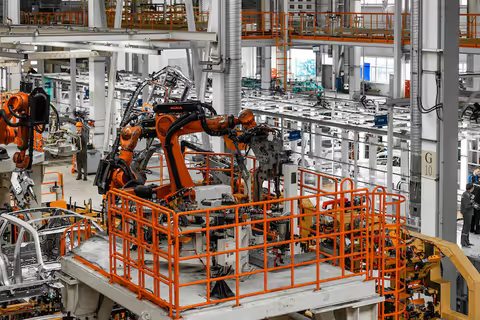
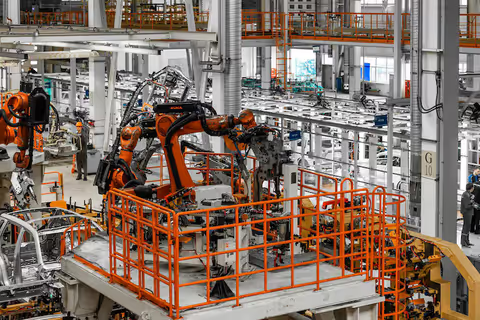
Industrial robots perform tasks that require repeatable movement, accurate positioning, or the handling of heavy and potentially hazardous materials. Common applications include welding, painting, material handling, machine tending, assembly, and quality inspection.
Robotic automation can improve consistency in repetitive operations and help limit workers' exposure to certain industrial hazards. However, robot selection and installation require attention to payload capacity, working range, cycle time, tooling, and workplace safety. Collaborative robots also require appropriate risk assessment when they operate near people.
Human-Machine Interfaces (HMIs)
A human-machine interface provides a way for operators to interact with automated equipment. An HMI may display production values, machine status, operating modes, warnings, and control options on an industrial screen or computer.
A well-designed interface presents important information clearly and helps operators recognize abnormal conditions. Poorly organized displays can increase the chance of mistakes, particularly when several processes must be monitored simultaneously. HMI design should therefore consider usability, alarm prioritization, access permissions, and the needs of the people operating the equipment.
Benefits of Industrial Automation
Improved Productivity and Process Consistency
Automated machinery can perform repetitive operations at predictable speeds and follow consistent operating sequences. This can help manufacturing facilities maintain production schedules and reduce variations associated with repetitive manual tasks. Automation can also coordinate equipment that would otherwise require separate manual adjustments.
The actual productivity improvement depends on the process, equipment reliability, production planning, and operator skills. Automation does not automatically eliminate every bottleneck. Material shortages, poor equipment maintenance, and inefficient workflows can still limit output.
Quality Control and Precision
Industrial automation supports quality control by monitoring process parameters and applying repeatable instructions. Sensors, machine vision systems, and automated inspection equipment can identify certain defects or variations during production.
For example, a vision inspection system may examine product dimensions, detect surface defects, or verify whether a component is positioned correctly. The results can help operators investigate quality problems and identify recurring production issues. Inspection accuracy depends on sensor capability, lighting, calibration, software configuration, and the quality of the inspection criteria.
Predictive Maintenance and Equipment Monitoring
Industrial equipment monitoring provides information about operating conditions and equipment health. Vibration sensors, temperature measurements, electrical readings, and other diagnostic data can help maintenance teams identify unusual behavior.
Predictive maintenance uses condition data and analytical techniques to estimate when equipment may require attention. It can support better maintenance planning, but it does not guarantee that failures will be predicted in every situation. Reliable results require suitable data, appropriate analysis, and qualified personnel who understand the machinery.
Workplace Safety
Automation can reduce the need for workers to perform certain repetitive, heavy, or hazardous tasks directly. Robots may handle hot materials, while automated systems can manage operations in environments where exposure to chemicals or extreme temperatures requires special precautions.
Nevertheless, automated equipment introduces its own risks, including unexpected movement, electrical hazards, stored energy, and control-system failures. Safety guards, emergency stops, interlocks, documented procedures, and suitable training remain essential parts of a safe industrial environment.
Energy and Resource Management
Industrial automation can help facilities monitor electricity consumption, compressed-air usage, water consumption, and other operating resources. Process controls can adjust equipment operation according to production requirements and measured conditions.
For instance, an automated pumping system may regulate motor operation according to pressure or flow demand. This can help avoid unnecessary operation when correctly designed and maintained. Actual energy savings depend on equipment efficiency, operating patterns, process design, and the accuracy of control settings.
Applications of Industrial Automation Across Industries
Automotive Manufacturing
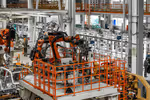
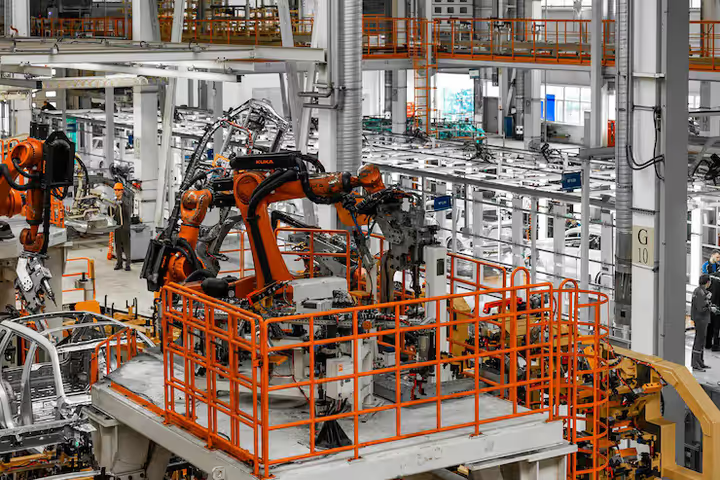
Automotive production uses industrial robots, programmable controllers, automated conveyors, and machine vision systems for body assembly, welding, painting, and component handling. Coordinated automation helps manufacturers manage complex production sequences and maintain consistent manufacturing standards.
Automated inspection systems can also examine components for dimensional or visual defects. Despite the extensive use of robotics, human expertise remains necessary for system programming, maintenance, process engineering, and quality management.
Pharmaceutical and Food Processing
Pharmaceutical manufacturing uses automation to monitor production conditions, control equipment sequences, record process information, and support consistent manufacturing procedures. Depending on the application, these systems may help maintain environmental conditions and provide traceability for critical production steps.
Food processing facilities use automation for mixing, cooking, filling, packaging, labeling, and inspection. Hygiene, cleaning procedures, product safety, and regulatory requirements must be considered when designing automated systems for either industry.
Chemical and Energy Industries
Chemical processing plants use distributed control systems, process sensors, and automated valves to manage complex operations. These systems help monitor variables that influence product characteristics, process stability, and equipment performance.
Energy facilities use automation to supervise generation equipment, monitor electrical systems, and coordinate operating sequences. Because failures may have significant physical consequences, these applications require suitable protection systems, risk assessment, and carefully controlled maintenance procedures.
Water Treatment and Wastewater Management
Water treatment facilities use sensors, pumps, valves, PLCs, and SCADA systems to monitor water levels, flow rates, pressure, and treatment conditions. Automated controls can coordinate filtration, pumping, and other treatment stages according to established operating requirements.
Remote monitoring may help operators identify abnormal conditions across multiple sites. However, connected water infrastructure also requires cybersecurity safeguards and reliable procedures for responding to equipment or communication failures.
Industrial Automation and Industry 4.0
Industry 4.0 describes the integration of digital technologies, connected machinery, automation, and data analysis into industrial operations. It extends traditional machine control by connecting production equipment with systems that provide broader operational visibility.
Industrial Internet of Things technology enables connected sensors and machines to exchange information. Cloud computing can support data storage and analysis, while edge computing processes information closer to the equipment. Artificial intelligence and machine learning can be applied to tasks such as anomaly detection, visual inspection, and equipment condition analysis.
These technologies can help organizations understand production performance and coordinate decisions across different parts of a facility. Their usefulness depends on data quality, network reliability, compatibility, cybersecurity, and the ability of employees to interpret the information correctly.
Digital transformation should therefore be approached as an operational improvement process rather than simply an equipment upgrade. Manufacturers need clear objectives, suitable system architecture, workforce preparation, and measurable performance indicators.
Industrial Automation Cybersecurity
Common Cybersecurity Risks
Industrial automation systems are increasingly connected to business networks, remote monitoring platforms, and external data services. This connectivity can improve visibility, but it may also create additional entry points for unauthorized access or malicious activity.
Potential risks include weak passwords, outdated software, insecure remote connections, unauthorized configuration changes, and insufficient network separation. A compromised control system can affect production, equipment integrity, worker safety, and the availability of essential services.
Protecting Industrial Control Systems
Cybersecurity measures should reflect the physical processes controlled by the system and the consequences of a potential failure. Common practices include restricting access according to job responsibilities, maintaining accurate equipment inventories, monitoring network activity, reviewing remote access, and testing recovery procedures.
Organizations should also plan software updates carefully because changes to operational technology may require compatibility checks and downtime planning. The ISA/IEC 62443 series provides a recognized framework for addressing cybersecurity across the lifecycle of industrial automation and control systems.
Effective protection requires cooperation among equipment operators, engineering teams, information technology specialists, system integrators, and management. Cybersecurity should be considered during system design and maintained throughout operation.
Challenges of Industrial Automation
System Integration and Compatibility
Industrial facilities often contain equipment from different manufacturers and generations. Integrating these systems can require compatible communication protocols, carefully designed interfaces, and reliable data exchange between controllers and software applications.
Legacy equipment may not support modern connectivity or centralized monitoring. Integration planning should identify technical limitations and establish how existing machinery will communicate with newer systems.
Initial Investment and Long-Term Maintenance
Industrial automation requires planning for equipment, engineering, installation, testing, software, employee training, and ongoing maintenance. The total investment depends on the size of the facility, the complexity of the process, and the level of automation required.
Organizations evaluating an automation project should consider the full lifecycle rather than the initial purchase alone. Downtime, spare parts, energy consumption, software updates, and technical support can influence long-term operating performance.
Workforce Skills and Training
Automated facilities require people who understand control systems, electrical equipment, industrial networks, robotics, and process operations. Employees may need additional training as production systems become more connected and data-driven.
Automation can change the tasks performed by workers, reducing some manual activities while increasing the importance of programming, maintenance, analysis, and supervision. Workforce planning helps organizations prepare employees for these changing responsibilities.
Reliability and Unexpected Downtime
Automated processes depend on the reliable operation of controllers, sensors, communication networks, mechanical components, and software. A failure in a critical component can interrupt an entire production sequence.
Maintenance planning, backup arrangements, spare-part availability, fault diagnostics, and tested recovery procedures help improve resilience. Facilities should also establish clear procedures for operating safely when automated equipment becomes unavailable.
How to Evaluate an Industrial Automation System
Define Operational Requirements
The first step is to identify the process that needs improvement and the problem the automation system is expected to address. Relevant considerations include production volume, cycle time, product variation, quality requirements, safety risks, and the amount of operator involvement.
Clearly defined objectives make it easier to compare different technical approaches and evaluate the results after implementation.
Assess Technical Compatibility
The proposed system should be evaluated against existing machinery, communication protocols, control architecture, and facility infrastructure. Engineers should consider how sensors, PLCs, SCADA platforms, robotics, and production software will exchange information.
Compatibility assessments also help identify integration limitations, maintenance requirements, and potential cybersecurity concerns before equipment is installed.
Measure Performance and Lifecycle Requirements
Useful performance indicators may include equipment availability, production throughput, defect rates, unplanned downtime, energy consumption, and maintenance frequency. These measures help determine whether an automation project is delivering the expected operational benefits.
Evaluation should also consider employee training, system documentation, replacement components, software support, and future production changes. A technically capable system is most useful when it can be operated, maintained, and adapted safely over time.
Future Trends in Industrial Automation
Industrial automation continues to evolve as manufacturers adopt connected equipment, advanced robotics, digital twins, and data-driven process management. Digital twins can represent physical assets or production processes in a digital environment, helping engineers study performance and evaluate possible changes. Their accuracy depends on the quality and timeliness of the underlying data.
Artificial intelligence is also being applied to industrial inspection, production analysis, and equipment monitoring. These systems can identify patterns that may be difficult to detect through manual observation alone, although their outputs still require appropriate validation and oversight.
Another important direction is the development of more flexible production environments. Collaborative robots, autonomous material-handling systems, and modular automation can help facilities adapt to changing production needs. At the same time, organizations must maintain appropriate safety controls, cybersecurity practices, and workforce training.
Future progress will depend not only on technological development but also on reliable engineering, responsible data management, and effective collaboration between people and automated systems.
Frequently Asked Questions About Industrial Automation
What are the main types of industrial automation?
The main types are fixed automation, programmable automation, flexible automation, and integrated automation. They differ in how easily equipment can accommodate production changes and how extensively machines and software are connected.
What are the most common industrial automation components?
Common components include programmable logic controllers, sensors, actuators, industrial robots, human-machine interfaces, SCADA systems, distributed control systems, industrial networks, and machine vision equipment.
How does industrial automation improve manufacturing efficiency?
Industrial automation can coordinate repetitive tasks, maintain consistent operating sequences, monitor production conditions, and identify certain equipment or quality problems. Its effectiveness depends on system design, maintenance, and production planning.
What is the difference between PLC and SCADA?
A PLC executes control logic and operates connected equipment. SCADA provides supervisory monitoring, data visualization, alarm management, and control functions across industrial processes. The two technologies frequently work together.
Is industrial automation part of Industry 4.0?
Yes. Industrial automation is a foundational element of Industry 4.0. Connected sensors, industrial IoT, cloud and edge computing, robotics, and advanced analytics can extend conventional automation into more integrated digital manufacturing environments.
Why is cybersecurity important in industrial automation?
Industrial control systems can affect physical equipment, production processes, and worker safety. Cybersecurity helps protect these systems against unauthorized access, disruptive changes, and other threats that could interrupt operations or create unsafe conditions.
Conclusion
Industrial automation plays an important role in modern manufacturing and industrial infrastructure. By combining sensors, controllers, robotics, monitoring software, and industrial communication networks, organizations can coordinate production processes and improve visibility into equipment performance.
The benefits depend on selecting appropriate technologies, integrating them carefully, maintaining equipment, and preparing employees to work with automated systems. Cybersecurity, process safety, and long-term maintenance are equally important considerations.
As Industry 4.0 technologies continue to develop, industrial automation will increasingly connect physical operations with digital analysis and coordinated decision-making. A balanced approach that combines technical capabilities with human expertise can help industrial organizations pursue reliable, efficient, and adaptable operations.