How To Fiber Laser Cutting Technology Works in Modern Manufacturing
Fiber laser cutting is an advanced manufacturing technology used to cut metal sheets, plates, tubes, and other suitable materials with a concentrated laser beam. It is widely used in industries that require accurate components, repeatable cutting processes, and flexible production capabilities.
As industrial manufacturing becomes increasingly automated, fiber laser cutting machines are becoming important equipment for metal fabrication, automotive production, engineering, electronics, and construction-related industries.
Understanding how fiber laser technology works, the different machine types, applications, and selection factors can help businesses identify suitable equipment for their production requirements.
What Is Fiber Laser Cutting?
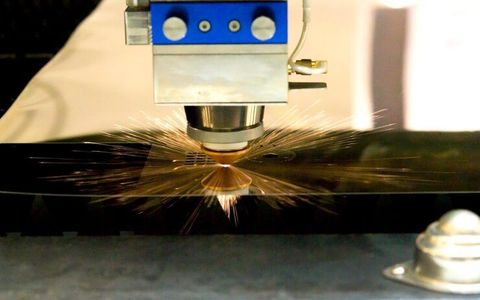
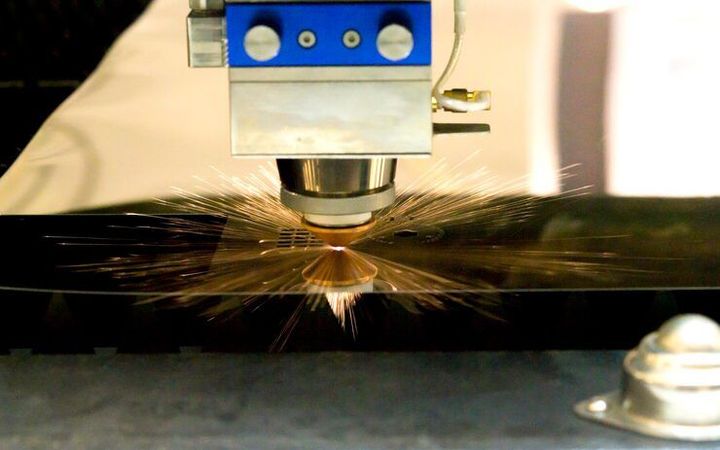
Fiber laser cutting is a thermal cutting process that uses a high-energy laser beam generated through an optical fiber system. The beam is focused onto a material surface, creating enough heat to melt or vaporize the material along a programmed cutting path.
An assist gas, such as nitrogen, oxygen, or compressed air, helps remove molten material from the cutting area.
A CNC fiber laser cutting machine follows digital instructions to produce specific shapes, holes, slots, and profiles. This allows manufacturers to process different component designs without changing traditional mechanical cutting tools.
Fiber laser cutting is particularly important in metalworking because it can process materials such as:
Mild steel
Stainless steel
Aluminium
Brass
Copper
Certain metal alloys
The actual cutting capability depends on laser power, material composition, thickness, cutting gas, machine configuration, and required edge quality.
How Does a Fiber Laser Cutting Machine Work?
A fiber laser cutting machine combines a laser source, optical delivery system, cutting head, CNC controller, motion system, and worktable.
The general cutting process involves several stages.
1. Laser Beam Generation
The fiber laser source generates a concentrated beam of light. The optical fiber system delivers the laser energy toward the cutting head.
2. Beam Focusing
The cutting head uses optical components to focus the laser beam onto a small area of the material. This produces a high energy density that heats the workpiece.
3. Material Cutting
The focused beam melts or vaporizes material along the programmed path. The cutting head moves according to the design instructions.
4. Assist Gas Application
Assist gas passes through the cutting nozzle to help remove molten material from the cutting area. Gas selection depends on the material and the desired cutting result.
5. CNC Motion Control
The CNC controller coordinates the movement of the cutting head and machine axes. It follows the programmed design to produce the required component geometry.
6. Finished Component Inspection
After cutting, the component can be checked for dimensions, edge quality, burr formation, and other production requirements.
Types of Fiber Laser Cutting Machines
Different fiber laser cutting systems are designed for specific materials, workpiece sizes, and manufacturing applications.
1. Sheet Metal Fiber Laser Cutting Machine
A sheet metal laser cutting machine is designed to process flat metal sheets.
It is commonly used to cut mild steel, stainless steel, aluminium, and other suitable materials into components with different shapes and dimensions.
Applications include:
Electrical control panels
Industrial enclosures
Metal furniture
Automotive components
Kitchen equipment
Sheet metal fabrication
2. CNC Fiber Laser Cutting Machine
A CNC fiber laser cutting machine uses computer numerical control to manage cutting movements and production instructions.
Operators can import digital drawings and prepare cutting programs using compatible software.
CNC systems are useful for producing components with complex shapes, repeated patterns, and specific dimensional requirements.
3. Tube and Pipe Laser Cutting Machine
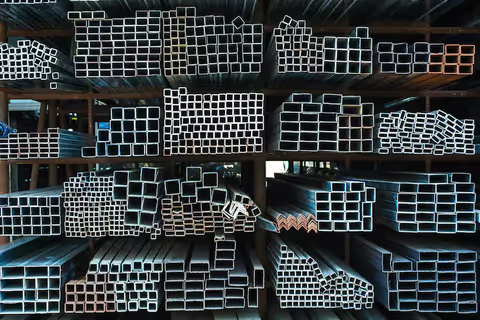
Tube laser cutting machines are designed to process round, square, rectangular, and other suitable metal profiles.
They can create holes, slots, angled cuts, and connection geometries.
Common applications include:
Furniture frames
Automotive structures
Construction components
Agricultural machinery
Metal railings
Industrial equipment frames
4. High-Power Fiber Laser Cutting Machine
High-power fiber laser cutting systems are used in industrial applications that require higher processing capacity or the ability to handle particular material thicknesses.
Machine power alone does not determine cutting performance. Cutting-head capability, optics, assist gas, motion accuracy, material properties, and process settings also influence the result.
5. Automatic Fiber Laser Cutting System
Automatic fiber laser cutting systems combine laser equipment with additional material-handling and production technologies.
Depending on the configuration, they may include:
Automatic loading and unloading
Sheet storage systems
Conveyor arrangements
Pallet-changing mechanisms
Production monitoring software
Robotic material handling
These systems can help manufacturers coordinate cutting operations with other production processes.
Major Components of an Industrial Fiber Laser Cutting Machine
Understanding the machine's main components helps businesses evaluate equipment specifications.
Fiber Laser Source
The laser source generates the energy used for cutting. Its power rating, beam characteristics, reliability, and compatibility with the cutting head influence machine performance.
Laser Cutting Head
The cutting head focuses the laser beam onto the material. It may include focusing optics, protective windows, nozzle arrangements, and height-control mechanisms.
CNC Control System
The CNC controller manages cutting paths, machine movement, and process instructions.
Motion System
The motion system controls the movement of the machine axes. Depending on the design, it may use rack-and-pinion drives, linear motors, or other motion technologies.
Cooling System
Industrial fiber laser cutting equipment uses cooling arrangements to maintain suitable operating temperatures for components that require thermal management.
Assist Gas System
Nitrogen, oxygen, and compressed air may be used during cutting. The appropriate gas depends on the material, thickness, edge-quality requirements, and production process.
Dust Extraction System
Cutting operations can generate fumes and particles. Suitable extraction and filtration systems help manage airborne contaminants in the working environment.
Applications of Fiber Laser Cutting Across Industries
Fiber laser cutting is used in many manufacturing sectors because it can produce different component geometries from suitable metal materials.
Automotive Industry
Automotive manufacturers and component suppliers use laser cutting for brackets, panels, frames, supports, and other metal components.
CNC-based production helps maintain repeatable cutting paths for different component designs.
Aerospace Industry
Aerospace manufacturing uses precision cutting processes for selected metal components. Material traceability, process qualification, dimensional requirements, and quality inspection are particularly important in this sector.
Construction and Infrastructure
Metal fabrication companies use fiber laser systems to process structural components, brackets, supports, enclosures, and metal profiles.
Tube laser cutting can also help prepare structural sections for joining and assembly.
Electrical and Electronics Manufacturing
Fiber laser cutting can process metal enclosures, electrical panels, equipment housings, and selected precision components.
Furniture and Interior Manufacturing
Manufacturers use laser cutting to produce metal frames, decorative panels, supports, and furniture components.
General Metal Fabrication
Job shops and fabrication businesses use industrial laser cutting machines for custom components, prototypes, small production batches, and repeated manufacturing orders.
Benefits of Fiber Laser Cutting Technology
Fiber laser cutting offers several advantages in suitable manufacturing applications.
High Cutting Precision
A focused laser beam can produce narrow cuts and detailed shapes. The achievable precision depends on machine calibration, material properties, cutting parameters, and operating conditions.
Flexible Production
Digital cutting programs allow manufacturers to change component designs without creating a new mechanical cutting tool for every design.
Processing Speed
Fiber laser systems can process suitable thin and medium-thickness metal materials at high speeds. Actual output varies with material thickness, machine power, geometry, and process settings.
Reduced Mechanical Contact
Laser cutting does not require a traditional cutting blade to contact the material. This changes the tooling requirements compared with mechanical cutting methods.
Automation Compatibility
Fiber laser equipment can be integrated with CNC software, loading systems, conveyors, robotic handling, and production monitoring tools.
Material Utilisation
Nesting software can arrange component designs on a sheet to help reduce unused material. Results depend on component geometry, cutting gaps, sheet dimensions, and production planning.
Fiber Laser Cutting vs CO2 Laser Cutting
Fiber and CO2 lasers use different laser-generation and beam-delivery technologies.
| Feature | Fiber Laser | CO2 Laser |
|---|---|---|
| Laser source | Optical fiber-based | Gas-based |
| Common applications | Industrial metal cutting | Metals and many non-metal materials |
| Energy efficiency | Generally higher for metal cutting applications | Generally lower |
| Beam delivery | Optical fiber | Mirror-based optical path |
| Maintenance | Often fewer beam-path maintenance requirements | Optical alignment and gas-system maintenance may be required |
| Material suitability | Many industrial metals | Metals and various non-metals, depending on configuration |
Fiber lasers are widely used for industrial metal cutting. CO2 systems remain relevant for applications involving materials such as acrylic, wood, textiles, and certain plastics.
The appropriate technology should be selected according to the material, thickness, required quality, and production process.
Factors to Consider When Selecting a Fiber Laser Cutting Machine
Choosing an industrial laser cutting machine requires more than comparing the advertised power rating.
Businesses should evaluate several technical and operational factors.
Material type: Identify whether the machine will process mild steel, stainless steel, aluminium, brass, copper, or other materials.
Material thickness: Confirm the machine's tested cutting capacity for the materials and thicknesses used in production.
Working area: Select a cutting table that accommodates the required sheet dimensions.
Laser power: Compare power options against actual production requirements rather than selecting the highest available rating.
Cutting head: Review focusing capabilities, height sensing, nozzle compatibility, and protective components.
CNC software: Check drawing compatibility, nesting functions, programming features, and operator usability.
Motion accuracy: Review positioning accuracy, repeatability, acceleration, and movement specifications.
Automation features: Evaluate loading, unloading, pallet changing, and integration requirements.
Safety systems: Review machine enclosure, laser protection, interlocks, emergency stops, and extraction arrangements.
Technical support: Consider operator training, spare parts, maintenance documentation, and support availability.
Fiber Laser Cutting Machine Price and Important Purchase Considerations
The price of a fiber laser cutting machine varies according to its configuration and production capabilities.
Important factors influencing equipment pricing include:
Laser source power
Cutting table dimensions
Sheet or tube processing capability
CNC controller and software
Cutting head specifications
Automatic loading and unloading
Cooling and extraction systems
Installation and commissioning requirements
Operator training and technical support
A basic machine configuration and a fully automated industrial cutting line should not be compared as equivalent equipment.
Before evaluating quotations, businesses should prepare a technical requirement document covering material type, thickness range, production volume, component dimensions, and required cutting quality.
A sample cutting test using the actual production material can provide useful information about cutting speed, edge quality, and process suitability.
Fiber Laser Cutting Industry Trends and Developments
Industrial laser technology continues to evolve as manufacturers invest in digital production, higher processing capacity, and automated material handling.
A 2026 India cutting-machine market report highlights growing adoption of laser-based cutting equipment and reports a shift toward fiber laser platforms in suitable metalworking applications. <Cite refs={["turn711211search1"]}/>
Other important developments include:
Higher-power laser sources: Manufacturers are developing equipment for a wider range of material thicknesses and production applications.
Automated material handling: Loading systems and pallet changers can reduce manual movement between production stages.
Tube laser processing: Dedicated systems can process different metal profiles and create complex connection features.
Smart manufacturing: Connected systems can provide information about production status and equipment performance.
Nesting software: Digital material arrangement can help improve sheet utilisation and production planning.
Robotic integration: Robots can support loading, unloading, sorting, and movement of finished components.
An October 2026 technical procurement specification from IIT Bombay also illustrates the type of measurable requirements industrial buyers may define, including cutting area, material thickness, positioning accuracy, and machine configuration. <Cite refs={["turn711211search22"]}/>
Safety and Maintenance Requirements
Fiber laser cutting machines involve high-energy laser systems, moving mechanical components, electrical equipment, and cutting fumes. Proper safety and maintenance procedures are essential.
Important practices include:
Operate equipment according to the manufacturer's instructions.
Use suitable laser safety enclosures and protective interlocks.
Restrict access to authorized and trained operators.
Maintain emergency-stop systems and machine guarding.
Use suitable extraction and filtration arrangements.
Inspect cutting nozzles, protective windows, and optical components.
Maintain cooling systems according to manufacturer instructions.
Check gas connections and pressure-control equipment.
Keep machine software and maintenance records updated.
Follow applicable workplace safety and electrical requirements.
Laser safety arrangements should be selected according to the laser classification, equipment design, and applicable standards.
Frequently Asked Questions
1. What is a fiber laser cutting machine used for?
A fiber laser cutting machine is used to cut suitable metal materials such as mild steel, stainless steel, aluminium, copper, and brass into specific shapes and dimensions.
2. Which materials can fiber laser cutting machines process?
Common materials include mild steel, stainless steel, aluminium, brass, and copper. The exact capability depends on the laser source, material thickness, machine configuration, and cutting parameters.
3. What is the difference between a CNC laser cutting machine and a standard laser cutting machine?
A CNC laser cutting machine uses computer numerical control to manage the cutting path and machine movements. This supports programmed component designs and repeatable production operations.
4. What factors affect fiber laser cutting machine performance?
Important factors include laser power, beam quality, cutting head design, material type, material thickness, assist gas, motion accuracy, and CNC software.
5. Is a fiber laser cutting machine suitable for small manufacturing businesses?
It can be suitable when the production volume, material requirements, component designs, and equipment utilisation justify the investment. Businesses should evaluate sample cutting results, technical support, and total operating requirements before selecting a system.
Conclusion
Fiber laser cutting is an important technology in modern metal fabrication and industrial manufacturing. It supports the production of sheet metal components, tubes, profiles, and precision parts across automotive, construction, aerospace, electronics, and engineering industries.
Understanding fiber laser cutting machines, CNC control systems, laser power, cutting applications, automation features, and safety requirements can help businesses evaluate suitable equipment for their manufacturing operations.
The best machine is not necessarily the one with the highest power rating. It is the system that matches the required materials, production volume, component dimensions, cutting quality, and long-term operating requirements.