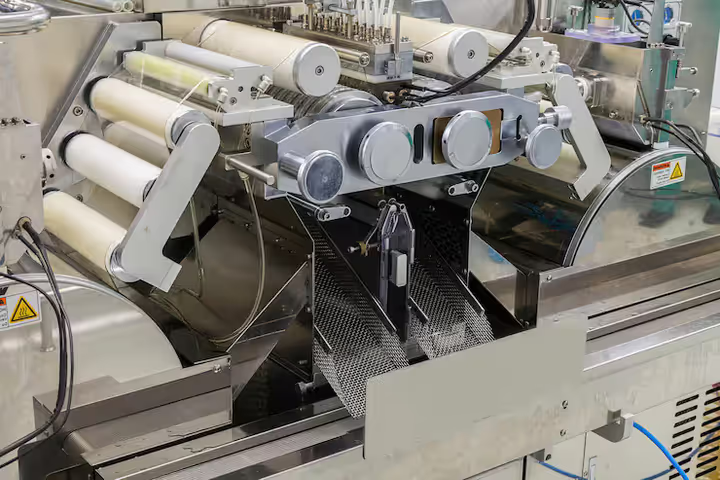
Extrusion Machine: Types, Working Principles, Applications, and Industry Insights
Extrusion machines are important pieces of industrial equipment used to manufacture products with a consistent cross-sectional shape. They are widely used in plastics, food processing, pharmaceuticals, rubber, aluminum, and other manufacturing industries.
As manufacturers focus on production efficiency, process automation, equipment reliability, and industrial cost management, understanding extrusion technology has become increasingly important. This guide explains what an extrusion machine is, how it works, the major types, applications, advantages, maintenance considerations, and factors businesses should evaluate before selecting equipment.
What Is an Extrusion Machine?
An extrusion machine is industrial equipment that processes a material and forces it through a specially designed opening called a die. The die determines the shape of the final product.
Depending on the material and application, an extrusion machine may process plastic pellets, polymers, rubber compounds, metals, food ingredients, or pharmaceutical materials.
A typical extrusion system can include:
- Material feeding equipment
- Hopper
- Screw or ram mechanism
- Heating and cooling systems
- Barrel or processing chamber
- Die
- Cooling equipment
- Cutting or sizing equipment
- Control and monitoring systems
Modern systems can also incorporate automated controls and sensors to monitor temperature, pressure, speed, and material flow.
How Does an Extrusion Machine Work?
The extrusion process varies according to the material being processed, but the basic principle remains similar.
1. Material Feeding
Raw material is introduced into the machine through a hopper or feeding system. In plastic extrusion, this commonly involves polymer pellets, granules, or regrind material.
Consistent feeding is important because variations in material flow can affect product dimensions and quality.
2. Material Processing
Inside the machine, the material moves through a heated processing zone. In screw-based systems, a rotating screw transports and processes the material.
Heat and mechanical energy can soften or melt suitable materials. Processing conditions depend on factors such as material characteristics, screw design, machine configuration, and production requirements.
3. Pressure Development
As material moves through the processing section, pressure develops. The machine pushes the processed material toward the die.
Maintaining appropriate pressure and material flow is important for achieving consistent output.
4. Die Forming
The processed material passes through the die opening. The geometry of the die determines the shape of the extruded product.
Dies can be designed for products such as:
- Tubes
- Pipes
- Sheets
- Films
- Profiles
- Rods
- Cables
- Food products
5. Cooling and Finishing
After leaving the die, the product may require cooling, sizing, stretching, cutting, or other finishing operations.
For example, plastic profiles may pass through calibration and cooling equipment before being cut to specified lengths.
Types of Extrusion Machines
Different extrusion machines are designed for different materials and manufacturing requirements.
Single-Screw Extrusion Machine
A single-screw extruder uses one rotating screw inside a barrel. It is commonly used for processing thermoplastics and producing pipes, sheets, films, profiles, and other products.
Its relatively straightforward design can make it suitable for many standard extrusion applications.
Twin-Screw Extrusion Machine
Twin-screw extruders use two screws operating within the processing barrel.
They are often selected for applications requiring improved mixing, compounding, or material processing flexibility. Depending on the design, the screws may rotate in the same or opposite directions.
Metal Extrusion Machine
Metal extrusion equipment forces heated or, in some cases, cold metal through a die to create products with a defined cross-sectional profile.
Aluminum extrusion is particularly important in construction, transportation, electronics, and industrial manufacturing.
Rubber Extrusion Machine
Rubber extrusion systems process rubber compounds to produce continuous profiles, seals, hoses, tubing, and other components.
Processing conditions need to be carefully controlled because rubber compounds have different material characteristics from thermoplastics.
Food Extrusion Machine
Food extrusion equipment is used to process ingredients under controlled temperature, pressure, moisture, and mechanical conditions.
Applications can include cereals, snacks, pasta, pet food, and other processed food products.
Pharmaceutical Extrusion Equipment
Extrusion technology can also be used in pharmaceutical manufacturing and research. Specialized equipment can support processes involving controlled material mixing, shaping, and formulation.
Pharmaceutical applications generally require strict process controls and compliance with applicable quality and manufacturing requirements.
Common Applications of Extrusion Machines
Extrusion technology is used across numerous industries.
Plastics Manufacturing
Plastic extrusion is one of the most widespread applications. Manufacturers can produce:
- Plastic pipes
- Window and door profiles
- Plastic sheets
- Films
- Tubing
- Cable insulation
- Automotive components
- Packaging materials
Construction Industry
Extruded materials are used in construction products and components. Aluminum extrusion, plastic profiles, insulation components, and piping systems are examples of products that can be manufactured using extrusion technology.
Automotive Manufacturing
The automotive sector uses extruded materials for various components because extrusion can produce continuous profiles with repeatable dimensions.
Potential applications include trim components, seals, structural profiles, tubing, and other specialized parts.
Electrical and Electronics
Extrusion equipment can produce cable insulation, protective profiles, tubing, and components used in electrical and electronic applications.
Food Processing
Food extrusion systems can combine mixing, heating, cooking, shaping, and other operations into a continuous production process.
Packaging
Plastic film, sheets, coatings, and other packaging materials can be produced using extrusion-based manufacturing processes.
Advantages of Extrusion Technology
Extrusion machines offer several potential advantages for industrial manufacturers.
Continuous Production
Unlike many batch manufacturing processes, extrusion can operate continuously. This makes it suitable for applications requiring high-volume production.
Consistent Product Profiles
A properly designed die and controlled process can produce products with consistent cross-sectional dimensions.
Production Flexibility
Changing the die and adjusting process parameters can allow manufacturers to produce different profiles using the same basic extrusion platform, depending on machine capabilities.
Process Automation
Modern extrusion systems can incorporate automated controls, sensors, data collection, and monitoring technologies.
Automation can help manufacturers improve process consistency and identify operating problems earlier.
Material Utilization
Extrusion can be an efficient manufacturing method for suitable materials because the process continuously forms material into the required profile.
However, actual material efficiency depends on machine configuration, product design, scrap rates, and production conditions.
Factors to Consider When Choosing an Extrusion Machine
Selecting industrial equipment requires more than comparing purchase prices.
Material Compatibility
The machine should be appropriate for the material being processed. Different polymers, metals, rubber compounds, food ingredients, and other materials have different processing requirements.
Production Capacity
Manufacturers should estimate required output before selecting equipment.
Important considerations may include:
- Required production rate
- Product dimensions
- Operating hours
- Number of production lines
- Expected future demand
Screw and Die Design
For screw-based extrusion, screw geometry can significantly influence material conveying, mixing, melting, and pressure development.
Die design is equally important because it determines the basic shape of the finished product.
Automation and Controls
Industrial buyers may evaluate control systems, sensors, temperature management, pressure monitoring, data logging, and integration with other production equipment.
These features can influence industrial automation costs, productivity, and operational efficiency.
Energy Consumption
Energy use is an important consideration when evaluating manufacturing equipment. Buyers may compare motor efficiency, heating systems, cooling requirements, operating cycles, and expected production output.
Maintenance Requirements
Equipment reliability can have a direct effect on manufacturing productivity.
Before purchasing a machine, businesses should consider access to replacement parts, technical support, preventive maintenance requirements, and service availability.
Extrusion Machine Maintenance
Regular maintenance can help reduce unexpected equipment downtime and support consistent production.
Inspect the Screw and Barrel
Wear on screws and barrels can affect material processing and production consistency. Inspection intervals should be based on machine usage, material characteristics, and manufacturer recommendations.
Monitor Heating and Cooling Systems
Temperature control is critical in many extrusion processes. Sensors, heaters, cooling systems, and related components should be inspected regularly.
Check the Die
Die condition can influence product dimensions and surface quality. Cleaning and inspection procedures should follow the equipment and material manufacturer's recommendations.
Inspect Motors and Drive Systems
Motors, gearboxes, bearings, and drive components should be inspected according to the machine's maintenance schedule.
Maintain Control Systems
Modern extrusion equipment may depend heavily on electronic controls and sensors. Proper inspection and calibration can help maintain process accuracy.
Automation in Modern Extrusion Manufacturing
Industrial automation is changing how extrusion lines are operated and monitored.
Manufacturers increasingly use process control systems, industrial sensors, programmable logic controllers, data monitoring, and predictive maintenance technologies to improve production management.
Real-Time Process Monitoring
Sensors can collect information about parameters such as:
- Temperature
- Pressure
- Screw speed
- Motor load
- Material flow
- Product dimensions
Operators can use this information to identify process variations and make appropriate adjustments.
Predictive Maintenance
Predictive maintenance uses equipment data to identify potential problems before they result in major failures.
This approach can help businesses manage maintenance schedules and reduce unexpected downtime, although implementation costs and system complexity should be considered.
Extrusion Machine Cost Factors
The price of an extrusion machine varies considerably depending on its design and intended application.
Important cost factors can include:
- Machine capacity
- Screw diameter
- Screw configuration
- Die requirements
- Automation level
- Material compatibility
- Heating and cooling systems
- Auxiliary equipment
- Installation
- Training
- Maintenance
- Spare parts
Businesses should evaluate the total cost of ownership rather than focusing only on the initial equipment price.
A lower purchase price does not necessarily represent the lowest long-term manufacturing cost if energy consumption, maintenance, downtime, or replacement parts are significantly higher.
Safety Considerations for Extrusion Equipment
Extrusion machines contain moving mechanical components and may operate at elevated temperatures and pressures. Appropriate industrial safety procedures are therefore essential.
Manufacturers should follow applicable workplace safety requirements and the equipment manufacturer's instructions.
Important practices can include:
- Using appropriate machine guarding
- Training operators
- Maintaining emergency stops
- Following lockout/tagout procedures where applicable
- Using suitable personal protective equipment
- Keeping work areas clean
- Following safe startup and shutdown procedures
- Performing maintenance only according to approved procedures
Safety requirements vary according to equipment type, workplace conditions, jurisdiction, and applicable regulations.
Future Trends in Extrusion Technology
The extrusion industry continues to develop alongside broader manufacturing trends.
Smart Manufacturing
Connected equipment and industrial data systems can provide manufacturers with greater visibility into production performance.
Energy Efficiency
Manufacturers are increasingly examining energy consumption because operating efficiency can influence production costs and environmental performance.
Advanced Process Control
More sophisticated monitoring and control systems can help maintain process parameters within defined operating ranges.
Sustainable Materials
Recycled and bio-based materials are receiving increasing attention in some extrusion applications. However, processing requirements can differ significantly from conventional materials.
Digital Maintenance
Machine data can support maintenance planning, equipment performance analysis, and troubleshooting.
How Businesses Can Evaluate Extrusion Equipment
A structured evaluation can help companies make better equipment purchasing decisions.
Before investing, businesses can compare:
- Required production capacity
- Material compatibility
- Product specifications
- Energy requirements
- Automation capabilities
- Maintenance requirements
- Spare-parts availability
- Technical support
- Installation requirements
- Total cost of ownership
It is also useful to request technical specifications and operating information from qualified equipment manufacturers before making a major capital investment.
Conclusion
Extrusion machines are versatile manufacturing systems used to transform materials into continuous products with controlled shapes and dimensions. They support applications ranging from plastics and aluminum to rubber, food processing, pharmaceuticals, packaging, construction, and automotive manufacturing.
The right equipment depends on the material, production volume, product design, process requirements, automation needs, energy consumption, maintenance strategy, and overall operating cost.
For businesses researching industrial machinery, manufacturing equipment, process automation, equipment financing, and production efficiency, understanding these factors can provide a stronger foundation for evaluating extrusion technology and planning future manufacturing investments.