Semiconductor Devices: Types, Facts , Working Principles, Applications, and Modern Technology
Semiconductor devices are electronic components manufactured using materials whose electrical conductivity can be controlled. They form the foundation of modern electronic systems, from computers and smartphones to automobiles, industrial equipment, communication systems, and renewable energy technologies. Unlike conventional conductors, semiconductor materials can be engineered to control the movement of electrical charge, making them suitable for switching, amplification, sensing, and power-management applications.
The development of semiconductor technology has transformed the electronics industry. Small semiconductor components can perform complex electrical functions while consuming relatively low amounts of energy. As demand for computing, automation, electric vehicles, telecommunications, and connected devices continues to grow, semiconductor devices remain an important area of electronics engineering and manufacturing.
What Are Semiconductor Devices?
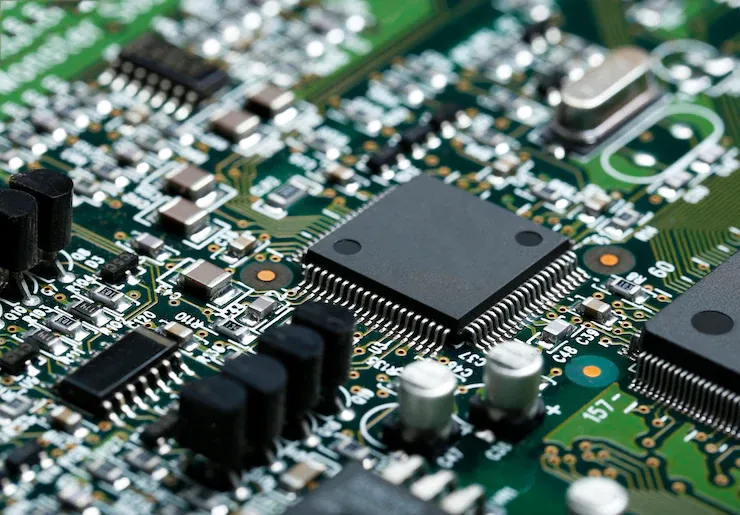
A semiconductor device is an electronic component made primarily from semiconductor materials such as silicon, germanium, gallium arsenide, gallium nitride, and silicon carbide. These materials have electrical properties between those of conductors and insulators.
The electrical behavior of a semiconductor can be modified by introducing controlled impurities, a process known as doping. Doping creates different types of semiconductor regions that allow engineers to control current flow. The interaction between these regions makes it possible to create components such as diodes, transistors, and integrated circuits.
Semiconductor devices can be designed for many different purposes. Some are primarily used to control electrical signals, while others are designed to handle high voltages and currents. Their characteristics depend on the semiconductor material, device structure, manufacturing process, and intended application.
How Semiconductor Devices Work
The operation of semiconductor devices is based on the movement of charge carriers. In semiconductor materials, electrons and holes can participate in electrical conduction. By controlling these charge carriers, engineers can regulate the flow of current through a device.
One of the most important concepts in semiconductor electronics is the p-n junction. It is formed when p-type and n-type semiconductor regions are joined. The resulting junction has electrical properties that can be used to control current flow.
A diode is a simple example of a semiconductor device based on a p-n junction. It generally allows current to flow more easily in one direction than the other. More complex semiconductor structures can provide switching, amplification, voltage regulation, sensing, and signal-processing functions.
Major Types of Semiconductor Devices
Diodes
Diodes are semiconductor devices commonly used for controlling the direction of electrical current. They are found in power supplies, protection circuits, signal-processing systems, lighting equipment, and many other electronic applications.
Different diode designs provide different characteristics. Examples include rectifier diodes, Zener diodes, Schottky diodes, light-emitting diodes, photodiodes, and laser diodes. Their performance depends on factors such as voltage rating, current rating, switching speed, and semiconductor material.
Transistors
Transistors are among the most important semiconductor devices because they can function as electronic switches or amplifiers. They are fundamental components in computers, communication equipment, industrial controllers, automotive electronics, and consumer devices.
Common transistor families include bipolar junction transistors and field-effect transistors. MOSFETs, a major type of field-effect transistor, are widely used in power electronics, digital circuits, motor controllers, and switching applications.
Power Semiconductor Devices
Power semiconductor devices are designed to control and convert electrical energy. They are particularly important in power electronics systems where voltage and current levels can be considerably higher than those used in many conventional electronic circuits.
Power diodes, power MOSFETs, insulated-gate bipolar transistors, and other specialized components can be used in power converters, motor drives, renewable energy systems, electric vehicles, battery-management systems, and industrial equipment.
Integrated Circuits
An integrated circuit combines many semiconductor components on a single piece of semiconductor material. Modern integrated circuits can contain millions or even billions of transistors depending on their design and manufacturing technology.
Microprocessors, memory chips, communication chips, sensor interfaces, and power-management ICs are examples of integrated circuits. Their ability to integrate many functions into a compact structure has been a major factor in the development of modern computing and electronic systems.
Optoelectronic Devices
Optoelectronic semiconductor devices interact with electrical and optical signals. LEDs, laser diodes, photodiodes, and image sensors are examples of this category.
These devices are used in optical communication, displays, lighting, imaging systems, industrial sensors, medical equipment, and consumer electronics. Semiconductor materials with suitable optical properties are selected according to the wavelength and performance requirements of the application.
Semiconductor Sensors
Semiconductor sensors detect physical or chemical changes and convert them into electrical signals. Depending on their design, they can measure temperature, pressure, light, motion, magnetic fields, gases, and other variables.
Sensor technology is increasingly important in industrial automation, automobiles, smart buildings, consumer electronics, and Internet of Things applications. Semiconductor-based sensors allow electronic systems to collect information from their surrounding environment.
Semiconductor Materials
Silicon
Silicon is the most widely used semiconductor material because of its useful electrical characteristics, established manufacturing infrastructure, and ability to form high-quality oxide layers. Silicon semiconductor technology is extensively used for integrated circuits, microprocessors, memory, power devices, and sensors.
Gallium Nitride
Gallium nitride, commonly known as GaN, is a wide-bandgap semiconductor material. It has properties that make it useful for high-frequency and high-power applications. GaN technology is being used in areas such as power conversion, radio-frequency electronics, and advanced communication systems.
Silicon Carbide
Silicon carbide, or SiC, is another wide-bandgap semiconductor material. Its ability to operate at relatively high temperatures and voltages makes it important for selected power electronics applications.
SiC semiconductor devices are being developed and used in areas such as electric vehicle power systems, industrial power conversion, renewable energy equipment, and high-voltage applications.
Semiconductor Manufacturing Process
Wafer Production
Semiconductor manufacturing begins with semiconductor material that is processed into wafers. The wafer provides the base on which electronic structures are fabricated.
The manufacturing process requires highly controlled conditions because extremely small particles or process variations can affect device performance. Semiconductor fabrication facilities therefore use specialized cleanroom environments and advanced process-control systems.
Wafer Fabrication
During wafer fabrication, multiple processes are used to create microscopic structures. Lithography, deposition, etching, ion implantation, oxidation, and other processes can be performed repeatedly to build the required device architecture.
Modern semiconductor manufacturing involves extremely precise equipment and process monitoring. The complexity of fabrication increases as device dimensions become smaller and circuit designs become more sophisticated.
Packaging and Testing
After fabrication, semiconductor devices undergo packaging and testing. Packaging protects the semiconductor die and provides electrical connections between the device and the external system.
Testing evaluates characteristics such as electrical performance, reliability, thermal behavior, and compliance with specified requirements. Advanced semiconductor packaging has become increasingly important as modern electronic systems demand higher performance and greater integration.
Applications of Semiconductor Devices
Consumer Electronics
Semiconductor devices are essential in smartphones, computers, televisions, digital cameras, wearable electronics, and home appliances. Processors, memory, power-management circuits, sensors, and communication components all rely on semiconductor technology.
Automotive Electronics
Modern vehicles contain semiconductor devices for engine management, safety systems, infotainment, driver-assistance technologies, battery management, and power conversion. Electric and hybrid vehicles further increase the importance of power semiconductor technology.
Industrial Automation
Industrial automation systems use semiconductors in programmable controllers, motor drives, sensors, robotics, machine-vision systems, and industrial communication equipment. Semiconductor devices allow automated systems to process information and control electrical and mechanical equipment.
Renewable Energy
Solar power systems and other renewable energy technologies rely on power electronics to convert and manage electrical energy. Semiconductor devices are used in inverters, converters, monitoring systems, and energy-management equipment.
Telecommunications
Communication infrastructure uses semiconductor components for signal processing, radio-frequency systems, optical communication, networking equipment, and data transmission. Semiconductor technology therefore plays an important role in modern connectivity.
Advantages of Semiconductor Devices
Semiconductor devices provide several characteristics that have made them central to modern electronics. Their compact size allows manufacturers to integrate large numbers of components into relatively small systems. They can also provide high switching speeds, reliable operation, and efficient control of electrical signals.
Another important advantage is scalability. Semiconductor manufacturing technologies allow engineers to create increasingly sophisticated circuits while maintaining compact physical dimensions. This has supported the development of high-performance computing, advanced communication systems, industrial automation, and smart electronic products.
Factors to Consider When Studying Semiconductor Devices
The appropriate semiconductor device depends on the electrical and environmental requirements of the application. Important characteristics can include operating voltage, current capacity, switching speed, power dissipation, thermal performance, frequency response, reliability, and package type.
The semiconductor material is also an important consideration. Silicon remains dominant across many applications, while materials such as GaN and SiC provide characteristics that can be advantageous for particular high-frequency, high-temperature, or power-electronics applications.
Engineers also consider manufacturing requirements, system architecture, operating conditions, and long-term reliability when selecting semiconductor components.
Future of Semiconductor Technology
Semiconductor technology continues to evolve as demand increases for computing performance, energy efficiency, connectivity, automation, and intelligent electronic systems. Research and development are focusing on advanced process technologies, new semiconductor materials, advanced packaging, specialized processors, and power-efficient architectures.
Wide-bandgap materials such as silicon carbide and gallium nitride are receiving significant attention for power and high-frequency applications. At the same time, advanced packaging and chip integration are becoming increasingly important for achieving higher system performance.
Artificial intelligence, electric mobility, industrial automation, data centers, telecommunications, and renewable energy are among the technology areas contributing to continued demand for advanced semiconductor components.
Conclusion
Semiconductor devices are fundamental building blocks of modern electronics. Diodes, transistors, power semiconductor devices, integrated circuits, optoelectronic components, and semiconductor sensors each perform different functions while relying on the controllable electrical properties of semiconductor materials.
Understanding semiconductor devices provides a foundation for learning about electronic circuits, semiconductor manufacturing, power electronics, automation, computing, and communication technologies. As electronic systems become more integrated and energy-conscious, semiconductor technology will continue to play an important role across industrial and consumer applications.