Mass Spectrometry: A Practical Guide to Modern Molecular Analysis
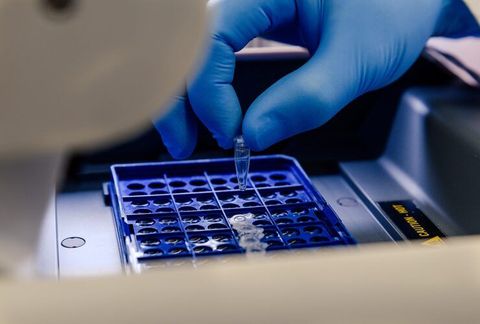
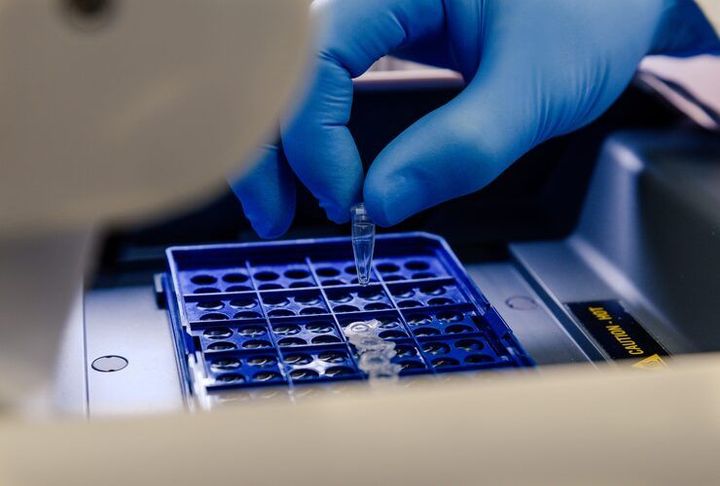
Mass spectrometry is an analytical technique used to identify and study chemical compounds by measuring the mass-to-charge ratio of ions. It is widely used in analytical chemistry, pharmaceutical research, biotechnology, environmental science, food analysis, and biological research. A mass spectrometer can provide detailed information about the molecular composition of a sample and can help researchers determine the identity, structure, and quantity of different compounds.
Unlike techniques that primarily examine visible characteristics or physical properties, mass spectrometry provides information at the molecular level. This makes it particularly valuable when scientists need to distinguish between compounds with similar chemical properties or analyze complex mixtures containing many different substances.
Why Is Mass Spectrometry Important?
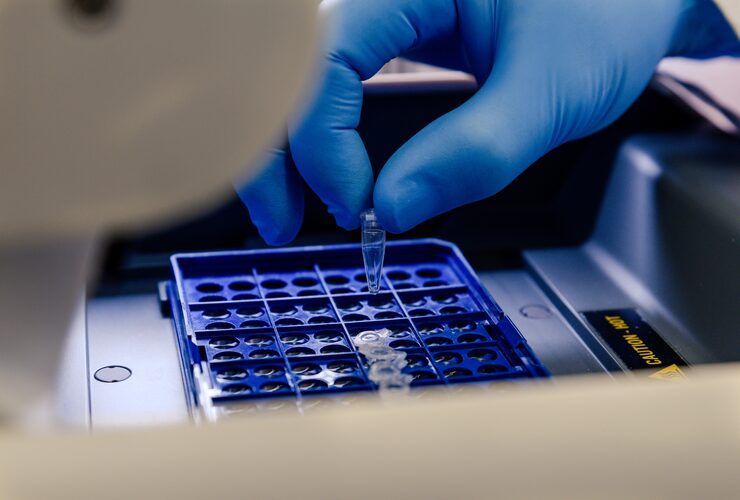
Mass spectrometry has become an important part of modern laboratory analysis because many research questions require highly sensitive and selective measurement. Biological samples, pharmaceutical compounds, environmental materials, and chemical mixtures can contain substances at very low concentrations. Mass spectrometry can help detect and characterize these compounds when combined with suitable sample preparation and separation techniques.
The technology also supports quantitative analysis. In pharmaceutical and biochemical research, for example, researchers may use mass spectrometry to determine the concentration of specific compounds in a sample. In proteomics, it can help researchers investigate proteins and peptides, while in metabolomics it can be used to study small molecules associated with biological processes.
How Does Mass Spectrometry Work?
Sample Introduction and Ionization
The first major stage of mass spectrometry is introducing the sample into the instrument and converting molecules into ions. Ionization is necessary because the mass analyzer measures charged particles rather than neutral molecules.
Different ionization techniques are selected according to the properties of the sample. Electron ionization is commonly associated with gas-phase analysis and can produce characteristic fragmentation patterns. Electrospray ionization is widely used for liquid samples and is particularly useful for biological molecules and pharmaceutical compounds. Matrix-assisted laser desorption/ionization, commonly called MALDI, is another important technique used for analyzing larger biomolecules.
Separation of Ions
After ionization, the resulting ions enter a mass analyzer. The analyzer separates ions according to their mass-to-charge ratios. Different types of mass analyzers use different physical principles to perform this separation.
Quadrupole analyzers, time-of-flight analyzers, ion traps, and Orbitrap-based systems are examples of technologies used in modern mass spectrometers. The choice of analyzer depends on the required sensitivity, resolution, mass range, speed, and type of analytical application.
Detection and Data Analysis
After separation, ions reach a detector that records their signals. Specialized software then converts these signals into a mass spectrum. A mass spectrum displays ion intensity against mass-to-charge ratio and can contain characteristic peaks associated with particular compounds or fragments.
Scientists interpret these patterns using reference databases, spectral libraries, molecular information, and additional analytical techniques. Modern laboratory software can also assist with compound identification, quantitative measurements, and complex data processing.
Major Types of Mass Spectrometry
Tandem Mass Spectrometry
Tandem mass spectrometry, often abbreviated as MS/MS, involves multiple stages of mass selection and fragmentation. It is particularly useful when researchers need more detailed structural information about a molecule.
In pharmaceutical analysis, clinical research, proteomics, and metabolomics, tandem mass spectrometry can provide highly selective measurements. Combining liquid chromatography with tandem mass spectrometry is also common for analyzing complex samples.
Liquid Chromatography–Mass Spectrometry
Liquid chromatography–mass spectrometry, or LC-MS, combines chromatographic separation with mass spectrometric detection. Liquid chromatography separates compounds before they enter the mass spectrometer, making the overall analysis more effective for complicated mixtures.
LC-MS is widely used in pharmaceutical research, drug metabolism studies, biomarker research, environmental testing, and biochemical analysis. It is especially useful for compounds that are difficult to analyze using gas chromatography.
Gas Chromatography–Mass Spectrometry
Gas chromatography–mass spectrometry, or GC-MS, combines gas chromatography with mass spectrometry. GC separates compounds that can be vaporized without significant decomposition, while the mass spectrometer provides molecular and structural information.
GC-MS is commonly used in environmental analysis, forensic research, petroleum studies, food analysis, and chemical laboratories. It can be particularly useful for identifying volatile and semi-volatile compounds.
MALDI Mass Spectrometry
MALDI uses a laser-absorbing matrix to help ionize molecules from a sample surface. It is especially associated with the analysis of large biomolecules, including proteins, peptides, polymers, and other macromolecules.
MALDI-based techniques have contributed significantly to biological research and proteomics. MALDI-TOF instruments are also used in certain microbiological applications because they can generate characteristic molecular fingerprints.
Applications of Mass Spectrometry
Pharmaceutical Research and Drug Development
Mass spectrometry plays an important role throughout pharmaceutical research. Scientists can use it to investigate drug molecules, metabolites, impurities, degradation products, and biological interactions. Analytical methods based on mass spectrometry can help characterize compounds during different stages of research and development.
The technique is also valuable for pharmacokinetic studies, where researchers examine how a compound behaves in a biological system. Sensitive analytical measurements can provide information about absorption, distribution, metabolism, and elimination.
Proteomics and Biological Research
Proteomics focuses on the large-scale study of proteins. Because proteins can vary considerably in size, structure, modification, and abundance, specialized analytical methods are required to study them effectively.
Mass spectrometry can identify peptides and proteins and can provide information about certain post-translational modifications. Researchers use these capabilities to investigate biological pathways, protein interactions, and changes associated with different experimental conditions.
Clinical and Biomedical Analysis
Mass spectrometry is increasingly important in biomedical laboratories and clinical research. It can support the analysis of hormones, metabolites, therapeutic compounds, biomarkers, and other molecules present in biological samples.
When appropriately validated, mass spectrometry-based methods can provide sensitive and selective measurements. However, clinical applications require rigorous method validation, quality control, laboratory standards, and appropriate interpretation.
Environmental Analysis
Environmental laboratories use mass spectrometry to investigate chemical substances in water, soil, air, and biological samples. Analytical methods can be designed to detect contaminants and other compounds at relatively low concentrations.
LC-MS and GC-MS are frequently used for environmental research because they can separate and identify numerous compounds within complex samples.
Food and Beverage Analysis
Mass spectrometry can also support food analysis by helping researchers investigate contaminants, additives, residues, flavor compounds, allergens, and other chemical components. The technique can be combined with chromatographic separation to analyze complex food matrices.
Such testing contributes to research into food composition, quality, authenticity, and chemical safety.
Advantages of Mass Spectrometry
Mass spectrometry offers several important analytical advantages. It can provide high sensitivity, strong selectivity, molecular mass information, and detailed structural information when appropriate ionization and fragmentation methods are used.
Another advantage is its flexibility. Different ionization sources, mass analyzers, separation techniques, detectors, and software platforms can be combined to address different research questions. This makes mass spectrometry suitable for applications ranging from small-molecule analysis to large biomolecular research.
Limitations of Mass Spectrometry
Although mass spectrometry is a powerful analytical technique, it has limitations. Instruments can be technically complex and require trained laboratory personnel for method development, operation, maintenance, and data interpretation.
Sample preparation can also influence analytical results. Matrix effects, ion suppression, contamination, calibration issues, and instrument conditions can affect measurements. For quantitative applications, appropriate standards, quality controls, calibration procedures, and validated analytical methods are important.
Another challenge is data management. Modern high-resolution instruments can generate large datasets that require appropriate computational tools and analytical expertise.
Mass Spectrometry in Modern Laboratory Research
The development of high-resolution mass spectrometry, improved ionization methods, advanced mass analyzers, and increasingly capable data-analysis software continues to expand the role of mass spectrometry. Researchers can now investigate increasingly complex molecular systems and process large volumes of analytical data.
The integration of chromatography, automation, high-resolution measurement, and computational analysis is also changing laboratory workflows. These developments are particularly relevant to fields such as proteomics, metabolomics, pharmaceutical research, biomarker discovery, and environmental science.
How to Choose a Mass Spectrometry Method
Consider the Sample
The chemical and physical characteristics of the sample are important when selecting a mass spectrometry workflow. Researchers should consider whether the target compounds are volatile, polar, thermally stable, large biomolecules, or components of a complex biological matrix.
Consider the Analytical Objective
The required information also determines the appropriate method. Compound identification, structural characterization, quantitative analysis, trace-level detection, and molecular profiling can require different instrument configurations and analytical workflows.
Consider Sensitivity and Resolution
Sensitivity refers to the ability to detect small quantities of a compound, while mass resolution describes the ability to distinguish ions with closely related mass-to-charge ratios. The appropriate balance depends on the analytical application and the complexity of the sample.
Future Trends in Mass Spectrometry
Mass spectrometry is expected to remain an important technology in analytical chemistry and molecular research. Improvements in high-resolution instruments, miniaturized systems, automated sample handling, imaging mass spectrometry, and computational analysis are expanding potential applications.
Artificial intelligence and machine-learning approaches are also being investigated for complex analytical datasets, including compound identification and molecular classification. These developments may help researchers interpret increasingly large datasets, although analytical validation and scientific oversight remain important.
Frequently Asked Questions About Mass Spectrometry
What is mass spectrometry used for?
Mass spectrometry is used to identify, characterize, and quantify chemical compounds and biomolecules. Applications include pharmaceutical research, proteomics, environmental analysis, food testing, biochemical research, and clinical studies.
What does a mass spectrometer measure?
A mass spectrometer primarily measures the mass-to-charge ratio of ions. The resulting measurements can be represented as a mass spectrum that provides information about the compounds present in a sample.
What is the difference between LC-MS and GC-MS?
LC-MS combines liquid chromatography with mass spectrometry and is commonly used for compounds that are suitable for liquid-phase separation. GC-MS combines gas chromatography with mass spectrometry and is generally used for compounds that can be vaporized and separated by gas chromatography.
Is mass spectrometry used in pharmaceutical research?
Yes. Mass spectrometry is widely used in pharmaceutical research for compound characterization, impurity analysis, metabolite studies, pharmacokinetic research, and quantitative analysis.
Conclusion
Mass spectrometry is a versatile analytical technology that provides valuable information about molecules based on their mass-to-charge ratios. Its combination with chromatography and advanced data-analysis methods has made it an important tool across pharmaceutical research, biotechnology, environmental science, food analysis, and analytical chemistry.
As laboratory instruments and computational methods continue to develop, mass spectrometry is likely to remain an important part of molecular analysis. Understanding its basic principles, major instrument types, applications, advantages, and limitations can help readers better understand how modern laboratories investigate complex chemical and biological samples.