Industrial Vacuum Packaging Technologies: A Complete Guide to Modern Packaging Solutions
Industrial vacuum packaging technologies refer to packaging methods that remove air from a package before sealing it. The primary objective is to protect products from environmental factors such as oxygen, moisture, dust, and contaminants that may affect quality, safety, or shelf life.
The concept of vacuum packaging emerged as industries sought better ways to preserve products during storage and transportation. Traditional packaging methods often left air inside packages, which could accelerate spoilage, oxidation, corrosion, and degradation. Vacuum technology was developed to address these challenges by creating a low-oxygen environment around packaged goods.
Today, vacuum packaging is widely used across multiple sectors, including:
- Food processing
- Pharmaceutical manufacturing
- Electronics production
- Medical device packaging
- Industrial component storage
- Chemical product packaging
The technology has evolved from simple vacuum chambers to highly automated packaging systems integrated with digital monitoring, sensors, and industrial automation platforms.
Common Types of Industrial Vacuum Packaging Technologies
| Technology | Typical Application | Key Characteristic |
|---|---|---|
| Chamber Vacuum Packaging | Food and industrial products | Entire package placed inside chamber |
| External Vacuum Packaging | Large products | Air removed externally |
| Skin Packaging | Retail and industrial goods | Product tightly conforms to film |
| Thermoforming Vacuum Packaging | High-volume production | Automated packaging process |
| Modified Atmosphere Packaging (MAP) | Food industry | Air replaced with controlled gases |
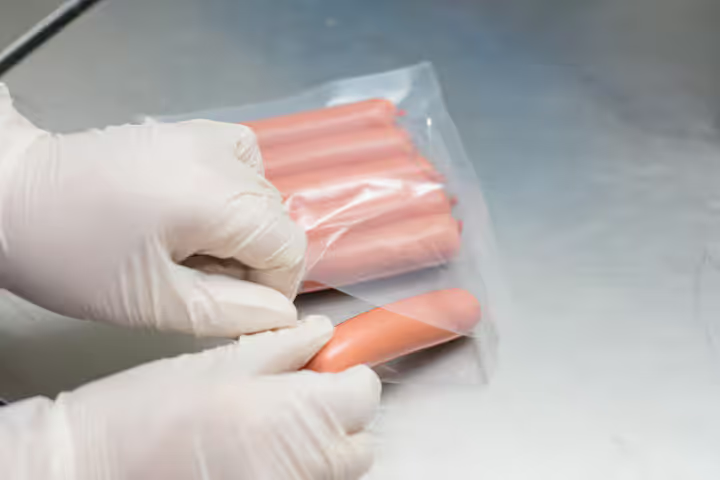
| Vacuum Shrink Packaging | Meat and food products | Combines vacuum and shrink technology |
Why Industrial Vacuum Packaging Matters Today
Modern supply chains have become increasingly complex and global. Products often travel long distances before reaching their final destination. As a result, packaging technology plays a critical role in maintaining product integrity.
Vacuum packaging helps reduce exposure to oxygen, which can contribute to:
- Food spoilage
- Metal corrosion
- Product contamination
- Moisture damage
- Reduced shelf stability
For the food sector, vacuum packaging supports food preservation and waste reduction. In pharmaceutical and medical industries, it helps maintain product sterility and quality. Electronics manufacturers use vacuum packaging to protect sensitive components from humidity and environmental damage.
The growth of e-commerce and international trade has further increased demand for advanced packaging solutions. Products now require greater protection during shipping, warehousing, and handling.
Major Benefits of Vacuum Packaging
| Benefit | Impact |
|---|---|
| Extended Product Preservation | Reduces exposure to oxygen |
| Improved Product Protection | Helps prevent contamination |
| Better Storage Efficiency | Reduces package volume |
| Supply Chain Support | Enhances transportation durability |
| Reduced Product Waste | Improves inventory management |
| Enhanced Product Presentation | Maintains product appearance |
Industries Most Affected by Packaging Innovation
Several sectors rely heavily on modern vacuum packaging systems:
Food Manufacturing
Food processors use vacuum sealing technology to preserve freshness and reduce microbial growth.
Healthcare and Pharmaceuticals
Medical products often require sterile packaging environments to maintain safety standards.
Electronics Manufacturing
Sensitive electronic components are vulnerable to moisture and oxidation. Vacuum packaging provides additional protection.
Industrial Manufacturing
Machined parts, precision components, and metal products benefit from corrosion prevention during storage and transportation.
Agriculture and Specialty Products
Seeds, specialty crops, and processed agricultural goods often use vacuum packaging to maintain quality over extended periods.
Recent Trends and Developments in Vacuum Packaging
The packaging industry experienced significant developments throughout 2025 and early 2026, driven by sustainability initiatives, automation, and digital transformation.
One major trend has been the adoption of smart packaging systems. Manufacturers increasingly integrate sensors and monitoring systems into packaging equipment to improve quality control and production efficiency.
Another notable development involves sustainable packaging materials. Throughout 2025, many packaging companies expanded research into recyclable films, mono-material packaging structures, and reduced-plastic solutions to align with environmental goals.
Artificial intelligence and machine learning technologies have also entered packaging operations. Modern vacuum packaging equipment can now monitor sealing consistency, detect defects, and optimize machine performance through predictive maintenance systems.
Recent Industry Trends Snapshot
| Trend | Industry Impact |
|---|---|
| Smart Packaging Systems | Improved monitoring and traceability |
| Packaging Automation | Increased operational efficiency |
| Sustainable Packaging Materials | Reduced environmental impact |
| AI-Based Quality Control | Enhanced consistency |
| Digital Manufacturing Integration | Better production visibility |
| Energy-Efficient Equipment | Lower energy consumption |
In 2025, several manufacturing regions expanded investments in Industry 4.0 initiatives, encouraging greater integration between packaging equipment, production software, and data analytics platforms. These developments continue shaping packaging operations in 2026.
Sustainability and Environmental Focus
Environmental considerations have become increasingly important in packaging technology discussions.
Organizations are exploring:
- Recyclable packaging films
- Reduced packaging material usage
- Energy-efficient machinery
- Waste reduction strategies
- Circular economy practices
Vacuum packaging can contribute to sustainability objectives by helping reduce product spoilage and extending usable product life. However, balancing packaging performance with environmental responsibility remains a key industry challenge.
Regulatory Frameworks and Compliance Requirements
Industrial vacuum packaging technologies operate within a framework of regulations and standards that vary by country and industry.
For food packaging applications, manufacturers must comply with food safety regulations governing packaging materials, hygiene practices, and product labeling.
In pharmaceutical and medical sectors, packaging systems often require compliance with stringent quality management standards and validation procedures.
Common regulatory areas include:
- Food contact material requirements
- Product safety standards
- Environmental regulations
- Waste management policies
- Labeling requirements
- Manufacturing quality standards
Examples of Relevant Standards
| Standard Area | Purpose |
|---|---|
| Food Safety Standards | Product protection and hygiene |
| ISO Quality Standards | Process consistency |
| Environmental Compliance | Sustainability objectives |
| Medical Packaging Standards | Sterility assurance |
| Manufacturing Regulations | Operational quality control |
Government agencies worldwide continue updating environmental policies related to packaging waste reduction, recycling targets, and sustainable manufacturing practices. Companies involved in industrial packaging must regularly monitor these changes to maintain compliance.
Tools and Resources Related to Vacuum Packaging
A variety of digital tools and resources support packaging professionals, engineers, and manufacturers.
Packaging Design Software
Used to create packaging layouts, simulate package performance, and optimize material usage.
Industrial Automation Platforms
Support monitoring and control of packaging equipment within manufacturing environments.
Shelf-Life Prediction Tools
Assist researchers and manufacturers in evaluating packaging effectiveness.
Packaging Material Databases
Provide technical information regarding barrier properties, durability, and compliance characteristics.
Quality Management Systems
Help organizations document procedures and maintain compliance with industry standards.
Helpful Resources for Learning
| Resource Type | Purpose |
|---|---|
| Packaging Engineering Publications | Technical education |
| Industry Standards Documentation | Compliance guidance |
| Manufacturing Automation Platforms | Process optimization |
| Packaging Research Journals | Emerging technologies |
| Professional Associations | Industry knowledge sharing |
| Sustainability Reports | Environmental best practices |
The Future of Industrial Vacuum Packaging
The future of vacuum packaging technologies will likely be shaped by several interconnected developments.
Advanced automation is expected to continue expanding, reducing manual intervention and improving consistency. Smart factories may increasingly connect packaging systems with production lines, inventory management platforms, and supply chain networks.
Material science innovations could introduce packaging materials with improved barrier performance and enhanced recyclability. Researchers are also investigating bio-based materials and alternative packaging structures designed to support sustainability goals.
Digital technologies such as artificial intelligence, industrial internet systems, and predictive analytics are expected to play larger roles in equipment monitoring and process optimization.
As global manufacturing becomes more data-driven, packaging systems will likely become increasingly intelligent, efficient, and environmentally conscious.
Frequently Asked Questions
What is industrial vacuum packaging?
Industrial vacuum packaging is a packaging method that removes air from a package before sealing it. The process helps protect products from oxygen, moisture, and contamination.
Which industries commonly use vacuum packaging?
Common industries include food processing, pharmaceuticals, healthcare, electronics manufacturing, industrial component production, and agriculture.
How does vacuum packaging improve product preservation?
By reducing oxygen exposure, vacuum packaging can slow oxidation and help maintain product quality during storage and transportation.
Is vacuum packaging compatible with automated manufacturing systems?
Yes. Modern vacuum packaging equipment is often integrated with automated production lines, quality control systems, and digital monitoring platforms.
What are the main trends in vacuum packaging technology?
Current trends include packaging automation, sustainable materials, smart packaging systems, AI-assisted quality control, and energy-efficient equipment.
Does vacuum packaging support sustainability efforts?
Vacuum packaging can contribute to sustainability goals by reducing product waste, improving storage efficiency, and supporting longer product usability. Ongoing research focuses on recyclable and environmentally responsible packaging materials.
Conclusion
Industrial vacuum packaging technologies have become an essential component of modern manufacturing, logistics, and product preservation. By removing air and creating controlled packaging environments, these systems help protect products, improve storage performance, and support increasingly complex supply chains.
Recent developments in automation, artificial intelligence, smart manufacturing, and sustainable materials are transforming how packaging systems operate. At the same time, regulatory requirements and environmental considerations continue influencing industry practices.
As technology advances, vacuum packaging is expected to remain a critical element of industrial operations, supporting product quality, operational efficiency, and long-term sustainability objectives across numerous sectors worldwide.