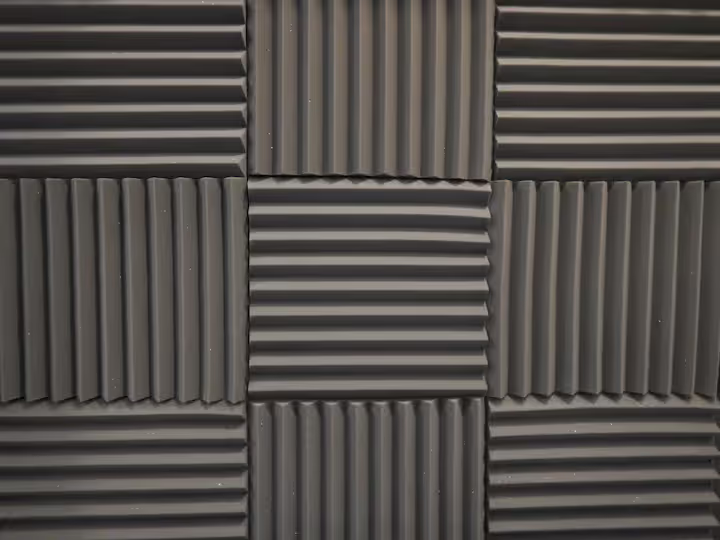
Industrial Soundproofing: A Complete Guide to Noise Control in Industrial Facilities
Industrial soundproofing is an important part of designing and maintaining factories, manufacturing plants, workshops, warehouses, power facilities, and other commercial environments. Industrial equipment can generate significant levels of noise through motors, compressors, pumps, generators, production lines, ventilation systems, and material-handling equipment.
Effective soundproofing helps organizations manage workplace noise, improve the working environment, protect sensitive areas, and support compliance with applicable occupational noise requirements. A well-planned industrial acoustic system can also improve communication and reduce the transmission of unwanted sound between production areas and nearby spaces.
What Is Industrial Soundproofing?
Industrial soundproofing refers to the use of materials, equipment, building modifications, and acoustic engineering techniques to reduce the transmission of unwanted sound.
Unlike basic residential soundproofing, industrial acoustic projects often involve large spaces, high-powered machinery, continuous production, vibration, and complex building structures.
Industrial soundproofing may include:
- Acoustic wall and ceiling systems
- Soundproof enclosures
- Acoustic barriers and partitions
- Equipment isolation systems
- Industrial acoustic panels
- Noise control curtains
- Vibration isolation
- HVAC and ventilation silencers
- Sound-absorbing materials
- Machinery acoustic enclosures
The appropriate solution depends on the source of the noise, its frequency, the surrounding structure, and the required noise-control objectives.
Why Industrial Noise Control Matters
Industrial noise can affect employees, visitors, neighboring properties, and equipment operators. Managing noise is therefore an important consideration for facility management and workplace design.
Improving Workplace Conditions
High noise levels can make conversations more difficult and may interfere with communication between workers. Acoustic treatment can help create more controlled sound environments in areas where communication is important.
Supporting Occupational Noise Management
Businesses may need to evaluate workplace noise according to local regulations and occupational safety requirements. Professional noise assessments can help identify areas where additional controls may be appropriate.
Reducing Noise Transmission
Sound can travel through walls, floors, ceilings, doors, ventilation systems, structural components, and openings. Industrial soundproofing systems are designed to address these transmission paths.
Protecting Nearby Areas
Factories and industrial facilities may operate close to offices, residential developments, commercial properties, or other businesses. Proper acoustic planning can help reduce the amount of industrial noise transmitted beyond the facility.
Common Sources of Industrial Noise
Identifying the noise source is the first step toward selecting an appropriate noise-control strategy.
Manufacturing Machinery
Production equipment such as CNC machines, presses, cutting systems, conveyors, and automated machinery can produce continuous or intermittent noise.
Compressors and Pumps
Air compressors, vacuum pumps, centrifugal pumps, and other rotating equipment can generate airborne and structure-borne noise.
Generators and Engines
Diesel generators, engines, turbines, and similar equipment can create both mechanical vibration and airborne sound.
HVAC and Ventilation Systems
Industrial ventilation fans, air-handling units, ducts, and exhaust systems can transmit noise throughout a building.
Material Handling Equipment
Forklifts, conveyors, packaging machinery, cranes, and other material-handling systems may contribute to overall facility noise.
Types of Industrial Soundproofing Solutions
There is no single soundproofing product suitable for every industrial application. Different approaches are often combined to address multiple noise paths.
Acoustic Enclosures
An acoustic enclosure surrounds a noisy machine or process with sound-control materials.
These systems are commonly considered for:
- Compressors
- Generators
- Pumps
- Motors
- Industrial testing equipment
- Manufacturing machinery
Enclosures can be designed with access doors, ventilation systems, inspection windows, and service openings.
Acoustic Barriers and Partitions
Industrial acoustic barriers separate noisy machinery from quieter work areas.
They can be used to create designated production zones and reduce direct sound transmission between equipment and occupied spaces.
Industrial Acoustic Panels
Acoustic panels absorb sound within a room and can help reduce reflected noise.
They are often installed on walls or ceilings in:
- Manufacturing facilities
- Workshops
- Production rooms
- Industrial offices
- Testing areas
- Mechanical rooms
Sound absorption and sound blocking are different functions, so acoustic panels should be selected according to the specific problem being addressed.
Soundproof Curtains
Acoustic curtains are flexible systems that can be installed around machinery, production areas, or temporary work zones.
They can be useful when permanent walls or enclosures are impractical or when production layouts change frequently.
Vibration Isolation
Some industrial noise is transferred through the building structure rather than traveling only through the air.
Vibration isolation may involve:
- Isolation mounts
- Rubber or elastomeric systems
- Spring isolators
- Equipment bases
- Flexible connectors
Reducing vibration at the source can be an important part of a comprehensive noise-control strategy.
Industrial Silencers
Silencers or acoustic attenuators can be installed in ventilation, exhaust, and air-moving systems.
They are designed to reduce noise transmission while allowing air or gases to move through the system.
Soundproofing vs. Sound Absorption
These terms are often used interchangeably, but they describe different acoustic functions.
Soundproofing
Soundproofing focuses primarily on reducing sound transmission from one area to another. It may involve heavier barriers, sealed construction, isolated structures, doors, windows, and other building elements.
Sound Absorption
Sound absorption reduces reflected sound within a room. Materials such as acoustic panels and absorptive ceiling systems can reduce reverberation and improve the acoustic characteristics of an interior space.
A facility may require both sound isolation and sound absorption depending on its noise-control requirements.
How Industrial Soundproofing Is Designed
Professional acoustic planning generally begins with an assessment of the facility and its noise sources.
Step 1: Identify Noise Sources
Engineers or acoustic professionals identify machinery and processes that contribute significantly to the overall noise environment.
Step 2: Measure Noise Levels
Noise measurements can help determine sound levels at different locations and operating conditions.
Depending on the project, measurements may consider:
- Sound pressure levels
- Frequency characteristics
- Operating cycles
- Distance from equipment
- Background noise
- Structure-borne vibration
Step 3: Determine Transmission Paths
Sound may travel through air, walls, floors, ceilings, ducts, openings, and structural connections. Identifying these paths helps determine where controls should be installed.
Step 4: Select Appropriate Materials
Materials are selected based on their acoustic properties, temperature resistance, fire requirements, durability, moisture exposure, and installation conditions.
Step 5: Consider Ventilation and Maintenance
Industrial equipment often requires cooling and regular maintenance. A soundproof enclosure must therefore provide suitable ventilation, access, and service arrangements.
Step 6: Verify Performance
After installation, additional measurements can help determine whether the acoustic system is achieving the intended noise-control objectives.
Important Materials Used in Industrial Soundproofing
Industrial acoustic projects can use several categories of materials.
Mass-Loaded Materials
Dense materials can help reduce airborne sound transmission by increasing the mass of a barrier.
Mineral Wool and Acoustic Insulation
Mineral wool and similar absorptive materials are commonly used inside acoustic walls, enclosures, and panels.
Acoustic Foam
Specialized acoustic foam can absorb certain sound frequencies and reduce reflections. Its suitability depends on the industrial environment and fire-safety requirements.
Composite Acoustic Panels
Composite systems can combine sound absorption, sound blocking, and structural durability in a single assembly.
Resilient Mounting Systems
Resilient materials can help separate equipment or building components and reduce vibration transmission.
Factors to Consider Before Installing Industrial Soundproofing
Choosing an acoustic system requires more than selecting the thickest or densest material available.
Noise Frequency
Low-frequency noise can behave differently from high-frequency noise. Fans, engines, compressors, and rotating machinery may produce different frequency profiles.
Temperature
Industrial environments can expose acoustic materials to elevated temperatures. Materials must be suitable for the operating conditions.
Fire Safety
Fire performance is an important consideration in industrial buildings. Acoustic materials and assemblies should be selected according to applicable fire-safety requirements.
Moisture and Chemicals
Some facilities may expose materials to humidity, water, oils, solvents, or other substances. Material compatibility should be evaluated before installation.
Maintenance Requirements
Enclosures and barriers should not make routine equipment inspection and maintenance unnecessarily difficult.
Available Space
Large acoustic systems may require additional floor or wall space. Facility layout should therefore be considered during the design stage.
Benefits of Professional Industrial Acoustic Design
Professional acoustic design can provide a systematic approach to noise management.
Better Noise Source Identification
Acoustic professionals can evaluate the characteristics and transmission paths of industrial noise rather than relying solely on visual inspection.
More Efficient Use of Materials
A targeted design can help determine where acoustic treatment is actually required, reducing unnecessary installation.
Integration With Industrial Equipment
Professional systems can be designed around equipment access, ventilation, electrical requirements, and maintenance procedures.
Long-Term Facility Planning
Acoustic planning can also consider future machinery changes, production expansion, and modifications to the facility.
Industrial Soundproofing for Different Facilities
Different industries can have different acoustic requirements.
Manufacturing Plants
Manufacturing facilities may use acoustic enclosures, barriers, panels, and vibration-control systems around production equipment.
Power Generation Facilities
Generators, turbines, engines, pumps, and ventilation systems can require specialized noise-control measures.
Automotive Facilities
Automotive manufacturing and testing environments may contain presses, robotic systems, machining equipment, and other significant noise sources.
Food Processing Plants
Food-processing facilities require acoustic materials that are appropriate for hygiene, cleaning procedures, moisture exposure, and applicable safety requirements.
Workshops and Fabrication Facilities
Metalworking, cutting, grinding, welding, and fabrication processes may produce a combination of airborne and structure-borne noise.
Industrial Soundproofing Cost Factors
The cost of industrial soundproofing depends on the size and complexity of the project rather than a single standard price.
Important cost factors include:
- Facility size
- Number of machines
- Required acoustic performance
- Type of enclosure or barrier
- Material specifications
- Ventilation requirements
- Installation complexity
- Fire-safety requirements
- Access and maintenance provisions
- Structural modifications
- Noise measurement and engineering services
A professional site assessment can provide a more reliable basis for estimating project costs.
How to Choose an Industrial Soundproofing Company
Organizations evaluating an acoustic contractor or engineering company should consider several factors.
Experience With Industrial Projects
Look for experience with machinery noise, industrial buildings, acoustic enclosures, vibration control, and related applications.
Acoustic Engineering Capability
A company with appropriate acoustic expertise can assess noise sources and recommend solutions based on measured conditions.
Material and Safety Documentation
Ask for relevant technical specifications, acoustic test information, fire-performance documentation, and installation requirements where applicable.
Maintenance Considerations
The proposed solution should allow equipment to be inspected, repaired, and maintained without unnecessary disruption.
Project Assessment
A reliable provider should generally evaluate the facility before recommending a major acoustic installation.
Industrial Soundproofing and Building Design
Noise control is often more effective when considered during the building-design stage rather than after a facility is completed.
Architects, engineers, facility managers, equipment suppliers, and acoustic specialists can coordinate the location of noisy equipment, occupied areas, walls, doors, ventilation systems, and maintenance zones.
Early acoustic planning can make it easier to incorporate suitable barriers, isolation systems, and ventilation controls into the overall facility design.
Frequently Asked Questions
What is the main purpose of industrial soundproofing?
The main purpose is to reduce unwanted sound transmission and improve control of noise within and around industrial facilities.
What is the best material for industrial soundproofing?
There is no universal best material. The appropriate material depends on the noise frequency, transmission path, temperature, moisture, fire requirements, durability, and facility design.
Can industrial machinery be completely soundproofed?
Complete elimination of industrial noise is generally not the objective. A properly designed system aims to reduce noise to an appropriate and practical level for the specific application.
Are acoustic panels the same as soundproofing?
No. Acoustic panels primarily absorb reflected sound inside a space, while soundproofing generally focuses on reducing sound transmission between spaces.
How much does industrial soundproofing cost?
Project costs vary considerably based on the facility, equipment, acoustic requirements, materials, installation complexity, and engineering work. A site assessment is normally required for a meaningful estimate.
Conclusion
Industrial soundproofing is a multidisciplinary approach to managing noise generated by machinery, production processes, ventilation equipment, engines, pumps, compressors, and other industrial systems.
Effective noise control typically begins with identifying the source, measuring sound levels, understanding transmission paths, and selecting suitable combinations of acoustic barriers, enclosures, absorptive materials, silencers, and vibration-isolation systems.
For businesses planning an industrial acoustic project, the most appropriate solution should be based on the facility's actual operating conditions, safety requirements, maintenance needs, and applicable regulations. Professional acoustic assessment can help organizations develop a practical and technically appropriate noise-control strategy.