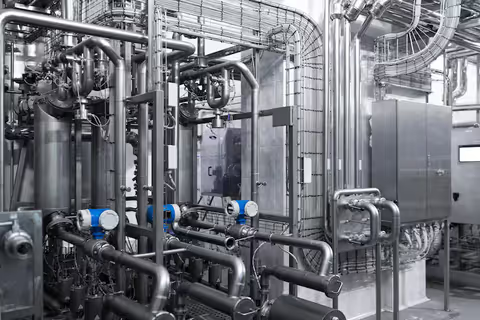
From preventive maintenance and equipment inspections to industrial repair services and replacement parts, an effective MRO program can help organizations reduce unexpected downtime, improve equipment reliability, and manage operating costs.
What Is Industrial Maintenance and Repair?
Industrial maintenance refers to the activities performed to keep machinery, equipment, buildings, electrical systems, and other industrial assets in working condition.
MRO generally covers three broad areas:
-
Maintenance: Routine inspections, servicing, testing, cleaning, lubrication, and preventive work.
-
Repair: Correcting equipment failures, replacing damaged components, and restoring machinery.
-
Operations: Supplies, tools, safety equipment, consumables, and other resources required to support daily operations.
Industrial MRO can involve everything from a simple bearing replacement to sophisticated industrial asset management, condition monitoring, and computerized maintenance systems.
Why Is MRO Important for Industrial Businesses?
Reliable equipment is essential for many industrial operations. An unexpected machine failure can interrupt production, create scheduling problems, increase repair expenses, and potentially create workplace safety risks.
A structured MRO strategy helps organizations take a more proactive approach to equipment care.
Reducing Equipment Downtime
Preventive maintenance can identify potential problems before they develop into major equipment failures. Regular inspections and servicing may help organizations schedule maintenance during planned downtime rather than responding to unexpected breakdowns.
Improving Equipment Reliability
Machines that receive appropriate maintenance can operate more consistently. Maintenance teams can monitor equipment performance and identify components that may require adjustment, servicing, or replacement.
Managing Maintenance Costs
Unplanned repairs can sometimes be more expensive than scheduled maintenance because they may require urgent labor, replacement parts, or extended equipment downtime.
Effective maintenance cost management involves balancing preventive maintenance, spare-parts inventory, labor, equipment life, and operational requirements.
Major Types of Industrial Maintenance
Different facilities use different maintenance strategies depending on their equipment, operating environment, production requirements, and risk considerations.
Preventive Maintenance
Preventive maintenance involves performing scheduled maintenance before equipment failure occurs.
Typical activities include:
-
Equipment inspections
-
Lubrication
-
Filter replacement
-
Calibration
-
Cleaning
-
Belt and chain inspection
-
Electrical testing
-
Component replacement
The objective is to reduce the likelihood of unexpected failures and maintain equipment performance.
Predictive Maintenance
Predictive maintenance uses equipment condition and performance information to determine when maintenance may be required.
Technologies can include:
-
Vibration monitoring
-
Thermal imaging
-
Oil analysis
-
Ultrasonic inspection
-
Motor current analysis
-
Temperature monitoring
-
Equipment sensors
Predictive maintenance can help maintenance teams prioritize equipment that shows measurable signs of deterioration.
Corrective Maintenance
Corrective maintenance is performed after a problem has been identified.
For example, an inspection may reveal a worn bearing. Maintenance personnel can then replace the bearing before it causes a larger equipment failure.
Corrective maintenance can therefore occur before or after a complete breakdown, depending on the circumstances.
Reactive Maintenance
Reactive maintenance occurs after equipment has failed or stopped performing as required.
While some failures are unavoidable, relying entirely on reactive maintenance can make maintenance planning more difficult and may increase downtime and emergency repair costs.
Condition-Based Maintenance
Condition-based maintenance uses the actual condition of equipment to determine whether maintenance is necessary.
Instead of servicing every component at exactly the same interval, maintenance teams can use inspection results and equipment data to determine when intervention is appropriate.
Common Industrial MRO Equipment and Supplies
MRO inventory can include thousands of different products depending on the industry and facility.
Mechanical Components
Common mechanical MRO items include:
-
Bearings
-
Gears
-
Couplings
-
Belts
-
Chains
-
Seals
-
Gaskets
-
Fasteners
-
Valves
-
Pumps
-
Motors
Electrical and Automation Components
Industrial facilities may also require:
-
Electrical connectors
-
Circuit protection devices
-
Sensors
-
Switches
-
Relays
-
Industrial control components
-
Motor controls
-
Cables
-
Power supplies
Safety Equipment
Workplace safety is another important part of industrial operations. Facilities may maintain inventories of appropriate personal protective equipment and other safety supplies based on their workplace requirements.
Examples include protective eyewear, gloves, hearing protection, protective footwear, and other equipment appropriate for specific tasks.
Industrial Maintenance Management
Maintenance management involves planning, scheduling, documenting, and evaluating maintenance activities.
A maintenance program may include several important processes.
Maintenance Planning
Maintenance teams identify equipment that requires inspection or servicing and determine the resources needed to complete the work.
Planning may consider:
-
Equipment condition
-
Manufacturer recommendations
-
Operating hours
-
Maintenance history
-
Available spare parts
-
Labor requirements
-
Production schedules
Maintenance Scheduling
Scheduling determines when maintenance work should be performed.
Planned schedules can help coordinate maintenance activities with production requirements and available personnel.
Work Order Management
A work order can document what needs to be done, which equipment is involved, what parts are required, who is responsible, and when the work should be completed.
Digital work-order systems can make maintenance records easier to organize and review.
Computerized Maintenance Management Systems (CMMS)
A CMMS (Computerized Maintenance Management System) is software designed to help organizations manage maintenance activities and asset information.
A CMMS can provide features such as:
-
Work-order management
-
Preventive maintenance scheduling
-
Asset tracking
-
Spare-parts management
-
Maintenance history
-
Technician assignments
-
Inventory tracking
-
Maintenance reporting
Organizations evaluating maintenance management software should consider their facility size, number of assets, workflow requirements, reporting needs, integrations, and budget.
Industrial Asset Management
Industrial asset management focuses on managing equipment and other physical assets throughout their operational life.
An asset management strategy may consider:
-
Asset selection
-
Installation
-
Commissioning
-
Maintenance
-
Performance monitoring
-
Repair
-
Replacement
-
Retirement
Effective asset management can help organizations make more informed decisions about maintenance spending and equipment replacement.
Spare Parts Inventory Management
Spare parts are an important component of MRO operations.
A facility needs enough critical parts to support maintenance without unnecessarily tying up capital in excessive inventory.
Critical Spare Parts
Critical components are parts whose failure could have a significant effect on production, safety, or facility operations.
Maintenance teams may identify these parts based on equipment criticality and historical failure information.
Inventory Optimization
MRO inventory management can involve monitoring:
-
Stock levels
-
Usage rates
-
Lead times
-
Supplier availability
-
Part criticality
-
Storage requirements
-
Replacement costs
Inventory software can help organizations maintain better visibility into available parts.
Role of Industrial Maintenance Technicians
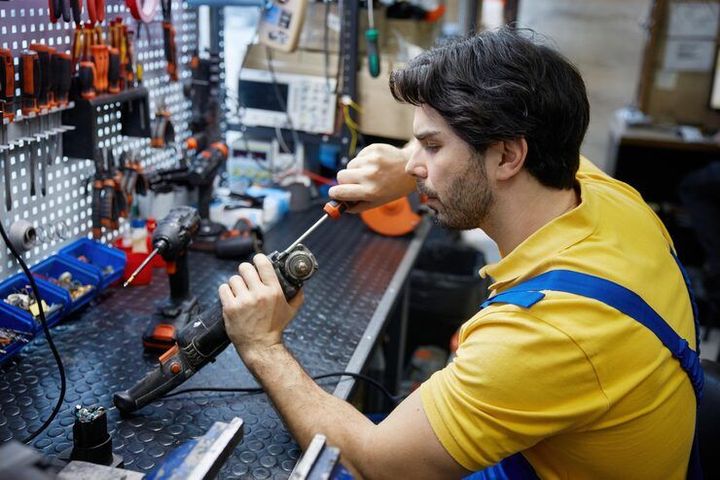
Industrial maintenance technicians perform many of the hands-on activities required to maintain equipment.
Their responsibilities can include:
-
Inspecting machinery
-
Troubleshooting equipment
-
Performing preventive maintenance
-
Replacing components
-
Testing equipment
-
Reading technical documentation
-
Recording maintenance activities
-
Following workplace safety procedures
Depending on the facility, maintenance teams may include mechanical technicians, electrical technicians, instrumentation specialists, millwrights, engineers, and other professionals.
Industrial Maintenance and Workplace Safety
Maintenance work can involve mechanical, electrical, thermal, chemical, or other workplace hazards. Appropriate safety procedures are therefore an essential part of an industrial maintenance program.
Organizations should develop maintenance procedures that reflect applicable laws, regulations, equipment instructions, and workplace conditions.
Important safety practices may include:
-
Equipment isolation procedures
-
Appropriate personal protective equipment
-
Electrical safety procedures
-
Machine guarding
-
Hazard identification
-
Proper tools and equipment
-
Employee training
-
Maintenance documentation
Safety requirements vary by workplace and jurisdiction, so organizations should rely on qualified safety professionals and applicable regulatory requirements when developing procedures.
Technology Trends in Industrial MRO
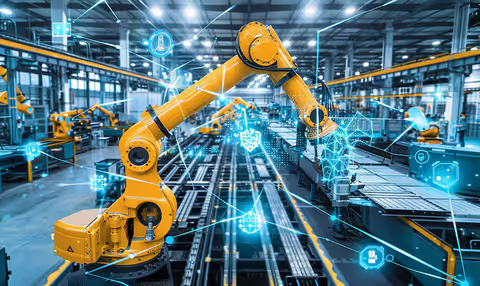
Technology is changing how maintenance teams monitor equipment and manage maintenance activities.
Internet of Things (IoT)
Industrial IoT sensors can collect information such as temperature, vibration, pressure, or operating conditions.
This information can help maintenance teams understand equipment condition and identify unusual patterns.
Artificial Intelligence and Data Analytics
AI and data analytics can be used to analyze large volumes of equipment information. Depending on the quality of the available data, these technologies may assist with identifying patterns, prioritizing maintenance tasks, and supporting maintenance planning.
Remote Equipment Monitoring
Connected monitoring systems can allow authorized personnel to review equipment information remotely. This can be particularly useful for facilities with distributed assets.
Digital Maintenance Records
Digital records can make it easier to access equipment history, work orders, inspection results, and maintenance documentation.
How to Build an Effective MRO Strategy
Developing an effective MRO strategy requires an understanding of the facility's equipment, operational priorities, maintenance resources, and costs.
Step 1: Identify Critical Assets
Start by identifying equipment that has a significant effect on production, safety, quality, or facility operations.
Step 2: Review Maintenance History
Analyze previous failures, repairs, inspections, and maintenance activities to identify recurring issues.
Step 3: Select Appropriate Maintenance Methods
Different assets may require different strategies. Preventive maintenance may be appropriate for some equipment, while condition monitoring or predictive maintenance may be more suitable for other assets.
Step 4: Improve Spare Parts Management
Identify critical spare parts and establish appropriate inventory policies based on usage, lead times, equipment criticality, and operational requirements.
Step 5: Track Maintenance Performance
Organizations can monitor metrics such as:
-
Equipment availability
-
Maintenance costs
-
Planned versus unplanned maintenance
-
Mean time between failures (MTBF)
-
Mean time to repair (MTTR)
-
Preventive maintenance completion
-
Spare-parts usage
These measurements can help maintenance managers identify areas for improvement.
MRO Procurement and Supplier Management
MRO procurement involves sourcing maintenance products, equipment, components, and services.
Organizations may purchase items directly from manufacturers, authorized distributors, specialized suppliers, or industrial procurement platforms.
Important purchasing considerations can include:
-
Product specifications
-
Quality requirements
-
Supplier reliability
-
Lead times
-
Warranty terms
-
Total cost of ownership
-
Availability of replacement parts
-
Technical support
The lowest purchase price is not always the lowest overall cost. Product quality, expected service life, maintenance requirements, and availability can also affect total operating costs.
Benefits of a Well-Managed MRO Program
A well-organized MRO program can provide several operational benefits:
-
Better maintenance planning
-
Improved equipment visibility
-
Reduced unexpected downtime
-
More organized spare-parts inventory
-
Better maintenance documentation
-
Improved resource planning
-
More informed asset replacement decisions
-
Greater operational consistency
Results vary depending on the facility, equipment, maintenance practices, and implementation quality.
Future of Industrial Maintenance and MRO
The industrial maintenance sector is increasingly combining traditional maintenance practices with connected equipment, data analytics, automation, and digital management systems.
Future MRO programs are likely to place greater emphasis on equipment condition data, predictive analytics, connected assets, digital work orders, and integrated enterprise asset management (EAM) systems.
However, technology does not replace the need for skilled maintenance personnel. Human expertise remains important for diagnosing complex equipment problems, interpreting information, performing repairs, and making maintenance decisions.
Conclusion
Industrial maintenance and repair is a fundamental part of modern industrial operations. MRO covers much more than repairing broken machinery—it includes preventive maintenance, equipment monitoring, spare-parts management, asset management, procurement, maintenance software, and operational planning.
By combining appropriate maintenance strategies with reliable equipment information, organized MRO inventory, skilled personnel, and effective maintenance management, organizations can make better decisions about their industrial assets and long-term operating costs.
For businesses researching industrial maintenance services, maintenance management software, MRO inventory management, predictive maintenance, industrial asset management, and equipment maintenance, understanding the fundamentals of MRO is an important first step toward developing an effective maintenance program.