Industrial Machinery Components: Types, Functions, Materials, and Maintenance facts
Industrial machinery components are the individual parts that work together to make machines operate safely, efficiently, and reliably. From bearings and gears to hydraulic systems, motors, seals, and control components, each part has a specific function within an industrial system.
These components are used across manufacturing, construction, agriculture, energy, transportation, food processing, and other industrial sectors. Understanding how they work can help businesses select suitable equipment, plan maintenance, reduce unexpected downtime, and improve operational efficiency.
What Are Industrial Machinery Components?
Industrial machinery components are mechanical, electrical, hydraulic, pneumatic, and electronic parts used to build or operate industrial machines.
A complete machine may contain hundreds or thousands of individual components. Some components transfer power, while others control movement, reduce friction, support loads, or protect internal mechanisms.
Common examples include:
- Bearings
- Gears
- Shafts
- Couplings
- Belts and pulleys
- Motors
- Pumps
- Valves
- Hydraulic cylinders
- Pneumatic actuators
- Seals and gaskets
- Fasteners
- Sensors
- Industrial control components
The correct combination of components depends on the machine's design, operating environment, load requirements, speed, temperature, and expected service life.
Why Industrial Machinery Components Matter
Industrial components have a direct effect on machine performance. A properly selected component can help equipment operate consistently, while an unsuitable or poorly maintained component may contribute to excessive wear or equipment failure.
Improving Machine Reliability
Reliable components help machinery perform its intended function over extended operating periods. Bearings, gears, shafts, seals, and couplings must be selected according to the mechanical loads and operating conditions involved.
Supporting Operational Efficiency
Efficient machinery can help manufacturers use energy, materials, and labor more effectively. Components such as efficient electric motors, variable-speed drives, precision bearings, and properly aligned transmission systems can contribute to better equipment performance.
Reducing Unplanned Downtime
Unexpected equipment failures can interrupt production schedules. Preventive maintenance and timely replacement of worn components can reduce the likelihood of sudden breakdowns.
Improving Workplace Safety
Industrial machinery components also contribute to safe machine operation. Braking systems, guards, emergency controls, pressure-control devices, sensors, and properly maintained mechanical parts can help reduce operational risks.
Major Types of Industrial Machinery Components
Industrial machinery components can be grouped according to their function and technology.
Bearings
Bearings support rotating or moving parts while reducing friction between surfaces.
Common types include:
- Ball bearings
- Roller bearings
- Tapered roller bearings
- Needle bearings
- Plain bearings
- Thrust bearings
Bearings are commonly found in motors, pumps, conveyors, machine tools, gearboxes, and industrial production equipment.
Bearing selection can depend on load capacity, rotational speed, temperature, lubrication requirements, available space, and operating environment.
Gears
Gears transfer rotational motion and mechanical power between shafts. They can also change speed, torque, and direction.
Common industrial gear types include:
- Spur gears
- Helical gears
- Bevel gears
- Worm gears
- Planetary gears
- Rack-and-pinion systems
Industrial gear systems are used in conveyors, machine tools, robotics, lifting equipment, packaging machinery, and other mechanical systems.
Shafts
Shafts transfer mechanical power from one rotating component to another. They are commonly manufactured from engineered metals selected for strength, durability, and resistance to fatigue.
Shaft design considers factors such as:
- Torque
- Bending forces
- Rotational speed
- Shaft diameter
- Material properties
- Operating temperature
Correct alignment is important because excessive misalignment can increase vibration and accelerate component wear.
Couplings
Couplings connect two shafts and transmit rotational power. Depending on the design, they may also accommodate limited shaft misalignment or reduce the transmission of vibration.
Common coupling designs include flexible, rigid, jaw, gear, disc, and grid couplings.
Belts and Pulleys
Belts and pulleys provide another method of transferring mechanical power. They are frequently used in conveyors, fans, compressors, pumps, and industrial drive systems.
Different applications may require V-belts, timing belts, flat belts, or specialized drive belts.
Motors
Electric motors convert electrical energy into mechanical motion. They are among the most widely used components in industrial equipment.
Industrial applications may use:
- AC motors
- DC motors
- Servo motors
- Stepper motors
- Synchronous motors
- Induction motors
Motor selection depends on factors such as power requirements, speed, torque, duty cycle, efficiency, environmental conditions, and control requirements.
Hydraulic and Pneumatic Components
Many industrial machines use fluid power to generate and control movement.
Hydraulic Components
Hydraulic systems use pressurized fluid to transmit power. Typical components include:
- Hydraulic pumps
- Hydraulic cylinders
- Hydraulic motors
- Directional control valves
- Pressure valves
- Hydraulic filters
- Hoses and fittings
- Hydraulic reservoirs
Hydraulic machinery is commonly used where high force and controlled movement are required.
Pneumatic Components
Pneumatic systems use compressed air to operate mechanical devices. Common components include:
- Air compressors
- Pneumatic cylinders
- Solenoid valves
- Air filters
- Regulators
- Lubricators
- Air hoses
- Pneumatic fittings
Pneumatic systems are widely used in automation, assembly lines, packaging machinery, and material-handling equipment.
Electrical and Automation Components
Modern industrial machinery increasingly combines mechanical equipment with electrical and digital control systems.
Sensors
Industrial sensors collect information about machine conditions or processes. They may measure:
- Temperature
- Pressure
- Position
- Speed
- Vibration
- Flow
- Proximity
- Level
Sensor data can be used by control systems to monitor equipment and automate machine operations.
Variable Frequency Drives
Variable frequency drives, or VFDs, control the speed of AC motors by adjusting electrical frequency and voltage.
They are commonly used in pumps, fans, conveyors, compressors, and other variable-speed applications.
Programmable Logic Controllers
Programmable logic controllers, commonly called PLCs, are industrial control devices used to automate machine processes.
A PLC can receive signals from sensors, process programmed instructions, and control motors, valves, actuators, and other equipment.
Materials Used in Machinery Components
Industrial components are manufactured from different materials depending on the application.
Steel
Steel is widely used because of its strength, durability, machinability, and availability. Different grades can provide specific mechanical and environmental properties.
Stainless Steel
Stainless steel is often selected for applications where corrosion resistance is important. It can be found in food-processing equipment, chemical-processing machinery, and equipment exposed to moisture.
Aluminum
Aluminum is lightweight and has useful corrosion-resistant properties. It is often used when reducing component weight is important.
Engineering Plastics
Engineering plastics can provide low weight, chemical resistance, electrical insulation, and low-friction characteristics. Their suitability depends on operating temperature, load, and chemical exposure.
Specialized Alloys
Some demanding applications require nickel-based alloys, titanium alloys, or other engineered materials. These materials may be selected for high-temperature strength, corrosion resistance, or other specialized performance requirements.
How to Select Industrial Machinery Components
Choosing the correct component requires more than comparing purchase prices. Engineers and maintenance teams typically consider technical specifications and operating conditions.
Check Load Requirements
Determine the expected radial, axial, impact, or combined loads. Components must have sufficient capacity for the intended application.
Consider Operating Speed
Rotational speed can affect bearings, motors, gears, seals, and other moving components. A component designed for low-speed operation may not be suitable for high-speed machinery.
Evaluate Temperature
High or low temperatures can affect lubricants, seals, plastics, electronics, and metal components. The operating temperature range should therefore be considered during component selection.
Examine the Operating Environment
Dust, moisture, chemicals, vibration, and corrosive materials can affect component performance. Machinery used outdoors or in harsh industrial environments may require specialized protection.
Review Compatibility
Replacement parts should be compatible with the machine's dimensions, specifications, materials, electrical characteristics, and operating requirements.
Consider Total Cost of Ownership
The cheapest component is not always the most economical choice. Businesses may evaluate purchase cost alongside service life, maintenance requirements, energy consumption, replacement frequency, and potential downtime.
Industrial Machinery Maintenance
Regular maintenance is essential for extending machinery service life and maintaining reliable performance.
Preventive Maintenance
Preventive maintenance involves scheduled inspections, lubrication, cleaning, adjustments, and component replacement based on time or operating cycles.
Typical activities include:
- Bearing inspection
- Lubricant replacement
- Belt tension checks
- Gear inspection
- Electrical connection checks
- Filter replacement
- Seal inspection
- Fastener checks
Predictive Maintenance
Predictive maintenance uses equipment data to identify potential problems before they develop into major failures.
Technologies may include:
- Vibration monitoring
- Thermal imaging
- Oil analysis
- Ultrasonic inspection
- Motor current analysis
- Sensor-based condition monitoring
Predictive maintenance can be particularly useful for critical equipment where unexpected downtime has significant operational consequences.
Corrective Maintenance
Corrective maintenance is performed after a problem has been identified. Depending on the situation, technicians may repair, adjust, or replace the affected component.
Industrial Machinery Components and Automation
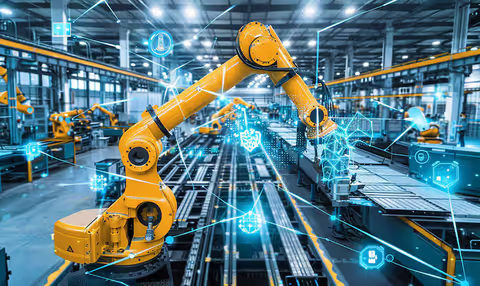
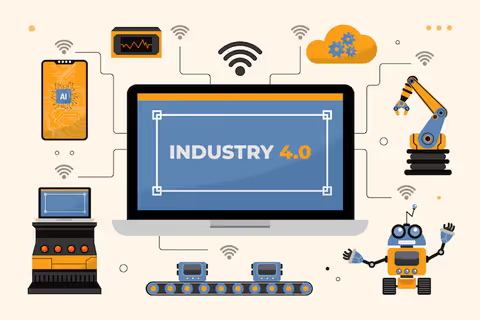
Automation has changed how industrial machinery is designed and maintained. Modern machines can combine mechanical components with sensors, controllers, software, and communication systems.
For example, a production machine may use a motor to generate movement, a gearbox to modify torque, sensors to monitor position, and a PLC to control the sequence of operations.
This integration allows manufacturers to collect operational data and improve process monitoring.
Role of Industrial Component Suppliers
Industrial component suppliers provide manufacturers and maintenance teams with parts required for equipment installation, repair, and replacement.
When evaluating a supplier, businesses may consider:
- Product specifications
- Component availability
- Quality documentation
- Technical support
- Delivery options
- Warranty terms
- Replacement availability
- Industry certifications
For critical equipment, maintaining access to suitable replacement components can be an important part of maintenance planning.
Common Problems With Machinery Components
Industrial components can experience several forms of deterioration.
Wear and Tear
Continuous mechanical movement can gradually wear surfaces, especially when lubrication or alignment is inadequate.
Corrosion
Moisture, chemicals, salt, and other environmental factors can cause corrosion in susceptible materials.
Misalignment
Incorrect alignment between shafts, couplings, bearings, or other components can increase vibration and mechanical stress.
Overheating
Excessive friction, overloading, insufficient lubrication, or electrical problems can contribute to elevated temperatures.
Contamination
Dust, dirt, water, and other contaminants can enter machinery and damage bearings, hydraulic systems, seals, and other components.
Industrial Machinery Components Market Trends
The industrial machinery sector continues to evolve as manufacturers focus on automation, energy efficiency, equipment reliability, and digital monitoring.
Several developments are influencing component selection:
- Increased industrial automation
- Greater use of condition monitoring
- Demand for energy-efficient motors
- Growth of smart manufacturing
- Wider use of industrial sensors
- Expansion of predictive maintenance
- Increased focus on equipment lifecycle management
These developments are encouraging businesses to look beyond individual replacement parts and consider the complete lifecycle of industrial equipment.
Frequently Asked Questions
What are the most common industrial machinery components?
Common components include bearings, gears, shafts, couplings, motors, belts, pulleys, pumps, valves, seals, fasteners, sensors, and control devices.
How often should industrial components be replaced?
There is no universal replacement interval. Service life depends on operating hours, load, speed, environmental conditions, maintenance practices, component quality, and machine design.
What is predictive maintenance?
Predictive maintenance uses equipment data and inspection technologies to identify developing problems and estimate when maintenance may be required.
Why are bearings important in industrial machinery?
Bearings support rotating or moving parts and help reduce friction. Their condition can significantly influence machinery performance and reliability.
What should businesses consider when buying replacement components?
Businesses should consider technical specifications, compatibility, quality, operating conditions, expected service life, availability, warranty terms, and total cost of ownership.
Conclusion
Industrial machinery components are fundamental to the performance, reliability, and safety of modern industrial equipment. Mechanical parts such as gears, bearings, shafts, and couplings work alongside motors, hydraulic systems, pneumatic equipment, sensors, and automation controls to perform complex industrial tasks.
Understanding component specifications and operating requirements can help organizations make informed equipment and maintenance decisions. Regular preventive maintenance, condition monitoring, and appropriate replacement strategies can also help extend machinery service life and reduce avoidable downtime.
As industrial automation and digital monitoring continue to develop, machinery components are becoming increasingly connected to broader equipment-management systems. This makes component selection, maintenance planning, and lifecycle management important considerations for modern industrial operations.