How to Choose the Right Industrial Rubber Suppliers
Industrial rubber suppliers provide specialised elastomer materials and components used in manufacturing, automotive, construction, engineering and infrastructure. These products include seals, gaskets, hoses, vibration mounts, molded components and rubber-to-metal assemblies. Industrial rubber manufacturers work with different compounds to meet requirements such as flexibility, chemical resistance, temperature tolerance and durability. Understanding rubber types, molding processes and technical specifications helps businesses identify suitable materials for their applications.
1. Understanding Industrial Rubber Suppliers
Industrial rubber suppliers provide raw rubber compounds, semi-finished materials and finished components for different industrial applications. Their product ranges may include rubber sheets, molded parts, extruded profiles, seals, gaskets, hoses, bushings and vibration-control components.
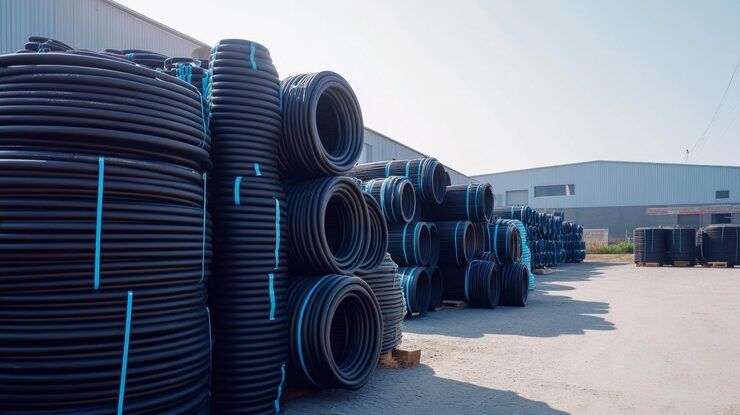
Rubber is an elastomer, meaning it can deform under pressure and recover much of its original shape when the force is removed. Its performance depends on the polymer type, formulation, manufacturing method and operating environment.
Some suppliers distribute standard rubber products, while others manufacture components according to customer drawings, samples or technical specifications. Their capabilities may include compound development, mold design, compression molding, transfer molding, injection molding and rubber-to-metal bonding.
Businesses generally evaluate suppliers based on material knowledge, production capabilities, quality procedures, dimensional accuracy and product documentation.
2. Importance of Industrial Rubber Components
Industrial rubber components help equipment operate reliably by providing sealing, cushioning, flexibility and vibration control. They can also protect machinery from dust, moisture, chemicals and mechanical movement when the material is suitable for the application.
Common industrial uses include:
-
Automotive: Rubber bushings, engine mounts, seals and vibration-control components.
-
Manufacturing: Machine mounts, gaskets, rollers and protective components.
-
Construction: Expansion joints, weather seals and vibration isolation products.
-
Oil and gas: Seals, diaphragms and components designed for specific fluid and pressure conditions.
-
Electrical equipment: Insulating components, protective covers and cable-related parts.
-
Water treatment: Sealing components and rubber-lined parts designed for compatible operating environments.
Choosing an unsuitable rubber compound can lead to swelling, cracking, hardening, loss of flexibility or premature wear. Material selection should therefore consider the actual operating conditions rather than relying only on general product descriptions.
3. Recent Developments in Rubber Manufacturing
During 2024–2026, industrial rubber manufacturing has continued to focus on process control, specialised compounds, production automation and material efficiency.
Several developments influence the sector:
-
Advanced elastomer compounds: Manufacturers are developing formulations for demanding temperature, chemical and mechanical conditions.
-
Automated molding: Process monitoring and automated production equipment help maintain repeatability.
-
Digital quality records: Batch identification and inspection documentation support material traceability.
-
Custom component development: CAD models, digital drawings and prototype testing help manufacturers assess component designs.
-
Sustainability initiatives: Some manufacturers are examining recycled rubber content, material recovery and more efficient production methods.
-
Specialised bonding processes: Controlled surface preparation and curing procedures support rubber-to-metal component manufacturing.
These developments differ between manufacturers and product categories. Buyers should evaluate actual production capabilities and test documentation instead of assuming that every supplier uses the same methods.
4. Indian Regulations and Compliance
Industrial rubber manufacturing and the use of rubber components in India may involve environmental, workplace safety and product-specific requirements.
Important considerations include:
-
Environmental permissions: Manufacturing facilities may require applicable consent from the relevant State Pollution Control Board or Pollution Control Committee.
-
Factory safety: Applicable workplace safety requirements cover machinery operation, chemical handling, ventilation and worker protection.
-
Chemical management: Rubber compounding may involve chemicals that require appropriate storage, handling and safety documentation.
-
Waste management: Rubber scrap, used materials and manufacturing waste should be handled according to applicable environmental requirements.
-
BIS standards: Relevant Bureau of Indian Standards specifications may apply to particular rubber products, testing methods and applications.
-
Automotive requirements: Components supplied to automotive manufacturers may need to meet customer-specific specifications and applicable quality-system requirements.
Requirements depend on the product, facility, application and industry. Businesses should verify the latest applicable regulations and technical standards before manufacturing or using industrial rubber components.
5. Rubber Materials and Manufacturing Processes
Industrial rubber products are manufactured using different elastomers and processing techniques. The correct combination depends on the required flexibility, strength, temperature range and exposure conditions.
| Rubber type | General characteristics | Common applications |
|---|---|---|
| Natural Rubber (NR) | Elasticity, flexibility and resilience | Mounts, vibration pads and mechanical components |
| Nitrile Rubber (NBR) | Resistance to many oils and fuels | Oil seals, gaskets and hoses |
| EPDM | Weather, ozone and water resistance | Outdoor seals, roofing and automotive components |
| Silicone Rubber | Flexible across a broad temperature range | Electrical, medical and industrial components |
| Neoprene (CR) | Weather resistance and general-purpose durability | Gaskets, protective covers and seals |
| Fluoroelastomer (FKM) | Resistance to many chemicals and elevated temperatures | Specialised seals and industrial equipment |
Custom Molded Rubber Parts
Custom molded rubber parts are components manufactured according to specific shapes, dimensions and performance requirements. Examples include O-rings, diaphragms, bellows, bushings, grommets, seals and vibration mounts.
The development process generally begins with a drawing, sample or product specification. The manufacturer then evaluates the rubber compound, mold design, dimensions, hardness and production method.
Important factors include:
-
Required hardness, commonly expressed in Shore A.
-
Tensile strength and elongation requirements.
-
Compression set and resistance to deformation.
-
Operating temperature and chemical exposure.
-
Dimensional tolerances and surface finish.
Testing and sample approval help determine whether the component meets its intended application requirements.
Industrial Rubber Manufacturers
Industrial rubber manufacturers convert elastomer compounds into products through controlled processing methods. Their capabilities may include rubber mixing, compound formulation, mold development, curing, trimming and final inspection.
Manufacturers may specialise in automotive components, industrial seals, molded products, extruded profiles or rubber-lined equipment. When evaluating manufacturing capability, businesses should review equipment, material handling, production capacity, inspection methods and technical experience relevant to the required component.
Custom Rubber Molding
Custom rubber molding produces components using a shaped mold and a suitable curing process. Three commonly used methods are:
-
Compression molding: Rubber is placed into a heated mold cavity and compressed to form the component.
-
Transfer molding: Rubber is transferred from a chamber into mold cavities under pressure.
-
Injection molding: Prepared rubber compound is injected into a closed mold for controlled production.
The appropriate method depends on component geometry, production quantity, material characteristics and dimensional requirements. Mold design, curing time, temperature and pressure influence the finished product.
Rubber to Metal Bonding Services
Rubber to metal bonding services combine an elastomer with a metal insert to create an integrated component. These assemblies are used in engine mounts, vibration isolators, bushings, industrial supports and specialised sealing products.
The process generally involves preparing the metal surface, applying a compatible bonding system, placing the rubber compound and curing the assembly under controlled conditions.
Bonding performance depends on surface preparation, metal type, adhesive compatibility, rubber formulation and curing parameters. Inspection may include visual checks, dimensional measurement and suitable adhesion or performance testing.
6. Tools and Resources for Material Selection
Businesses can use technical resources to assess rubber materials and component requirements.
-
Material data sheets: Review hardness, tensile strength, elongation and temperature information.
-
Safety data sheets: Understand chemical handling, storage and workplace precautions.
-
CAD drawings: Define component geometry, dimensions and tolerances.
-
Hardness testing: Measure rubber hardness using an appropriate Shore scale.
-
Compression set testing: Evaluate the material's ability to recover after compression.
-
Environmental testing: Assess resistance to heat, ozone, fluids and ageing.
-
Inspection records: Track batch details, test results and production consistency.
For demanding applications, engineers should confirm material compatibility through testing under conditions that represent actual equipment operation.
7. Frequently Asked Questions
1. What products do industrial rubber suppliers provide?
They may provide rubber sheets, molded parts, seals, gaskets, hoses, extruded profiles, bushings and rubber-to-metal bonded components.
2. Which rubber materials are commonly used in industrial applications?
Natural rubber, NBR, EPDM, silicone, neoprene and FKM are commonly used. Each has different properties and application limitations.
3. What are custom molded rubber parts?
They are rubber components manufactured according to specific drawings, samples or technical requirements. Examples include seals, diaphragms, bellows and vibration mounts.
4. How does rubber-to-metal bonding work?
The process combines a prepared metal insert with a rubber compound using a compatible bonding system and controlled curing conditions. The result is an integrated component.
5. How should businesses evaluate industrial rubber manufacturers?
Review their material expertise, molding processes, inspection procedures, technical documentation, production capabilities and experience with similar applications.
8. Conclusion
Industrial rubber suppliers support manufacturing, automotive, construction and engineering industries through specialised elastomer materials and components. Custom molding and rubber-to-metal bonding allow manufacturers to produce parts for specific mechanical and environmental requirements. Understanding rubber properties, production processes and quality checks helps businesses assess component suitability. Clear technical specifications and appropriate testing support consistent industrial applications.