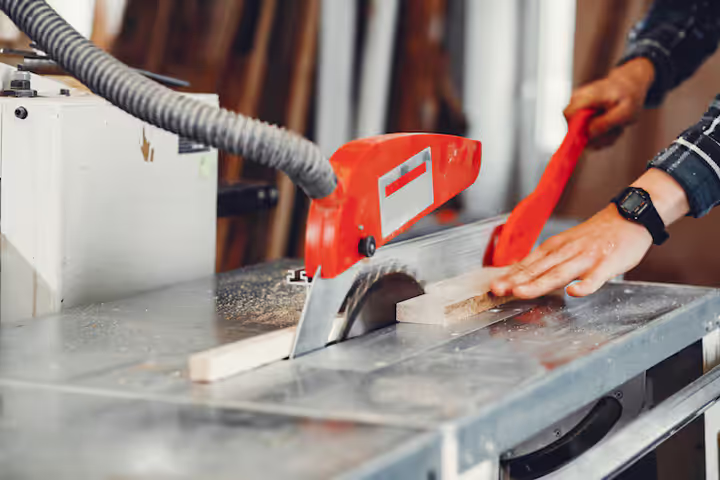
How Sheet Cutting Machines Use to Help Achieve Clean and Accurate Cuts
Sheet cutting machines are essential equipment used across many industries to create accurate and consistent cuts in different types of sheet materials. These machines are commonly used for processing metal sheets, plastic sheets, composite panels, paper, acrylic, and other flat materials into precise shapes and dimensions.
Modern manufacturing depends on precision. Even a small cutting error can affect the quality, safety, and performance of a finished product. As industries continue to adopt automation and digital manufacturing methods, sheet cutting machines have become an important part of production processes because they improve accuracy, reduce material waste, and maintain consistent quality.
Industries such as automotive manufacturing, aerospace engineering, construction, electronics, furniture production, renewable energy, and industrial fabrication rely on sheet cutting technology to produce components that meet exact design specifications.
Understanding Sheet Cutting Machines
What Is a Sheet Cutting Machine?
A sheet cutting machine is a manufacturing machine designed to cut flat sheets into required sizes, patterns, or shapes. Depending on the material and application, different cutting technologies may be used.
Common materials include:
- Steel sheets
- Stainless steel
- Aluminum
- Copper
- Brass
- Plastic sheets
- Acrylic panels
- Composite materials
- Rubber sheets
- Paper and cardboard
The primary objective is to create clean edges while maintaining dimensional accuracy and minimizing waste.
Common Types of Sheet Cutting Machines
| Machine Type | Common Materials | Typical Applications |
|---|---|---|
| Laser Cutting Machine | Metal, plastic, acrylic | Precision manufacturing |
| Fiber Laser Cutter | Steel, aluminum, stainless steel | Industrial fabrication |
| Plasma Cutting Machine | Thick metal sheets | Heavy engineering |
| Waterjet Cutting Machine | Metal, stone, glass, composites | Heat-sensitive materials |
| Mechanical Shearing Machine | Metal sheets | Straight-line cutting |
| CNC Sheet Cutting Machine | Various materials | Automated production |
Why Clean and Accurate Cuts Matter
Clean cuts improve both product appearance and functionality. Poor cutting quality may create rough edges, dimensional variations, or material damage that affects later manufacturing steps.
Industries benefit from accurate cutting because it helps:
- Maintain consistent product quality
- Improve assembly accuracy
- Reduce production errors
- Minimize material waste
- Increase manufacturing efficiency
- Support automated production systems
- Reduce secondary finishing operations
Precision cutting is particularly important in industries where components must fit together with very small tolerances.
How Sheet Cutting Machines Achieve Precision
Computer Numerical Control (CNC)
Many modern sheet cutting machines use CNC technology.
A CNC system follows digital design files and automatically controls machine movement. This reduces manual measurement errors while maintaining consistent cutting accuracy across multiple production cycles.
Benefits include:
- Repeatable results
- High positioning accuracy
- Digital programming
- Reduced operator variation
- Complex shape production
Advanced Cutting Technologies
Different cutting methods are selected based on material type and thickness.
Laser Cutting
Laser cutting uses a focused beam of light to melt or vaporize material. It produces narrow cutting widths and smooth edges.
Suitable for:
- Thin metal sheets
- Stainless steel
- Aluminum
- Precision components
Fiber Laser Technology
Fiber laser systems have become increasingly common due to their efficiency and ability to process reflective metals.
Advantages include:
- High cutting speed
- Excellent edge quality
- Reduced maintenance
- Consistent accuracy
Waterjet Cutting
Waterjet systems use high-pressure water, sometimes combined with abrasive particles.
This process avoids heat-related material distortion, making it useful for:
- Composite materials
- Glass
- Stone
- Thick metals
- Heat-sensitive materials
Plasma Cutting
Plasma cutting uses electrically conductive gas to cut thick metal sheets.
It is widely used for:
- Structural steel
- Heavy fabrication
- Industrial equipment
- Construction materials
Features That Improve Cutting Accuracy
Modern sheet cutting machines include several technologies that help maintain precision.
Automatic Positioning Systems
Sensors continuously monitor machine movement and adjust cutting paths to improve accuracy.
Material Holding Systems
Vacuum tables or clamping systems keep sheets stable during cutting.
This reduces movement that could otherwise affect edge quality.
Precision Motion Control
Servo motors and precision guide rails help maintain smooth machine movement during operation.
CAD and CAM Software Integration
Design software allows engineers to create detailed cutting layouts before production begins.
Benefits include:
- Better material utilization
- Reduced waste
- Improved production planning
- Consistent design accuracy
Industries That Use Sheet Cutting Machines
Sheet cutting technology supports many industrial sectors.
| Industry | Common Uses |
|---|---|
| Automotive | Vehicle body panels and components |
| Aerospace | Aircraft structural parts |
| Construction | Steel fabrication and roofing materials |
| Electronics | Electrical enclosures and panels |
| Furniture Manufacturing | Decorative panels and frames |
| Renewable Energy | Solar panel structures and wind energy components |
| Industrial Equipment | Machine parts and fabricated assemblies |
Importance in Today's Manufacturing Environment
Manufacturing continues to evolve toward higher precision, automation, and sustainability.
Sheet cutting machines contribute by helping manufacturers:
- Improve production consistency
- Support digital manufacturing workflows
- Reduce scrap material
- Increase operational efficiency
- Produce complex component designs
- Maintain product quality standards
These advantages are especially valuable as industries adopt smart manufacturing technologies and automated production systems.
Recent Updates in Sheet Cutting Technology
The sheet cutting industry has seen several technological developments during 2025 and early 2026.
Increased AI Integration
Many equipment manufacturers have expanded the use of artificial intelligence to improve machine monitoring, predictive maintenance, and cutting optimization.
AI-assisted systems can help identify potential maintenance needs before machine performance declines.
Improved Automation
Recent manufacturing trends show greater adoption of:
- Robotic material loading
- Automatic sheet unloading
- Digital production monitoring
- Remote machine diagnostics
These technologies help improve production consistency while reducing manual intervention.
Energy-Efficient Systems
Newer laser cutting systems introduced during 2025 focus on lower energy consumption while maintaining cutting performance.
Energy-efficient manufacturing continues to receive attention as industries work toward sustainability goals.
Industry 4.0 Connectivity
More sheet cutting machines now support:
- Cloud-based monitoring
- Production analytics
- Machine connectivity
- Industrial Internet of Things (IIoT)
These capabilities allow manufacturers to monitor production performance in real time and improve operational decision-making.
Laws and Policies Affecting Sheet Cutting Machines
The operation of sheet cutting machines is influenced by workplace safety regulations, environmental standards, and manufacturing quality requirements.
Although regulations vary between countries, several international standards are commonly referenced.
Workplace Safety
Manufacturing facilities often follow occupational safety requirements covering:
- Machine guarding
- Emergency stop systems
- Operator training
- Protective equipment
- Electrical safety
These measures help reduce workplace risks.
Environmental Regulations
Many countries encourage manufacturing practices that reduce:
- Air emissions
- Industrial waste
- Noise pollution
- Energy consumption
Modern cutting equipment often includes features that support compliance with environmental requirements.
Quality Management Standards
Many manufacturers operate under internationally recognized quality management systems that emphasize:
- Process consistency
- Product traceability
- Continuous improvement
- Documentation
Government Manufacturing Programs
Several countries continue to support advanced manufacturing through industrial modernization initiatives that encourage:
- Digital manufacturing
- Smart factory development
- Automation adoption
- Energy-efficient industrial technologies
These programs aim to strengthen industrial productivity while supporting sustainable manufacturing practices.
Helpful Tools and Resources
Several digital tools assist engineers, manufacturers, educators, and production planners working with sheet cutting processes.
| Tool or Resource | Purpose |
|---|---|
| CAD Software | Create engineering drawings |
| CAM Software | Generate machine cutting paths |
| CNC Programming Software | Prepare cutting programs |
| Material Thickness Charts | Select cutting parameters |
| Sheet Metal Bend Calculators | Calculate bending allowances |
| Nesting Software | Optimize material utilization |
| Manufacturing Standards Documents | Understand quality requirements |
| Industrial Safety Checklists | Improve workplace safety planning |
Additional educational resources include:
- Manufacturing engineering publications
- Industrial automation learning platforms
- Mechanical engineering textbooks
- Technical standards organizations
- Machine manufacturer documentation
Factors That Influence Cutting Quality
Several variables affect the final cutting result.
Material Properties
Different materials require different cutting methods depending on:
- Thickness
- Hardness
- Surface finish
- Heat sensitivity
Machine Calibration
Proper calibration helps maintain dimensional accuracy and edge quality.
Cutting Speed
The selected cutting speed should match the material and cutting technology being used.
Maintenance
Routine inspection helps ensure:
- Stable machine performance
- Accurate positioning
- Reliable cutting quality
- Longer equipment lifespan
Comparison of Common Cutting Technologies
| Technology | Precision | Heat Generation | Best For |
|---|---|---|---|
| Laser | Very High | Moderate | Thin and medium metals |
| Fiber Laser | Very High | Moderate | Reflective metals |
| Waterjet | High | None | Heat-sensitive materials |
| Plasma | Medium to High | High | Thick conductive metals |
| Mechanical Shearing | High (Straight Cuts) | None | Straight sheet cutting |
Simple Workflow of a Sheet Cutting Process
Design Creation
       │
       ▼
CAD Drawing
       │
       ▼
CAM Programming
       │
       ▼
Material Selection
       │
       ▼
Machine Setup
       │
       ▼
Sheet Cutting
       │
       ▼
Quality Inspection
       │
       ▼
Finished Components
Frequently Asked Questions
What is the main purpose of a sheet cutting machine?
A sheet cutting machine is designed to cut flat materials accurately into required shapes and dimensions while maintaining consistent quality and minimizing material waste.
Which industries commonly use sheet cutting machines?
Automotive, aerospace, construction, electronics, industrial manufacturing, renewable energy, furniture production, and metal fabrication industries commonly use sheet cutting machines.
Why is CNC technology important in sheet cutting?
CNC technology automates machine movement based on digital designs, helping improve cutting precision, repeatability, and production consistency.
Which cutting method provides the highest precision?
Laser and fiber laser cutting are widely recognized for producing highly accurate cuts with smooth edges, particularly for thin and medium-thickness metal sheets. The most suitable method depends on the material and application.
How do modern sheet cutting machines support sustainability?
Many modern machines improve material utilization, reduce scrap generation, optimize energy consumption, and support automated manufacturing processes that enhance production efficiency.
Conclusion
Sheet cutting machines play an important role in modern manufacturing by helping produce clean, accurate, and consistent cuts across a wide range of materials. Their combination of precision engineering, CNC automation, advanced cutting technologies, and digital integration supports efficient production while maintaining high quality standards.
Recent developments in artificial intelligence, Industry 4.0 connectivity, robotic automation, and energy-efficient machine design continue to improve manufacturing capabilities. At the same time, workplace safety regulations, environmental standards, and quality management practices encourage responsible and reliable industrial operations.
As manufacturing continues to evolve, sheet cutting machines remain a key technology that enables precise production, reduces material waste, and supports the growing demand for high-quality engineered components across numerous industries.