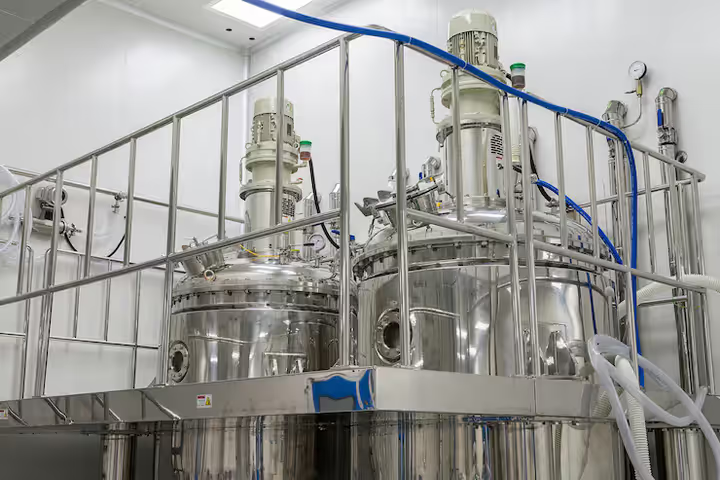
Explore Bioreactors: The Engine Behind Biopharmaceutical Manufacturing and Cell Culture Success
Bioreactors sit at the heart of modern biotechnology and biopharmaceutical manufacturing. These specialized vessels create and maintain the precise conditions living cells or microorganisms need to grow, multiply, and produce valuable products such as monoclonal antibodies, vaccines, recombinant proteins, and cell therapies. Without reliable bioreactors, scaling laboratory discoveries into commercial biopharma products would be nearly impossible.
What Exactly Is a Bioreactor?
A bioreactor is an engineered system designed to support a controlled biological environment. It regulates critical parameters including temperature, pH, dissolved oxygen, nutrient levels, and mixing so that cells or microbes can perform their work efficiently and consistently. In biopharmaceutical manufacturing, bioreactors move processes from small flasks or shake flasks into volumes that range from a few liters in research to thousands of liters in commercial production.
The core purpose remains the same across scales: provide a sterile, monitored space where biology can be directed toward a useful outcome. Sensors continuously track conditions, while automated systems adjust feeds, gases, and agitation to keep the culture healthy and productive.
Main Types of Bioreactors Used Today
Stirred Tank Bioreactors
Stirred tank bioreactors remain the most widely used design in both research and industrial biopharma. A cylindrical vessel contains one or more impellers that mix the culture medium while a sparger supplies oxygen. This combination delivers excellent homogeneity and oxygen transfer, making stirred tank systems suitable for microbial fermentation as well as mammalian cell culture.
These bioreactors are available as traditional stainless-steel vessels for large-scale commercial production and as single-use versions for greater flexibility. Sizes range from benchtop units of a few liters up to multi-thousand-liter production systems.
Single-Use Bioreactors
Single-use bioreactors have transformed bioprocessing over the past two decades. Instead of a fixed stainless-steel vessel, the product-contact surface is a pre-sterilized, gamma-irradiated polymer bag mounted in a reusable support frame. The bag is discarded after each run.
This design eliminates the need for clean-in-place and steam-in-place procedures between batches. Facilities gain faster turnaround times, lower risk of cross-contamination, and reduced capital investment in complex utility systems. Single-use systems work especially well for clinical manufacturing, multi-product facilities, and processes that require frequent changeovers. Current commercial platforms commonly reach 2,000 liters, with some systems extending toward 5,000–6,000 liters.
Other Specialized Designs
Rocker or wave bioreactors use a gentle rocking motion to mix cells inside a disposable bag. They generate low shear forces and suit shear-sensitive cells such as certain stem-cell or primary-cell cultures. Fixed-bed and packed-bed bioreactors provide large surface areas for adherent cells and appear frequently in viral-vector and vaccine production. Airlift and bubble-column designs rely on gas flow rather than mechanical impellers and can be useful for certain microbial or algal processes.
How Bioreactors Operate in Practice
Most biopharmaceutical processes run in fed-batch or perfusion mode. In fed-batch culture, nutrients are added gradually over a period of roughly 10–14 days while the culture grows and produces the desired molecule. Perfusion systems continuously supply fresh medium and remove spent medium while retaining the cells, enabling higher cell densities and longer production runs.
Key control loops manage dissolved oxygen through sparging and agitation, pH through acid or base addition or gas adjustment, and temperature through jackets or external heat exchangers. Modern systems integrate process analytical technology so operators can monitor critical quality attributes in real time and make adjustments before product quality drifts.
Applications in Biopharmaceutical Manufacturing
Bioreactors support the production of a wide range of biologics. Mammalian cell culture, especially Chinese hamster ovary cells, is the workhorse for monoclonal antibodies and many therapeutic proteins. Microbial systems using bacteria or yeast produce insulin, growth hormone, enzymes, and certain vaccines. Cell and gene therapy manufacturing increasingly relies on specialized bioreactors for stem cells, immune cells, and viral vectors.
The choice of bioreactor type and operating mode directly influences product yield, quality attributes such as glycosylation patterns, and overall cost of goods. Process development teams spend considerable effort matching cell-line characteristics with the right vessel design, mixing intensity, and feeding strategy.
Single-Use Versus Stainless-Steel Bioreactors: Key Considerations
Stainless-steel systems excel at very large scales and high annual throughput for a single commercial product. Once the facility is built and validated, the cost per batch can be lower because there are no disposable bags to purchase each run. However, they require significant capital investment, complex cleaning and sterilization infrastructure, and longer changeover times.
Single-use systems lower the barrier to entry, accelerate facility construction, and simplify multi-product operations. They reduce cleaning validation burdens and contamination risk. The trade-off appears in consumable costs and current limitations on maximum vessel size. Many modern plants adopt hybrid approaches, using single-use systems for clinical and early commercial stages while retaining stainless steel for high-volume blockbuster products.
Looking Ahead
Advances continue in larger single-use capacities, improved sensor integration, continuous processing, and digital twins that model bioreactor performance in real time. As cell and gene therapies move toward broader commercial use, demand grows for systems that handle sensitive cell types with even greater gentleness and control.
Bioreactors will remain central to biopharmaceutical manufacturing for the foreseeable future. Understanding the available designs, their strengths, and the practical trade-offs between single-use and traditional stainless-steel systems helps scientists, engineers, and decision-makers choose the right tools for each stage of product development and commercial supply.