Explore Industrial Steel : Types, Manufacturing Processes, Applications, and Quality Standards
Industrial steel is one of the most widely used engineering materials in modern manufacturing, construction, transportation, energy production, and infrastructure development. Its combination of strength, durability, formability, and versatility makes it suitable for producing everything from heavy machinery and structural frameworks to pipelines, storage tanks, automotive components, and industrial tools.
The properties of industrial steel depend on its chemical composition, manufacturing process, heat treatment, and intended application. Different steel grades are developed to meet specific engineering requirements, including load-bearing capacity, corrosion resistance, hardness, weldability, and performance at elevated temperatures. Understanding these characteristics helps engineers, manufacturers, and construction professionals select suitable materials for their projects.
What Is Industrial Steel?
Industrial steel is an iron-based alloy that generally contains carbon and may include other elements such as chromium, nickel, manganese, molybdenum, or vanadium. These elements influence its mechanical properties, corrosion resistance, and suitability for different operating environments.
Steel is manufactured in various forms, including plates, sheets, coils, bars, rods, beams, tubes, and pipes. Each form serves a different purpose. For example, structural beams support buildings and industrial facilities, while steel sheets are used in equipment enclosures, vehicle bodies, and fabricated components.
The selection of industrial steel depends on the required strength, operating temperature, exposure to moisture or chemicals, fabrication requirements, and applicable engineering standards.
Types of Industrial Steel
Carbon Steel
Carbon steel is widely used in industrial manufacturing because its properties can be adjusted through carbon content, processing, and heat treatment. It is commonly classified as low-carbon, medium-carbon, and high-carbon steel.
Low-carbon steel is generally suitable for sheet metal fabrication, general construction, pipes, and components that require good formability and weldability. Medium-carbon steel is often used for shafts, gears, machine parts, and other components that require a balance of strength and toughness. High-carbon steel can provide greater hardness and wear resistance, making it useful for selected cutting tools, springs, and specialized mechanical components.
Carbon steel is not inherently as corrosion-resistant as stainless steel, so protective coatings or other corrosion-control measures may be necessary in exposed environments.
Stainless Steel
Stainless steel contains sufficient chromium to develop a protective passive surface layer that helps resist corrosion. Depending on the grade, it may also contain nickel, molybdenum, and other alloying elements.
Industrial stainless steel is commonly used in food-processing equipment, chemical-processing facilities, pharmaceutical manufacturing equipment, industrial kitchens, and applications where cleanliness or corrosion resistance is important.
Austenitic stainless steels, including commonly used 304 and 316 grades, are selected for many corrosion-resistant applications. However, their performance depends on the specific chemical environment, temperature, surface condition, and maintenance practices.
Alloy Steel
Alloy steel contains additional elements that improve particular mechanical or physical properties. Chromium, nickel, molybdenum, manganese, and vanadium may be added to achieve specific combinations of strength, toughness, hardenability, and resistance to wear or elevated temperatures.
Alloy steel is used in industrial gears, heavy machinery, automotive components, power-generation equipment, and certain pressure-containing components. Heat treatment is often important because it can significantly influence hardness, strength, and toughness.
The appropriate grade must be selected according to the component's loading conditions and operating environment rather than alloy composition alone.
Structural Steel
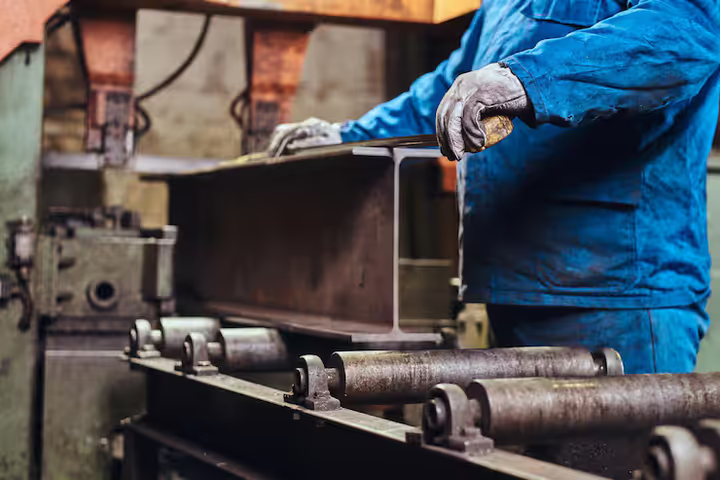
Structural steel is designed for load-bearing applications in buildings, industrial plants, bridges, warehouses, and other infrastructure. It is available in forms such as I-beams, H-beams, channels, angles, plates, and hollow structural sections.
Its performance depends on yield strength, tensile strength, ductility, weldability, and structural design. Engineers must consider not only the steel grade but also member dimensions, connections, corrosion protection, fire resistance, and the loads that the structure must withstand.
Tool Steel
Tool steel is developed for applications requiring specific levels of hardness, wear resistance, and dimensional stability. Some grades retain useful properties at elevated temperatures, making them suitable for demanding manufacturing operations.
Typical applications include cutting tools, dies, molds, punches, and forming equipment. The selection of tool steel depends on the material being processed, the operating temperature, the expected wear mechanism, and the required service life.
Industrial Steel Manufacturing Process
Raw Material Preparation
Steel production begins with raw materials such as iron ore, recycled steel scrap, and other inputs. The materials used depend on the production route and the desired steel composition.
Steelmaking facilities prepare and process these materials before converting them into molten steel. Accurate control of the input materials helps maintain consistent chemical composition and product quality.
Ironmaking and Steelmaking
In the blast furnace–basic oxygen furnace route, iron ore is processed to produce iron, which is then refined into steel. In an electric arc furnace, electrical energy is used to melt metallic feedstock, often including recycled steel scrap.
The choice of production route influences energy use, raw material requirements, emissions, and process control. Additional refining operations may be used to achieve the required chemical composition and cleanliness.
Casting and Rolling
Molten steel is commonly cast into semi-finished products such as slabs, billets, or blooms. These products are then processed into final or intermediate forms.
Hot rolling shapes steel at elevated temperatures, allowing manufacturers to produce beams, plates, bars, and other products. Cold rolling is performed at lower temperatures and can improve dimensional accuracy and surface finish while changing mechanical properties.
The choice between hot-rolled and cold-rolled steel depends on the application, manufacturing requirements, and specified tolerances.
Heat Treatment and Surface Finishing
Heat treatment involves controlled heating and cooling to modify steel properties. Processes such as annealing, normalizing, quenching, and tempering are selected according to the grade and intended use.
Surface finishing may include pickling, polishing, galvanizing, painting, or other protective treatments. These processes can improve appearance, surface condition, corrosion resistance, or suitability for subsequent fabrication.
The appropriate treatment depends on the steel grade and the environmental conditions in which the finished component will operate.
Major Industrial Applications of Steel
Construction and Infrastructure
Structural steel is widely used in industrial buildings, warehouses, bridges, factories, transmission structures, and large-span facilities. Its strength-to-weight characteristics allow engineers to design a variety of structural systems.
Steel reinforcement is also used in concrete construction. In these applications, material specifications, structural calculations, fabrication quality, and inspection requirements are essential to maintaining structural performance.
Heavy Machinery and Manufacturing
Industrial machinery relies on steel for frames, gears, shafts, rollers, fasteners, machine beds, and other load-bearing components. Different parts require different combinations of strength, fatigue resistance, hardness, and machinability.
Manufacturers select steel grades according to operating loads, movement, vibration, friction, and exposure to environmental conditions. Proper material selection can help reduce premature component failure and improve equipment reliability.
Oil, Gas, and Energy Infrastructure
Steel is used in pipelines, storage tanks, pressure vessels, power-generation systems, and supporting structures. These applications may involve high pressure, changing temperatures, corrosive fluids, or demanding mechanical loads.
The required material specification depends on the intended service conditions and applicable industry codes. Inspection, welding procedures, traceability, and testing are especially important for safety-critical components.
Automotive and Transportation
Steel is used in vehicle frames, body structures, suspension systems, gears, axles, and other mechanical components. Different grades are selected to balance strength, formability, fatigue performance, and weight.
High-strength and advanced high-strength steels can support lightweight vehicle designs while maintaining specified structural performance. Their suitability depends on component design, manufacturing processes, and applicable safety requirements.
Industrial Steel Quality Standards and Testing
Steel quality standards help define material composition, mechanical properties, dimensions, testing methods, and acceptance requirements. Standards from organizations such as ASTM International and ISO are used across different sectors, although the applicable specification depends on the product and its intended use.
For example, ASTM A36 is associated with carbon structural steel, while ASTM A370 describes test methods and definitions for mechanical testing of steel products. These standards serve different purposes and should not be treated as interchangeable.
Common industrial steel inspection and testing methods include:
Tensile testing: Evaluates properties such as yield strength, tensile strength, and elongation.
Hardness testing: Assesses resistance to localized indentation.
Chemical composition analysis: Verifies the content of specified alloying elements and other constituents.
Impact testing: Evaluates toughness under specified test conditions.
Non-destructive testing: Methods such as ultrasonic testing or magnetic particle testing can identify certain discontinuities without destroying the component.
Testing requirements should be established by the relevant material specification, engineering design, and applicable regulations. <Entity value="ASTM International" category="organization" disambig="Standards development organization"/> provides a reference for steel classifications and testing specifications.
Factors to Consider When Selecting Industrial Steel
Mechanical Properties
Yield strength, tensile strength, ductility, toughness, fatigue resistance, and hardness are important when selecting industrial steel. The relative importance of each property depends on how the component will be loaded and operated.
A component exposed to repeated stress may require particular attention to fatigue performance, while a wear-resistant machine part may require suitable hardness and surface properties.
Corrosion Resistance
Steel exposed to moisture, salts, industrial chemicals, or outdoor conditions may require a corrosion-resistant grade, protective coating, or maintenance plan.
Stainless steel can provide useful corrosion resistance, but it is not immune to corrosion in every environment. Carbon steel can also perform effectively when its protective system is designed and maintained appropriately.
Fabrication and Weldability
Manufacturing requirements influence the choice of steel. Cutting, bending, machining, welding, and heat treatment may affect the finished component's properties and dimensions.
Engineers should verify that the selected grade is compatible with the planned fabrication process. For welded structures and pressure-containing equipment, qualified procedures and appropriate inspection are particularly important.
Operating Conditions and Standards
Temperature, pressure, vibration, chemical exposure, and expected service life should all be considered. The required steel grade and product form must meet the relevant design code and material specification.
Material certificates, traceability records, inspection reports, and dimensional checks help confirm that supplied products meet project requirements.
Sustainability in the Industrial Steel Industry
Steel sustainability involves energy efficiency, material recovery, emissions reduction, and responsible resource management. Steel can be recycled, and recycled scrap is an important input for many steelmaking operations.
Electric arc furnaces can use substantial amounts of scrap, while integrated steelmaking routes may rely more heavily on iron ore and carbon-based reducing agents. The environmental performance of a particular facility depends on its production route, electricity source, raw materials, energy efficiency, and emissions controls.
Manufacturers can also improve material utilization through better production planning, reduced scrap generation, preventive maintenance, and product designs that use materials efficiently. Assessing environmental performance requires considering the full production process rather than relying on a single characteristic.
Frequently Asked Questions About Industrial Steel
What are the main types of industrial steel?
The main categories include carbon steel, stainless steel, alloy steel, structural steel, and tool steel. Each category has different properties and applications, and the most suitable type depends on engineering requirements.
What is the difference between carbon steel and stainless steel?
Carbon steel generally relies on its carbon content and processing to achieve the required mechanical properties. Stainless steel contains sufficient chromium to provide a protective passive layer that improves corrosion resistance. The two materials differ in composition, performance, fabrication requirements, and suitability for specific environments.
How is industrial steel tested for quality?
Quality testing can include chemical analysis, tensile testing, hardness measurements, impact testing, dimensional inspection, and selected non-destructive testing methods. The tests performed depend on the material specification and intended application.
Which steel is commonly used for industrial structures?
Structural carbon steel and high-strength low-alloy steel are common choices for industrial structures. The appropriate grade depends on design loads, structural calculations, fabrication requirements, environmental exposure, and applicable building codes.
Why are steel standards important?
Steel standards establish consistent requirements for material properties, dimensions, testing, and product identification. Following the applicable specifications helps engineers and manufacturers verify material suitability and maintain quality throughout production and construction.
Conclusion
Industrial steel remains an essential material across construction, manufacturing, transportation, energy, and infrastructure. Its versatility comes from the wide range of available grades, product forms, manufacturing methods, and surface treatments.
Understanding the differences between carbon steel, stainless steel, alloy steel, structural steel, and tool steel helps professionals make informed engineering decisions. By evaluating mechanical properties, corrosion resistance, fabrication requirements, quality standards, and environmental considerations, manufacturers and engineers can select steel materials that suit the demands of their applications.