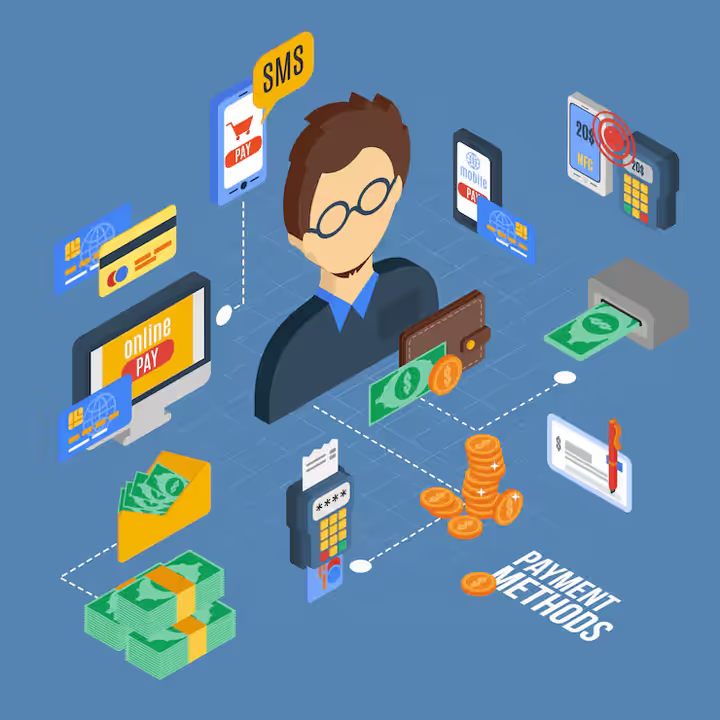
Razorpay vs PayPal Complete Guide to Digital Payments Features and Business Tools
Digital payments have become an essential part of modern commerce, allowing individuals and businesses to transfer money securely through online platforms. Among the widely recognized payment solutions, Razorpay and PayPal are frequently discussed because they support different payment needs, business models, and international transaction capabilities.
Although both platforms help process digital payments, they are designed with different priorities. Razorpay primarily focuses on businesses operating in India, while PayPal is known for facilitating international payments across many countries. Understanding their features, supported payment methods, compliance requirements, and business tools helps users make informed decisions based on their operational needs.
This guide explains the differences between Razorpay and PayPal, recent developments, applicable regulations, useful resources, and commonly asked questions in a neutral and educational manner.
Understanding Razorpay and PayPal
Digital payment platforms simplify financial transactions by connecting customers, businesses, payment networks, and banking systems.
Razorpay provides payment processing, payment gateway technology, subscription management, payout solutions, and financial automation tools that support Indian businesses and online platforms.
PayPal is a global online payment platform that enables payments between consumers, businesses, and merchants across multiple countries while supporting various international currencies.
Both platforms emphasize secure payment processing, fraud protection, transaction monitoring, and compliance with financial regulations.
Why Digital Payment Platforms Matter
Digital payments continue to grow because consumers increasingly use online shopping, digital subscriptions, mobile applications, and electronic banking.
These platforms benefit various users, including:
- Small businesses
- Large enterprises
- E-commerce websites
- Educational institutions
- Software companies
- Freelancers working with international clients
- Non-profit organizations
- Digital content creators
Common challenges addressed by payment platforms include:
- Secure online payments
- Faster payment processing
- Digital invoicing
- Subscription billing
- International transactions
- Payment tracking
- Business reporting
- Fraud prevention
As digital commerce expands worldwide, businesses increasingly rely on payment technology that integrates with accounting systems, websites, and mobile applications.
Razorpay vs PayPal at a Glance
| Feature | Razorpay | PayPal |
|---|---|---|
| Primary Focus | India-based businesses | Global online payments |
| International Payments | Limited compared to PayPal | Extensive global coverage |
| Payment Gateway | Yes | Yes |
| Digital Wallet | No traditional wallet for consumers | Yes |
| Subscription Management | Available | Available |
| Business Dashboard | Comprehensive | Comprehensive |
| Multi-Currency Support | Limited | Extensive |
| API Integration | Yes | Yes |
| Mobile SDK | Yes | Yes |
| Fraud Protection | Yes | Yes |
Core Features Comparison
Businesses often compare payment platforms based on functionality rather than popularity alone.
| Business Tool | Razorpay | PayPal |
|---|---|---|
| Payment Links | ✔ | ✔ |
| Online Checkout | ✔ | ✔ |
| API Integration | ✔ | ✔ |
| Invoice Generation | ✔ | ✔ |
| Recurring Payments | ✔ | ✔ |
| Business Analytics | ✔ | ✔ |
| Payment Reporting | ✔ | ✔ |
| Mobile Integration | ✔ | ✔ |
| Security Monitoring | ✔ | ✔ |
| Developer Documentation | ✔ | ✔ |
Security and Payment Protection
Security remains one of the most important aspects of digital payment processing.
Both platforms implement multiple layers of protection, including:
- Data encryption
- Secure payment authentication
- Fraud detection systems
- Risk monitoring
- Transaction verification
- Account activity monitoring
- Secure API communication
- Payment tokenization where applicable
Businesses also benefit from detailed transaction logs that improve financial transparency and auditing.
Business Tools Available
Modern payment platforms provide much more than payment collection.
Common business tools include:
- Payment dashboards
- Invoice management
- Subscription billing
- Payment reconciliation
- Settlement reports
- Business analytics
- Customer payment history
- API documentation
- Webhook integrations
- Mobile application support
These tools help businesses manage payment workflows while improving operational efficiency.
Integration Options
Many organizations integrate payment platforms with existing software.
Common integrations include:
- E-commerce platforms
- Accounting software
- Customer relationship management systems
- Enterprise resource planning software
- Inventory management platforms
- Mobile applications
- Business websites
- Custom software through APIs
Developers often rely on software development kits (SDKs), REST APIs, and webhook technology to automate payment-related processes.
Recent Updates in Digital Payments
Digital payment technology continues to evolve as governments, financial institutions, and technology companies improve payment infrastructure.
During 2025, digital payment adoption continued to increase across many regions due to the growing use of mobile commerce, cloud-based financial platforms, and embedded payment technology. Businesses also expanded the use of automated payment reconciliation and subscription management solutions.
In 2025, payment providers strengthened fraud detection systems by incorporating more advanced artificial intelligence and machine learning techniques to identify unusual transaction patterns and reduce payment risks.
The Reserve Bank of India (RBI) continued encouraging secure digital payment infrastructure through updated payment security guidance and improvements related to payment aggregation and digital transaction oversight.
Internationally, payment providers continued enhancing support for stronger authentication methods, improved API capabilities, and faster payment processing technologies to support cross-border commerce and digital financial services.
These developments demonstrate the continuing evolution of secure and efficient payment ecosystems.
Laws and Policies That Influence Digital Payments
Digital payment platforms operate under financial regulations that aim to protect consumers, businesses, and payment systems.
For businesses operating in India, important regulatory areas include:
- Reserve Bank of India (RBI) payment regulations
- Payment Aggregator and Payment Gateway guidelines
- Know Your Customer (KYC) requirements
- Anti-Money Laundering (AML) compliance
- Data security standards
- Information Technology Act, 2000
- Personal data protection requirements where applicable
Businesses accepting international payments may also need to comply with:
- Foreign exchange regulations
- Tax reporting obligations
- Cross-border payment requirements
- International financial compliance standards
Payment platforms generally maintain security certifications that support secure handling of payment information and customer data.
Organizations should regularly review official regulatory updates because payment regulations continue evolving alongside financial technology.
Advantages and Considerations
Every payment platform has strengths depending on business requirements.
| Consideration | Razorpay | PayPal |
|---|---|---|
| Domestic Business Support | Strong | Moderate |
| International Reach | Moderate | Strong |
| Developer Tools | Extensive | Extensive |
| Business Automation | Strong | Strong |
| Multi-Currency Capability | Limited | Broad |
| API Flexibility | High | High |
The most suitable platform often depends on business location, customer base, regulatory requirements, and international payment needs.
Useful Tools and Resources
Businesses working with digital payments often use additional tools to improve financial management and operational efficiency.
Helpful resources include:
- Official documentation for Razorpay APIs
- Official PayPal developer documentation
- Reserve Bank of India payment regulations
- GST compliance resources
- Financial accounting software
- Payment reconciliation templates
- Invoice management software
- Business analytics dashboards
- API testing platforms
- Cybersecurity assessment tools
- Financial reporting templates
- Digital bookkeeping applications
These resources assist organizations in understanding payment integration, reporting, compliance, and financial record management.
Common Use Cases
Digital payment platforms support many industries.
Examples include:
- Online education
- Retail commerce
- Software platforms
- Healthcare administration
- Event registration
- Digital subscriptions
- Hospitality
- Professional consulting
- Manufacturing
- Business-to-business payments
Each industry may prioritize different features depending on payment volume, customer location, reporting requirements, and compliance obligations.
Frequently Asked Questions
Is Razorpay the same as PayPal?
No. Both are digital payment platforms, but Razorpay primarily focuses on payment solutions for businesses operating in India, while PayPal has a broader international payment network.
Which platform supports international transactions?
PayPal has wider international payment coverage across numerous countries and currencies. Razorpay also supports certain international payment capabilities, but its primary focus remains the Indian market.
Are both platforms suitable for business integration?
Yes. Both platforms provide APIs, developer documentation, software development kits, reporting dashboards, and payment automation features that support business integration.
Do these platforms follow financial regulations?
Yes. Payment platforms generally operate under applicable financial regulations, security standards, and compliance requirements established by the countries where they conduct business.
What factors should businesses evaluate before choosing a payment platform?
Important considerations include supported payment methods, geographic coverage, integration capabilities, security features, reporting tools, compliance requirements, currency support, and business workflow compatibility.
Conclusion
Razorpay and PayPal both play significant roles in today's digital payment ecosystem, although they are designed for different operational environments. Razorpay provides extensive payment infrastructure tailored to businesses within India, while PayPal offers broad international payment capabilities that support global commerce.
As digital transactions continue expanding, organizations increasingly depend on secure payment processing, business automation, regulatory compliance, fraud prevention, and data security. Understanding the features, integrations, regulations, and available business tools allows organizations and individuals to evaluate payment technologies based on their specific operational requirements rather than assumptions.
Staying informed about payment regulations, security developments, and technology advancements will remain important as digital commerce continues evolving across domestic and international markets.