China Industrial AI: Understanding the Future of Smart Manufacturing
China Industrial AI refers to the use of artificial intelligence technologies in China's manufacturing, engineering, production, logistics, and industrial operations. It combines machine learning, computer vision, robotics, industrial software, and connected equipment to improve how factories operate.
Traditional manufacturing systems depend heavily on predefined instructions and manual monitoring. Industrial artificial intelligence introduces systems that can analyze operational data, identify unusual patterns, support production decisions, and improve processes.
China has become an important market for industrial AI because of its extensive manufacturing infrastructure, expanding robotics industry, and increasing adoption of smart manufacturing technologies.
Businesses exploring AI in manufacturing can encounter several technologies, including:
Machine learning for industrial data analysis.
AI-powered robotics for automated production.
Computer vision for product inspection.
Predictive maintenance software for equipment monitoring.
Industrial Internet of Things (IIoT) platforms.
Digital twin technology for production simulation.
AI-based manufacturing execution systems.
These technologies help manufacturers understand production performance and identify opportunities to improve operational efficiency.
Why Industrial AI Is Important for China's Manufacturing Industry
Industrial AI is becoming increasingly relevant because manufacturing businesses must manage production quality, equipment performance, supply chains, energy consumption, and changing customer requirements.
China's manufacturing ecosystem includes automotive production, electronics, machinery, chemicals, textiles, and other industrial sectors. Each sector has different operational requirements, but many can benefit from intelligent automation.
1. Improved Manufacturing Automation
AI-powered manufacturing automation allows machines and production systems to analyze information and respond to changing conditions.
For example, an automated production line can use machine vision to identify incorrectly positioned components. AI software can then help operators investigate the problem before it affects additional products.
Manufacturers evaluating manufacturing automation software often consider:
Production monitoring capabilities.
Compatibility with existing machinery.
Integration with industrial sensors.
Automated reporting.
Real-time operational visibility.
2. Predictive Maintenance
Predictive maintenance uses equipment data to identify possible mechanical problems before unexpected failures occur.
AI-based predictive maintenance software can analyze vibration, temperature, pressure, and operating patterns.
For example, an industrial motor that begins producing unusual vibration patterns may indicate a developing mechanical issue.
Maintenance teams can use this information to investigate equipment before a major breakdown occurs.
Common applications include:
Industrial motors and pumps.
Manufacturing equipment.
Conveyor systems.
Heating and cooling equipment.
Robotics and automated machinery.
3. Better Product Quality Inspection
Quality inspection is another important application of industrial AI.
Computer vision systems use cameras and AI models to examine products during manufacturing. They can identify visible defects, surface irregularities, incorrect dimensions, and missing components.
AI quality inspection systems may support:
Electronics manufacturing.
Automotive component inspection.
Metal production.
Packaging operations.
Pharmaceutical manufacturing.
These systems can help quality teams identify defects more consistently, although performance depends on camera quality, training data, product variation, and operating conditions.
4. More Efficient Production Planning
AI systems can analyze production schedules, inventory information, machine availability, and historical performance.
This can help manufacturing managers identify production bottlenecks and evaluate different scheduling decisions.
AI-powered production planning can be particularly useful for factories managing multiple production lines and complex supply chains.
Major China Industrial AI Technologies
Industrial AI includes several technology categories. Understanding their differences helps businesses identify which systems may be appropriate for particular manufacturing operations.
Industrial Robotics and AI Automation
Industrial robots perform repetitive, precise, and physically demanding manufacturing activities.
When combined with AI, robotics systems can support more adaptive operations, including object recognition, automated inspection, material handling, and production assistance.
Common applications include:
Automotive assembly.
Electronics manufacturing.
Welding and material handling.
Automated packaging.
Warehouse operations.
According to the International Federation of Robotics, China had approximately 2.027 million industrial robots operating in factories in 2024, with 295,000 new installations during that year.
Industrial AI Software
Industrial AI software connects operational data with analytical systems to help businesses monitor and understand manufacturing processes.
Industrial AI platforms may include:
Machine learning applications.
Production analytics.
Equipment monitoring.
Quality management.
Workflow automation.
Operational reporting.
Businesses evaluating industrial AI software should examine data security, integration requirements, system reliability, scalability, and compatibility with existing infrastructure.
Digital Twin Technology
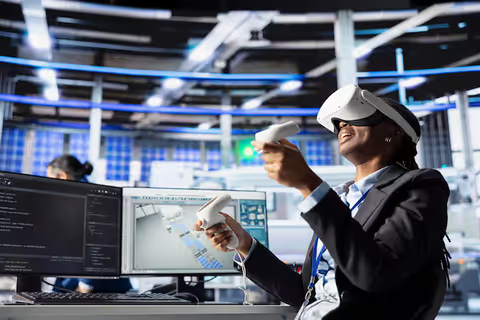
A digital twin is a virtual representation of a physical machine, production line, or industrial facility.
It can combine sensor information, engineering data, and simulation models to help manufacturers understand how equipment and production systems behave.
Digital twin applications include:
Factory layout planning.
Equipment performance analysis.
Production simulation.
Maintenance planning.
Process optimization.
Industrial Internet of Things (IIoT)
The Industrial Internet of Things connects machines, sensors, control systems, and software platforms.
IIoT infrastructure provides operational information that AI systems can analyze.
For example, connected sensors can collect temperature and vibration readings from production equipment. An industrial AI platform can examine those readings and identify unusual patterns.
Key Applications of China Industrial AI
Industrial AI has applications across multiple manufacturing industries.
Industry | Industrial AI applications |
|---|---|
Automotive | Robotic assembly and quality inspection |
Electronics | Component inspection and precision manufacturing |
Chemicals | Process monitoring and equipment maintenance |
Textiles | Automated inspection and production monitoring |
Metal manufacturing | Defect detection and production optimization |
Food processing | Automated sorting and packaging |
Logistics | Warehouse robotics and inventory analysis |
The electronics and automotive industries are particularly important areas for industrial robotics adoption in China.
Industrial AI Software and Solutions: What Should Businesses Evaluate?
Companies considering industrial AI solutions should understand their operational requirements before selecting a technology.
Different platforms address different manufacturing challenges. A predictive maintenance platform, for example, is not necessarily designed to manage production scheduling or visual quality inspection.
Important Software Features
1. AI Data Analytics
The platform should be able to process relevant operational information and present useful insights.
2. Predictive Maintenance Capabilities
Businesses should examine whether the software supports equipment monitoring, fault detection, and maintenance reporting.
3. Manufacturing System Integration
Compatibility with existing equipment, sensors, enterprise resource planning (ERP), and manufacturing execution systems (MES) is important.
4. Security and Access Management
Industrial systems may contain sensitive operational information. Businesses should examine access controls, data protection, network security, and vendor security practices.
5. Scalability
The platform should support the business's current requirements and potential future expansion.
Industrial AI Implementation Considerations
Before implementing AI manufacturing solutions, companies should consider:
Existing machinery and infrastructure.
Availability and quality of operational data.
Employee training requirements.
Integration with legacy systems.
Maintenance and technical support.
Performance measurement.
Data governance and cybersecurity.
A limited pilot project can help businesses evaluate system performance before expanding deployment across an entire facility.
Recent Developments in China's Industrial AI Industry
China's industrial AI ecosystem continues to develop through manufacturing modernization, robotics adoption, and the integration of AI into industrial operations.
Several developments illustrate this direction.
Growth in Industrial Robotics
The International Federation of Robotics reported in September 2025 that China had reached a record 2.027 million operational industrial robots in factories, based on 2024 figures. Annual installations reached 295,000 units.
This demonstrates the importance of robotics in China's manufacturing ecosystem.
AI Integration in Industrial Automation
Industrial AI is increasingly being applied to production monitoring, predictive maintenance, quality inspection, and manufacturing process optimization.
China's AI-plus-manufacturing initiatives also emphasize the development of industrial AI models, datasets, and practical applications.
Expansion of Smart Manufacturing
Digital twins, connected equipment, edge computing, and industrial software are becoming important parts of modern manufacturing infrastructure.
These technologies can help factories combine operational information with intelligent analysis and automation.
Challenges Facing Industrial AI Adoption
Although industrial AI offers potential advantages, its implementation involves practical challenges.
Data Quality
AI systems depend on accurate and relevant data. Missing sensor readings, inconsistent formats, and outdated records can reduce system performance.
High Implementation Complexity
Integrating AI with older production equipment may require additional hardware, software modifications, and technical expertise.
Cybersecurity Risks
Connected industrial systems can create additional cybersecurity requirements. Companies need appropriate network protection, access controls, and incident-response procedures.
Workforce Training
Employees need to understand how AI systems work and how to interpret their outputs. Training is important for operators, engineers, maintenance teams, and managers.
System Reliability
Industrial AI should be evaluated under real operating conditions. Businesses should test reliability, accuracy, and performance before depending on automated recommendations.
Future of China Industrial AI
The future of China Industrial AI will likely involve deeper integration between artificial intelligence, robotics, connected equipment, and advanced manufacturing software.
Some important developments to watch include:
AI-powered robotics: More intelligent robots capable of adapting to different production tasks.
Industrial AI agents: Software systems that assist with specific operational workflows.
Smart factories: Greater coordination between machines, software, and production teams.
Advanced computer vision: More sophisticated automated inspection systems.
Edge AI: Processing information closer to industrial equipment.
Digital twins: More detailed virtual models for manufacturing simulation.
Energy optimization: AI-supported monitoring of industrial energy consumption.
The expansion of these technologies will depend on implementation costs, technical reliability, data availability, and industry-specific requirements.
Frequently Asked Questions
1. What is China Industrial AI?
China Industrial AI refers to artificial intelligence technologies used in China's manufacturing and industrial sectors. Applications include robotics, predictive maintenance, automated quality inspection, production analytics, and smart factory operations.
2. How is AI used in Chinese manufacturing?
AI is used for production monitoring, industrial robotics, defect detection, equipment maintenance, production planning, and supply chain analysis.
3. What is industrial AI software?
Industrial AI software uses machine learning, data analytics, and automation technologies to help businesses monitor equipment, analyze production information, and improve industrial operations.
4. What are the benefits of AI in manufacturing?
Potential benefits include improved quality monitoring, better equipment maintenance planning, more consistent production processes, operational visibility, and reduced unplanned downtime.
5. What is the difference between industrial AI and industrial automation?
Industrial automation uses machines and control systems to perform tasks with limited manual intervention. Industrial AI adds capabilities such as data analysis, pattern recognition, prediction, and adaptive decision support.
Conclusion
China Industrial AI is an important part of the country's evolving manufacturing and industrial technology landscape. Robotics, machine learning, predictive maintenance, computer vision, and smart factory platforms are changing how manufacturers monitor and manage production.
For businesses exploring industrial AI technology, understanding individual applications is essential. Comparing software capabilities, evaluating integration requirements, and testing systems through controlled projects can support more informed technology decisions.
As industrial AI continues to develop, its role in manufacturing automation, equipment monitoring, and production intelligence is likely to remain an important area of technological development.